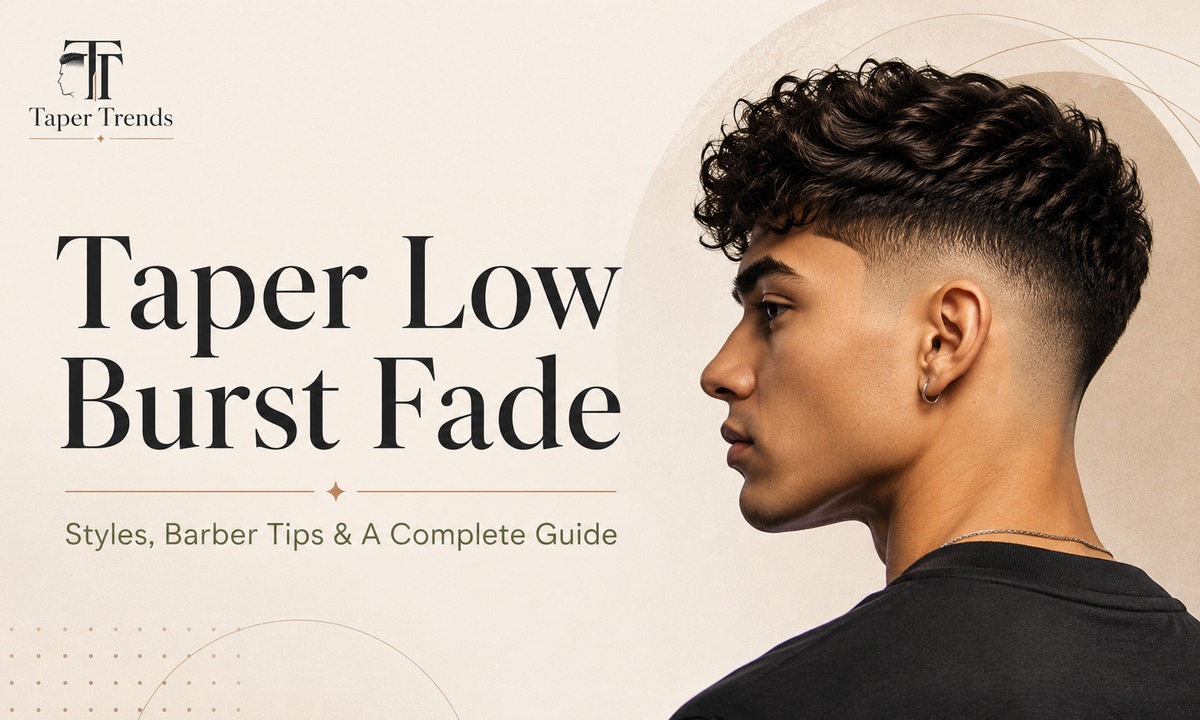
Ask ten barbers for a “fade” and you'll get ten slightly different haircuts. That's the problem the taper low burst fade quietly solves, as long as you can describe it properly. It pairs a low taper along the sides and neckline with a curved burst that wraps around the ear, so you end up with a clean, wearable cut that still has some shape to it.
This guide covers what the cut is, who it suits, the variations worth asking for, how to explain it at the chair, and what it takes to keep it looking sharp.
What a taper low burst fade is
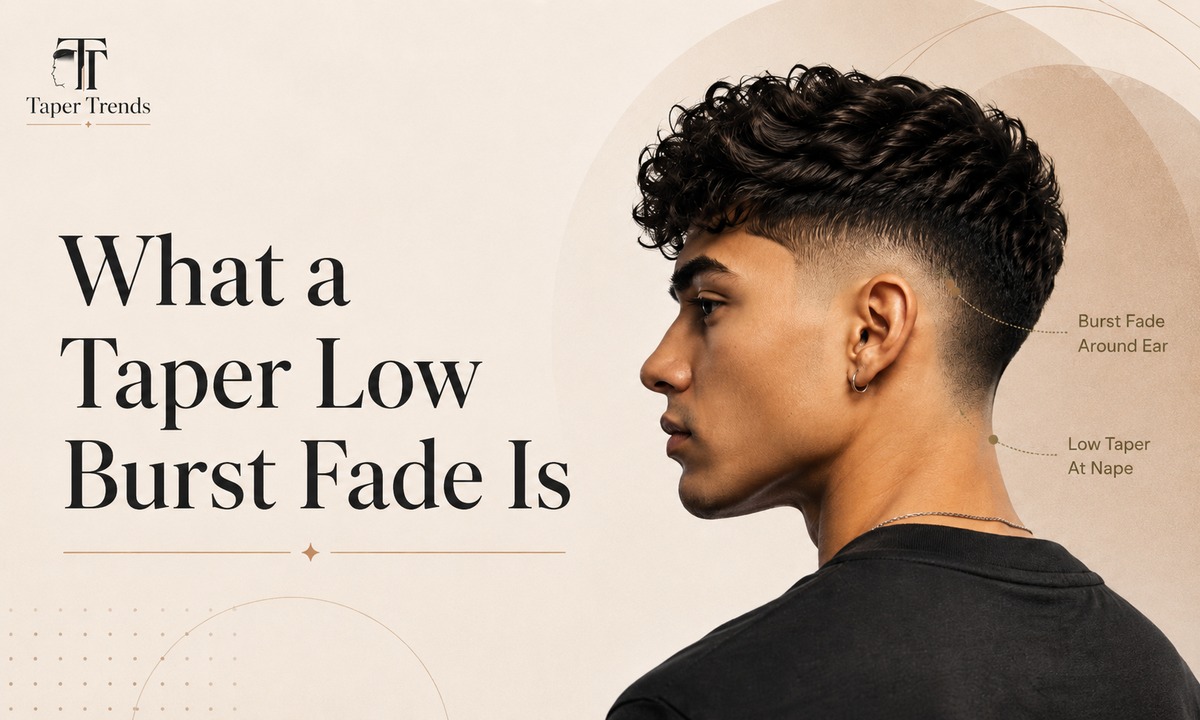
A taper low burst fade combines two techniques into one cut. The low taper handles the sides and neckline: the hair gets gradually shorter as it drops toward the ears and nape, without necessarily going all the way down to skin. The burst is the curved part. Instead of the fade running in a straight line down the side and across the back, it arcs around the ear in a half-circle — tightest right at the ear and radiating outward like a small sunburst.
The “low” part matters because it sets where the shortest hair sits. A low placement keeps the fade close to the ears and neckline and leaves more length on the sides, which reads softer than a mid or high version. So you get a cut that looks tidy and controlled, but with a rounded detail around the ear that a plain fade just doesn't have.
Because the burst curves instead of cutting straight, it sits well under longer or textured hair on top, where a hard horizontal line can look disconnected from the shape above it. That's why you tend to see it on curls, fringes, and crops rather than short, flat styles. If you want to picture the base shape from every angle first, our guide on what a low taper fade looks like breaks it down, and the complete low taper fade haircuts guide covers every style and hair type in depth.
Taper vs low fade vs burst fade
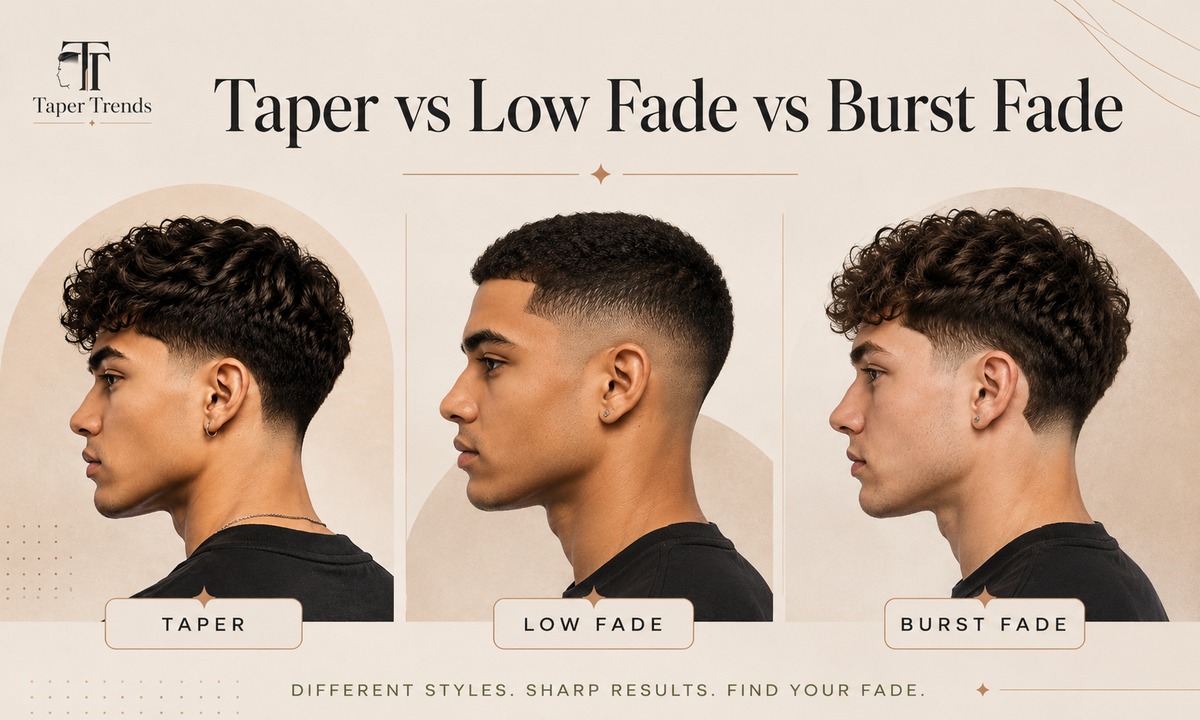
These three terms get mixed up constantly, and asking for the wrong one is how people end up disappointed. Here's the quick version.
Taper
A taper is the gradual, subtle option. The hair shortens toward the neckline and ears without exposing much skin. It's the conservative, grow-out-friendly choice, and it's often the base barbers build other details onto.
Low fade
“Low” describes where the fade starts, not how it's shaped. A low fade begins near the ears and neckline rather than up by the temples, so more hair stays on the sides. Lower fades also grow out more gracefully, which usually means fewer trips back to the barber. If you're still deciding how much contrast you want on the sides, our breakdown of low taper vs low fade walks through exactly how each reads on the head.
Burst fade
The burst is about shape, not height. It curves around the ear instead of running straight across, which is what gives the cut its rounded side profile. It pairs naturally with mullets, fringes, and textured tops because the curve follows length and movement instead of fighting it.
The burst fade isn't a new invention, either. It has roots in classic barbering and Black hair culture, and it picked up mainstream attention over the last decade or so. Many barbers credit Usher and his longtime barber, Curtis Smith, with pushing the curved shape into the spotlight. You'll occasionally hear it called the “South of France” cut for the same reason.
Who a taper low burst fade suits
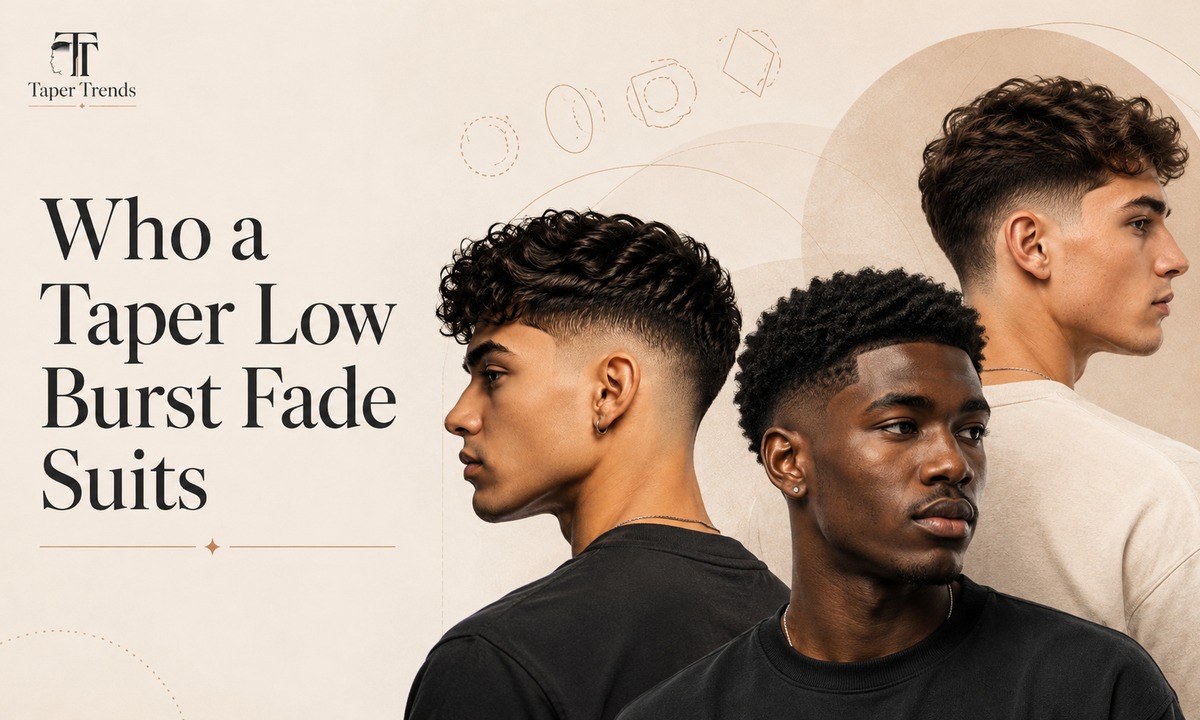
Because the fade starts low and the burst keeps things rounded, this cut flatters a wider range of faces and hair textures than a high or skin fade would. A few things are still worth pointing out to your barber.
Face shapes
- RoundKeep real length and volume on top — that vertical lift balances a round shape more than the fade itself does. If you want a stronger narrowing effect, a mid burst adds more height than a low one.
- SquareSuits this cut well. The curved fade softens a strong jaw rather than sharpening it — the opposite of what a hard, blocky fade line would do.
- Oval / oblongThe easy case. Almost any version works, from a textured crop to a fringe, because there's no proportion you're trying to correct.
- HeartDoes well with a bit more volume on top and a low fade, which helps balance a narrower chin against a broader forehead.
If your face is quite round and you want a stronger narrowing effect, a mid burst gives you more height than a low one — our low mid taper fade guide covers that higher starting point in detail.
Hair types
- StraightTakes this cut well, especially with a textured or cropped top. The curved fade shows up clearly against straight strands, so the shape stays sharp and defined.
- WavyProbably the easiest texture to work with here. The natural movement plays nicely off the curve — let the waves fall as they are, or add a little texture powder for grip.
- CurlyWhere the burst really earns its place. It keeps curls full and bouncy up top while the fade controls everything underneath, and the rounded shape follows the curl pattern instead of clashing with it.
- CoilyWorks well too. The rounded burst complements the natural shape of coily textures, and keeping the fade low means less exposed skin to grow out unevenly, so upkeep is a little simpler.
Plenty of barbers recommend a burst specifically for curly clients for exactly that reason. If your hair is poker-straight instead, our dedicated low taper fade guide for straight hair covers the best top styles, products, and step-by-step styling.
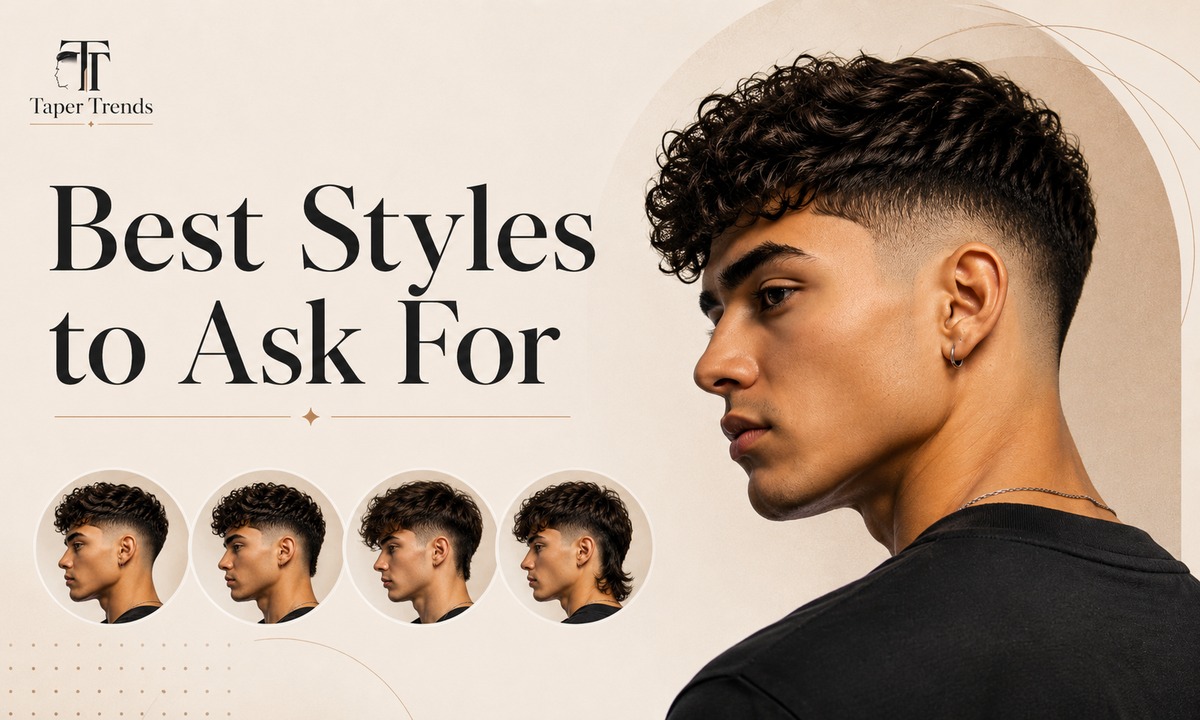
Best styles to ask for
Once the fade itself is settled, the real decision is what you do with the hair on top. The length up there changes the whole personality of the cut even though the fade stays the same, so it's worth having a version in mind before you sit down.
- Textured cropThe most requested option. Cut with scissors or clipper-over-comb, it gives a slightly messy, lived-in finish that suits most face shapes and takes about thirty seconds to style with a little matte clay.
- Short topThe cleanest, lowest-effort version. Keeping the top short does the same job with even less styling, and the curved detail around the ear still carries the whole look.
- Curls left longFor curly guys, leaving the curls intact over a low burst is a genuinely low-maintenance combo — curls hide a lot of growth and let you stretch time between cuts.
- 360 wavesIf you brush and maintain a wave pattern up top, the low fade keeps the sides tidy without competing with the wave lines.
- Burst fade mulletThe bolder end. The back stays long for that classic silhouette while the curved sides stay clean, and the low placement stops it from tipping into full costume.
- Forward fringeA fringe over a low burst reads softer and more youthful, with the hair falling forward while the sides stay balanced. Needs a touch more upkeep, but looks noticeably different.
A fringe over a low burst is one of the softer, more youthful versions — our guide on the textured fringe with low taper fade goes deeper on length and styling. A burst fade mullet or a fringe both need a bit more upkeep than a short or textured top, but they look noticeably different from the versions everyone else is walking around with.
How to ask your barber for it
Even with a clear picture in your head, vague instructions get you a different haircut. Barbers move fast and see a lot of clients, so being specific saves everyone the awkward “that's not quite it” conversation at the end.
A script that works
“I'd like a low taper fade that curves around my ear in a burst shape, not a straight line. Keep the fade low near my neckline and ears, and leave [length] on top.”
Swap in “textured,” “curly,” “short,” or “a bit longer for a fringe” depending on what you're after.
What to show
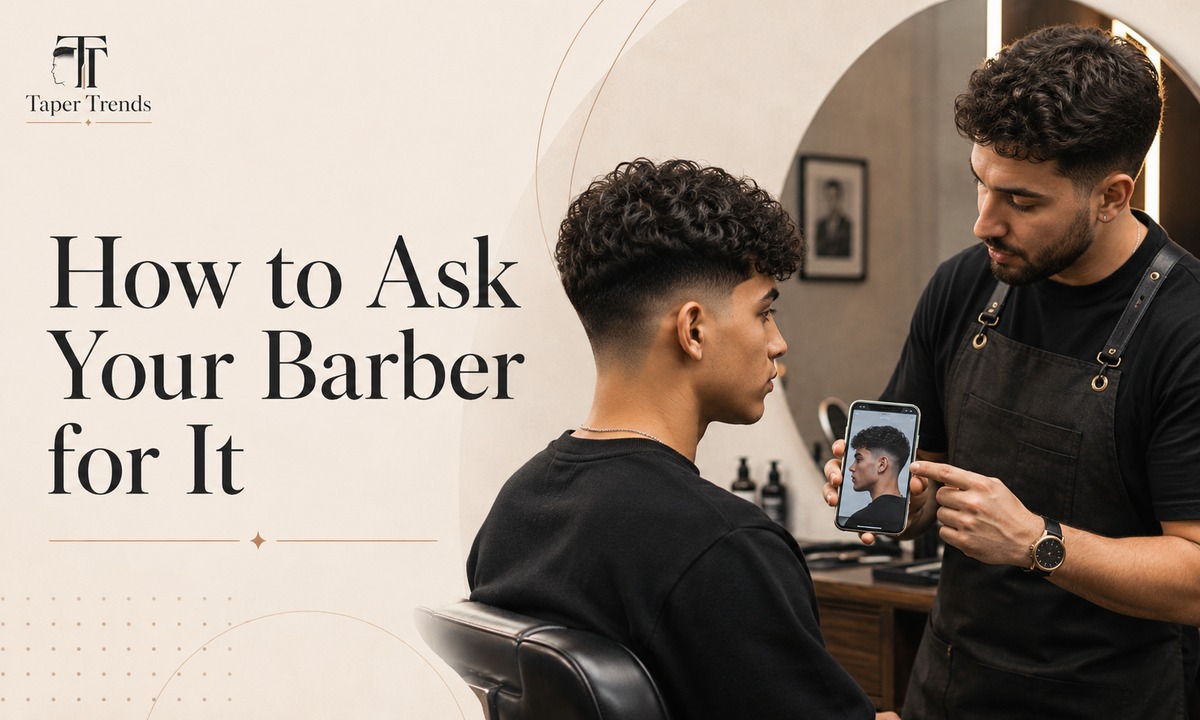
A reference photo does more work than any description. Look for one that clearly shows the curve around the ear, how low the fade starts, and the length and texture on top. Try to bring shots from the side and back too, since the burst detail is genuinely hard to judge from a front-facing photo alone.
Two things go wrong most often at this stage. People say “fade” without specifying low and burst, so the barber defaults to a straight or higher fade. And people say “not too short” without giving a length or a photo, which leaves too much open to interpretation. Mention your hair type as well, because a curly burst and a straight one are cut differently.
Keeping a taper low burst fade sharp
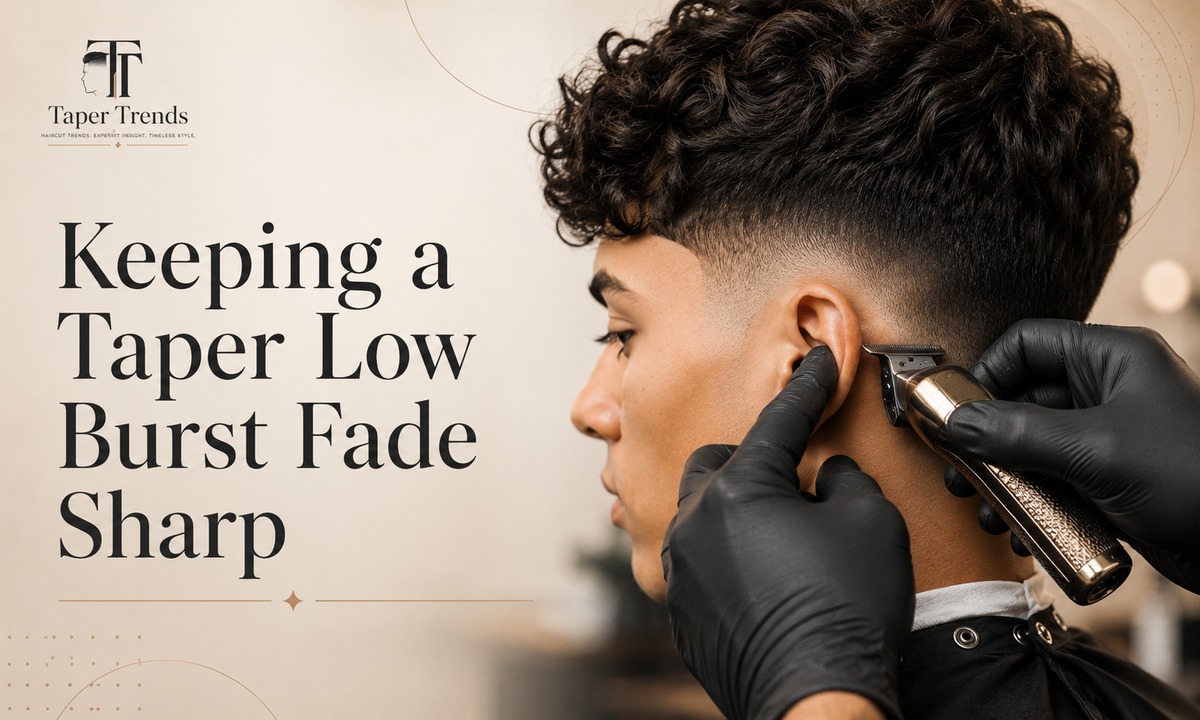
A burst fade relies on a precise curve, and that curve is the first thing to go as the hair grows. It tends to look overgrown faster than a plain taper, especially around the ear and neckline.
Touch-up timeline
Most guys are looking at a barber visit every two to four weeks to keep the curve crisp. If the fade is cut tight or your hair grows quickly, you'll land nearer the two-to-three-week end. A softer, longer version can stretch closer to four weeks before it starts looking off. A short or textured top hides regrowth reasonably well, and a mullet or fringe is forgiving too, since the eye goes to the length rather than a perfectly fresh fade line.
Neckline and sideburn cleanup
A quick cleanup at home buys you time between full cuts. For the neckline, a trimmer with a close guard works, but go slow and follow your natural hairline instead of carving a hard straight edge. For sideburns, take off small amounts at a time. It's easy to overshoot, and uneven sideburns throw off the whole look even when the rest of the fade is still clean.
Mistakes that ruin the cut
A few execution problems come up again and again, and most of them happen at the chair rather than at home.
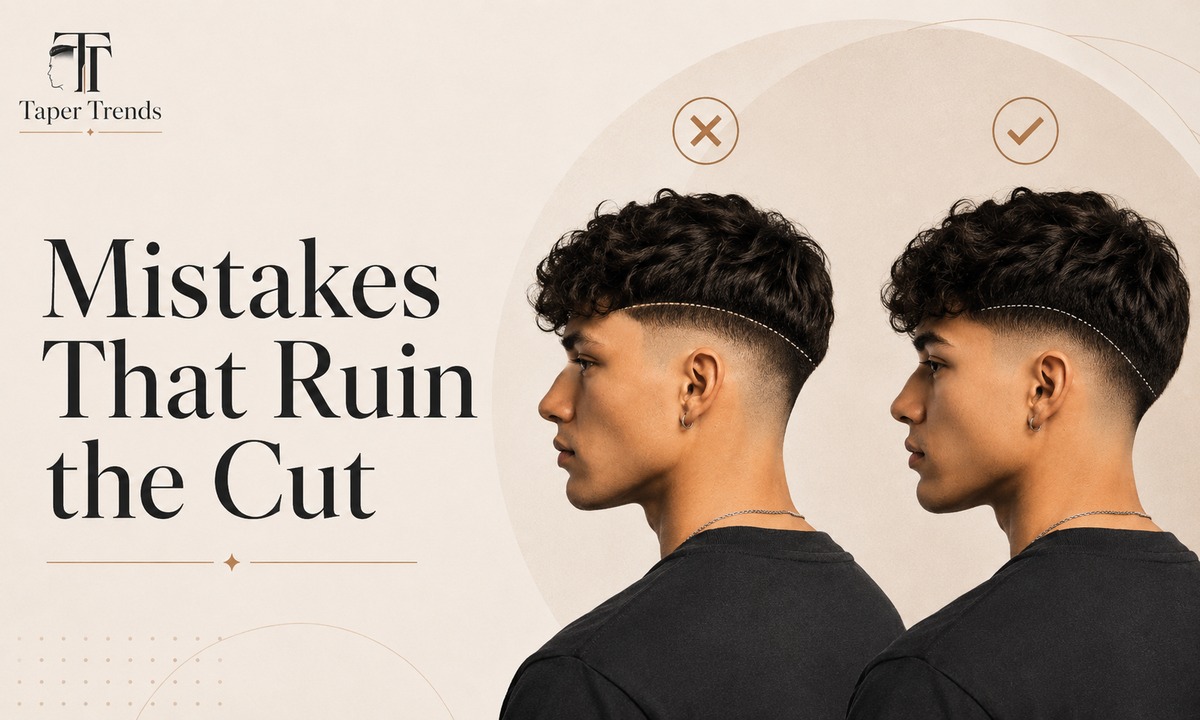
- Letting the fade creep upThe most common problem: a low fade quietly turns into a mid or high, and the low-key quality that makes this cut worth getting disappears. Confirm with your barber that the fade stays low.
- Over-cutting around the earThe burst shape depends on keeping enough hair there to hold the curve. Strip too much away and the burst flattens into an ordinary fade. This is the fiddliest part of the cut — which is exactly why a clear reference photo matters.
- A poorly blended backThis shows up a week or two later: if the back isn't blended as carefully as the sides, you get a visible line where the burst meets the rest of the hair as it grows in.
If you're tempted to add a carved line into the faded side, get the burst right first — our low taper fade design guide covers where a line sits best and what to ask for.
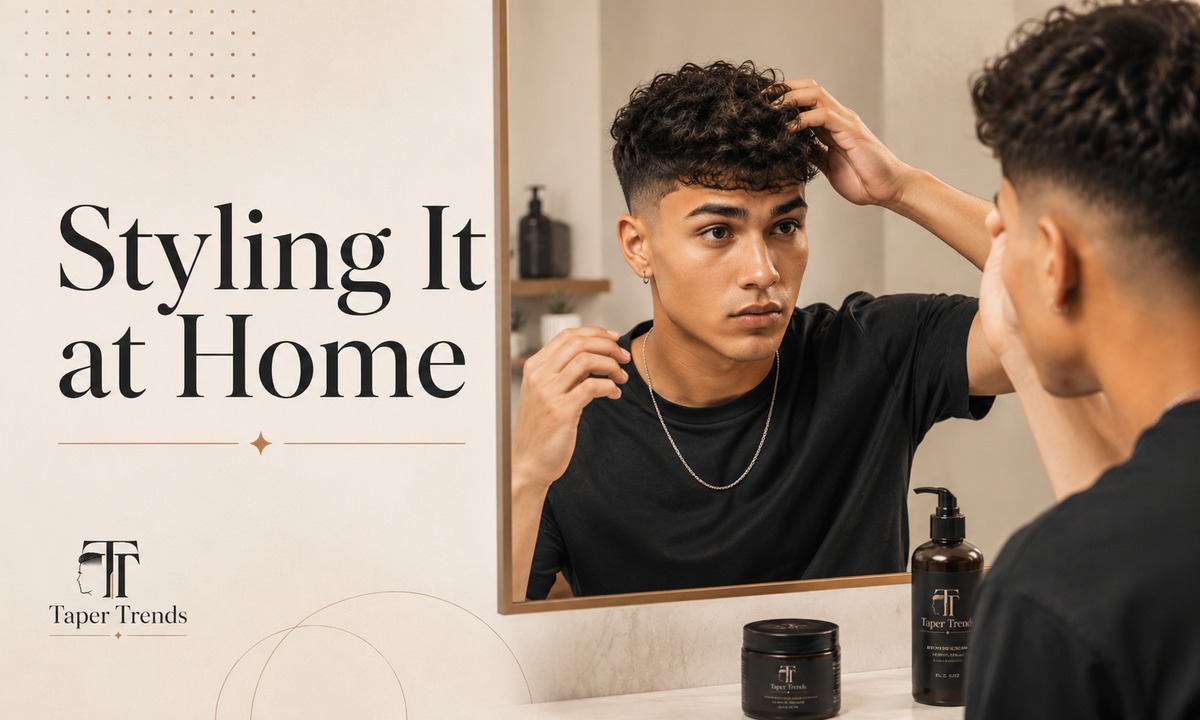
Styling it at home
The good news is that the cut does most of the work, so your daily routine can be short.
For textured or short tops, a matte clay adds definition without shine and suits most casual and work settings. If you want a bit of sheen for a slicker or wave style, a light pomade holds well. Texture powder is the one to reach for if your hair is fine or straight and tends to fall flat, since it adds grip and volume at the roots.
Worth knowing: most barbers prefer this cut slightly dry and textured rather than glossy. Heavy, high-shine products tend to make a burst fade look stiff and overdone.
The routine itself is quick. Start with damp, towel-dried hair, warm a pea-sized amount of product between your fingers, and work it through by hand rather than with a comb for a more natural finish. Lift at the roots with your fingertips if you want height, or press it down for a sleeker shape. Two minutes, tops.
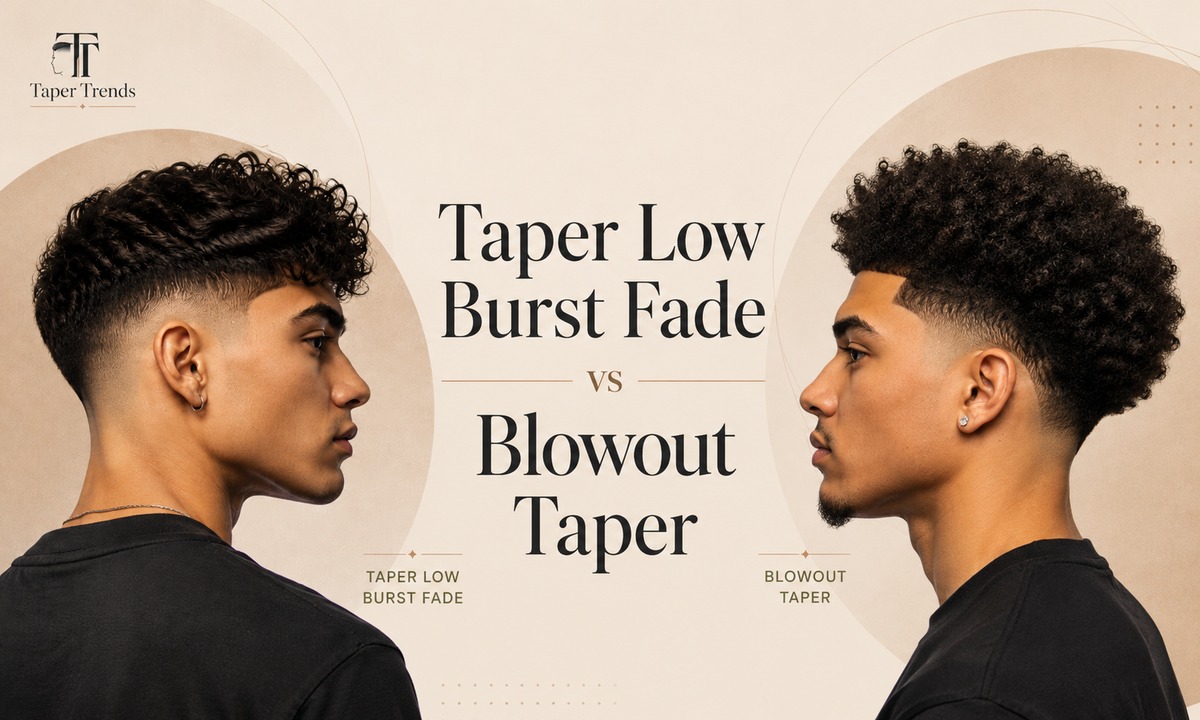
Taper low burst fade vs blowout taper
These two get compared a lot, partly because people assume “blowout” is a different fade line. It isn't. A blowout taper uses a normal taper on the sides, and the “blowout” refers to the styling: the top is blow-dried up and out for volume. So the difference is mostly about the top, not the fade.
That distinction changes the comparison. A taper low burst fade generally looks cleaner and more defined from the side, because the curved line does that work for you with barely any daily effort. A blowout carries more height and fullness on top, which looks great but only if you actually blow-dry and style it most mornings.
On maintenance, it's a trade-off rather than a clear winner. The burst needs more frequent barber visits to keep that curve tight, but almost no daily styling. The blowout is more forgiving as it grows out, since it doesn't hang on a precise line, but it asks for real styling effort every day to look like anything. Pick based on which kind of upkeep you'd rather do.
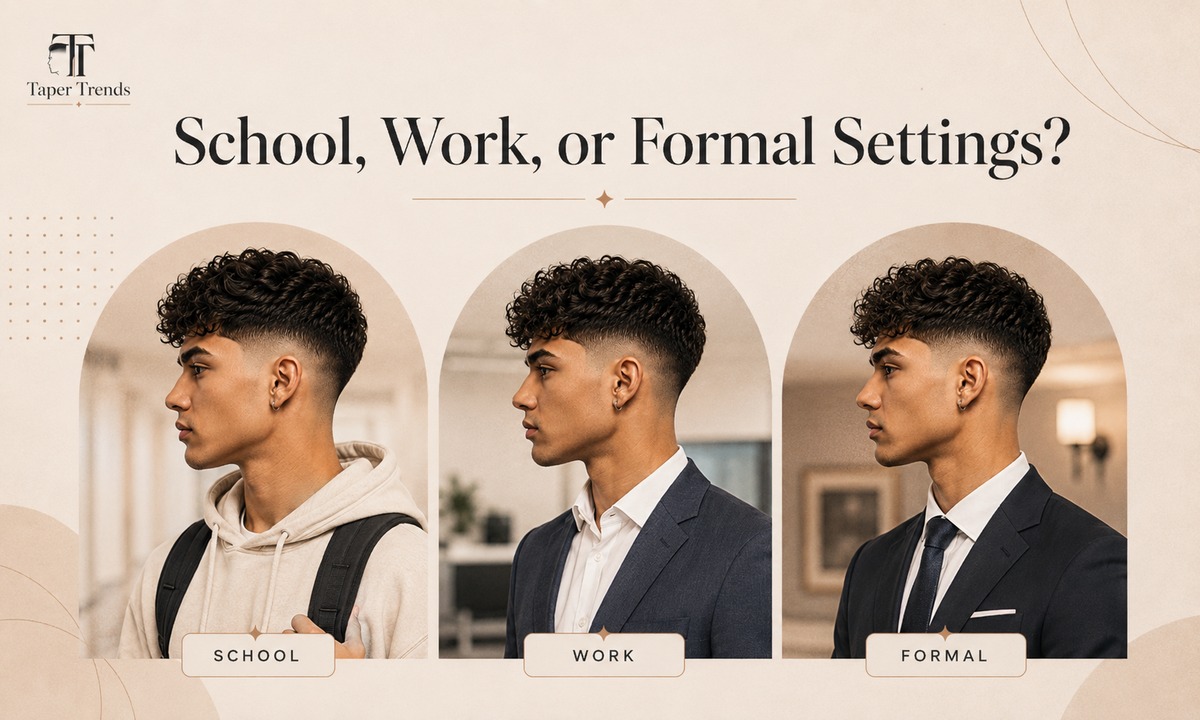
Is it okay for school, work, or formal settings?
Yes, and that's a big part of why it's stuck around. The low placement keeps things conservative enough for a school dress code or an office, while the burst detail adds just enough character to stop it looking plain. Keep the top short or medium for the most formal-friendly version. Cutting one for a younger family member? Our low taper fade haircut for boys guide covers school rules and kid-friendly styling.
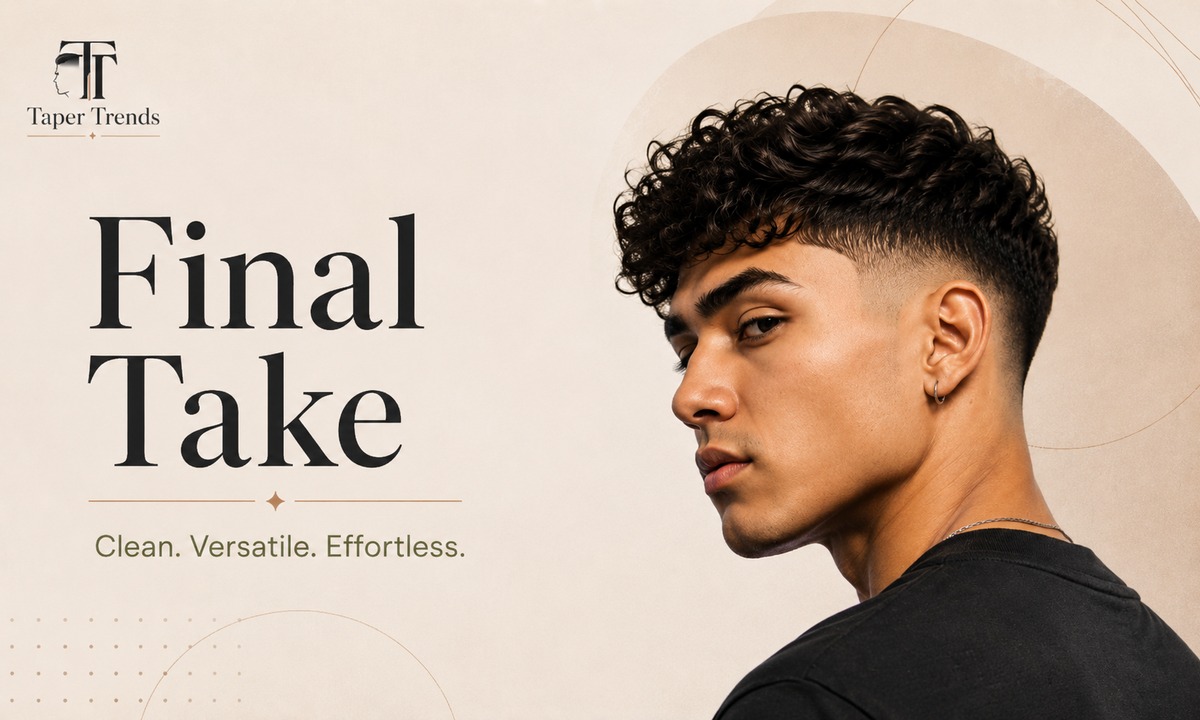
Final take
If you want a clean cut that looks intentional without being loud, the taper low burst fade is an easy one to recommend. It works across most face shapes and hair types, adapts to a long list of top styles, and holds up in both casual and formal settings. The one real cost is upkeep: that curved line needs regular touch-ups to stay sharp, so it rewards people who don't mind a fairly steady barber schedule.
Bring a clear reference photo, spell out the low and curved details, mention your hair type, and keep up with the touch-ups. Do that and this cut will look considered every time you leave the chair.
In short
A taper low burst fade pairs a low taper with a curved burst around the ear — clean and wearable, but with a rounded detail a plain fade doesn't have. It suits curly, wavy, and textured hair especially well.
Ask for a low taper that curves around the ear, give a length for the top, mention your hair type, and book a touch-up every two to four weeks to keep the curve sharp.
Go deeper: low taper fade guides
Picked a direction? Each style, hair type, and decision below has its own dedicated guide with photos, products, and barber wording:
- Low taper fade haircutsThe complete overview of the cut
- Low mid taper fadeMore height: the mid-temple starting point
- Low taper vs low fadeWhich to choose, by contrast and upkeep
- Textured fringeThe fringe-forward version
- What it looks likeEvery angle, before you book
- Low taper fade designAdding a carved line to the fade
- For straight hairTop styles, products, and styling
- For boysSchool rules and kid-friendly styling
FAQs about the taper low burst fade
Is a burst fade the same as a taper fade?
No. A taper fade describes a gradual fade in general, while a burst fade specifically curves around the ear. This cut combines both — a low taper with a curved burst around the ear.
What's the difference between a burst fade and a drop fade?
A drop fade follows the skull down behind the ear toward the nape. A burst fade arcs around the ear and stops near the side of the neck, keeping more length at the back.
How often will I need a touch-up?
Usually every two to four weeks. Tighter or shorter cuts sit closer to two or three weeks, while softer, longer versions can stretch toward four.
Does it work with curly hair?
Very well. The curved line follows natural curl patterns better than a straight fade does, so curly hair is one of the best matches for this cut.
Is a low burst fade good for round faces?
It can be, but the lift that balances a round face comes mainly from length and volume on top. If you want stronger slimming, a mid burst adds more height than a low one.
What do I tell my barber?
Ask for a low taper that curves around the ear in a burst shape, give a length for the top, and mention your hair type.
Is this haircut high maintenance?
It's moderate. The cut needs fairly regular barber touch-ups to keep the curve, but daily styling is quick once you have the right product.
Want more taper fade guides?
Browse clean, barber-ready breakdowns for every hair type.