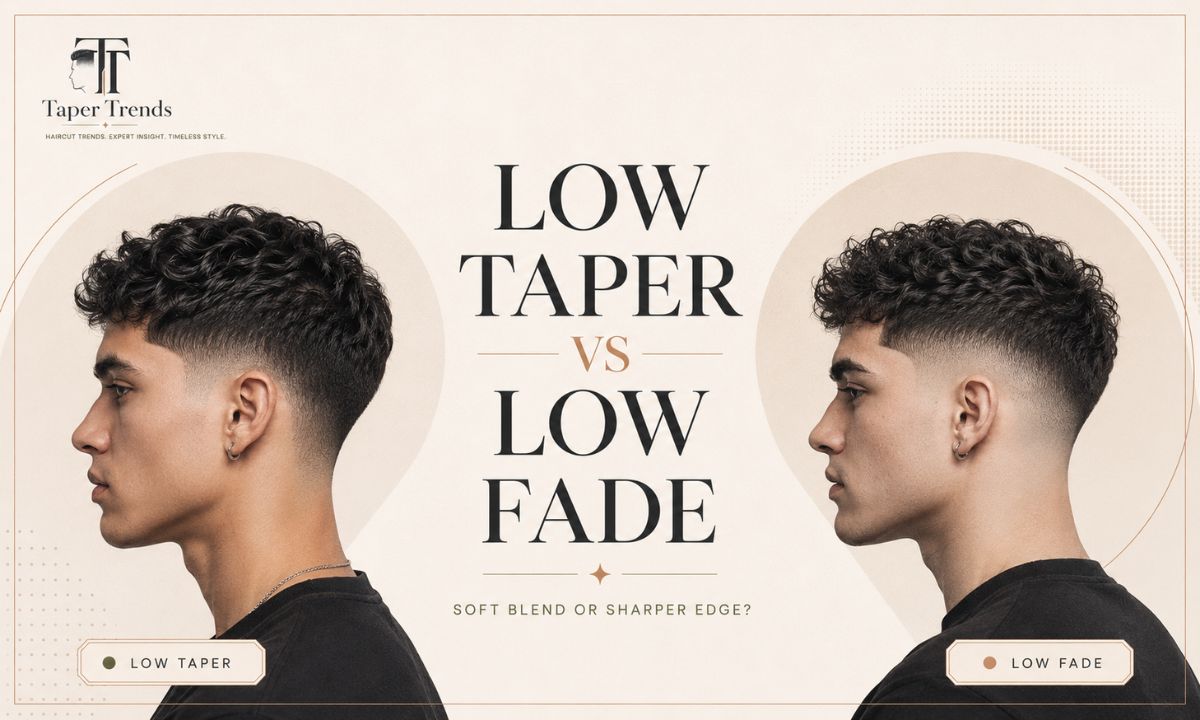
Two haircuts dominate barbershop requests right now, and the low taper vs low fade question trips people up constantly. Side by side they look related, because both start low on the head, around the ears and neckline. That shared starting point is where most of the confusion comes from. The real difference is smaller than people expect, and easier to act on once you can see it.
It comes down to one thing: contrast. A taper blends softly into your hair. A fade drops sharply, often down to skin. Neither is the better cut. They just do different jobs, and the right one depends on your hair, your routine, and how often you can sit in a barber's chair. Here is how to tell them apart and pick the one that fits.
The main difference
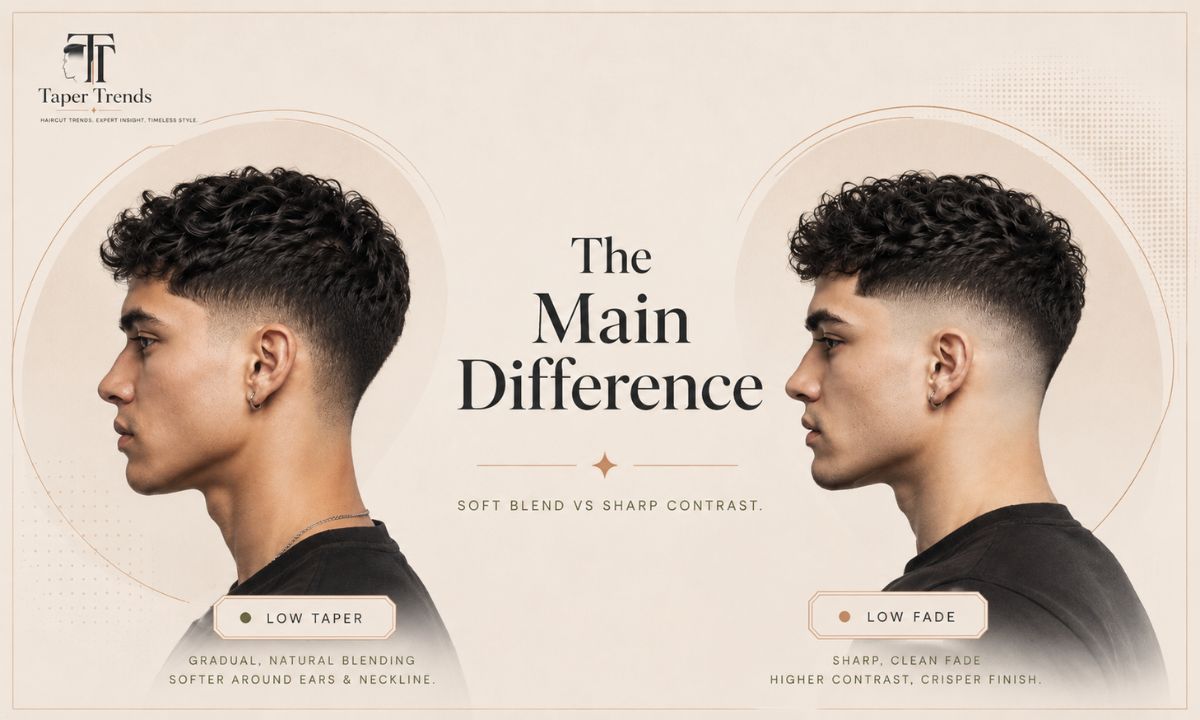
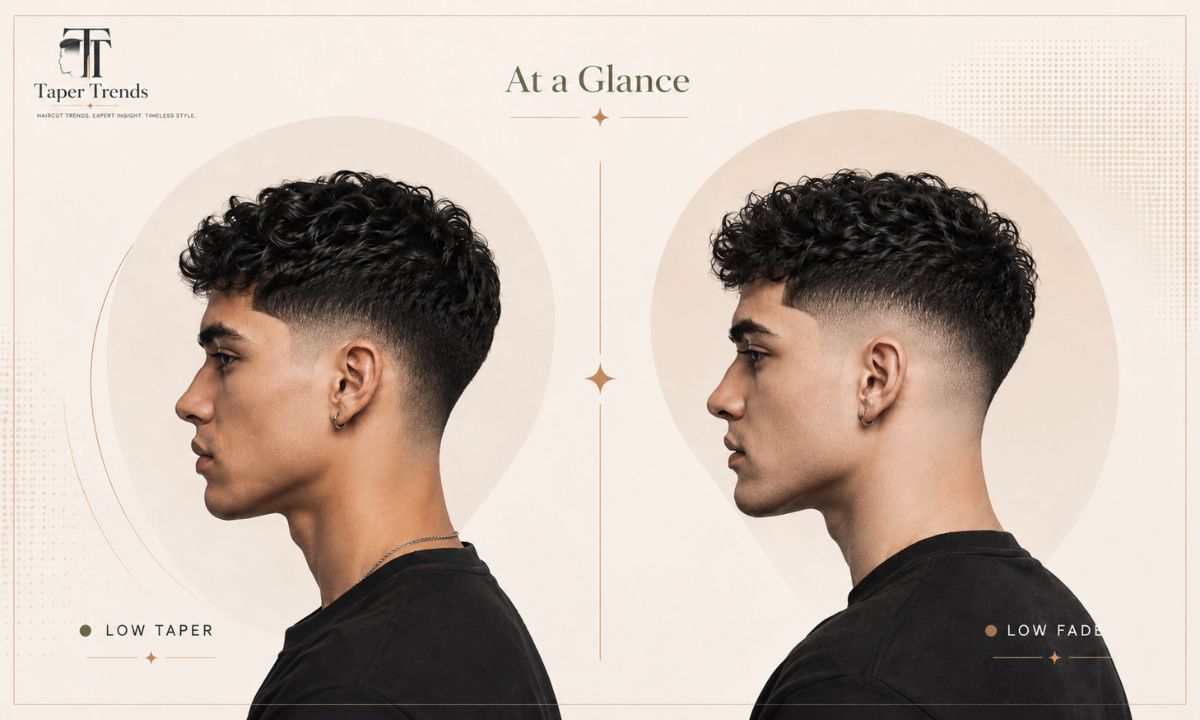
A low taper and a low fade both begin low, just above the ears and along the neckline. After that, they part ways.
A low taper shortens the hair gradually as it moves toward the sideburns and nape. It usually stops short of the skin, so the sides keep some length and the whole thing reads as tidy rather than dramatic. Most people who notice it just think your hair looks neat.
A low fade goes further. The hair drops from longer on top to very short or bare skin near the bottom, and you can clearly see where that drop happens. That visible contrast is the entire point. It looks deliberate, sharp, and fresh from the chair.
In feel, the taper is the classic, understated option that works almost anywhere. The fade is the bolder, more modern one that makes the cut itself part of the look. Want quietly blended sides? Taper. Want a clean, defined edge? Fade.
What is a low taper?
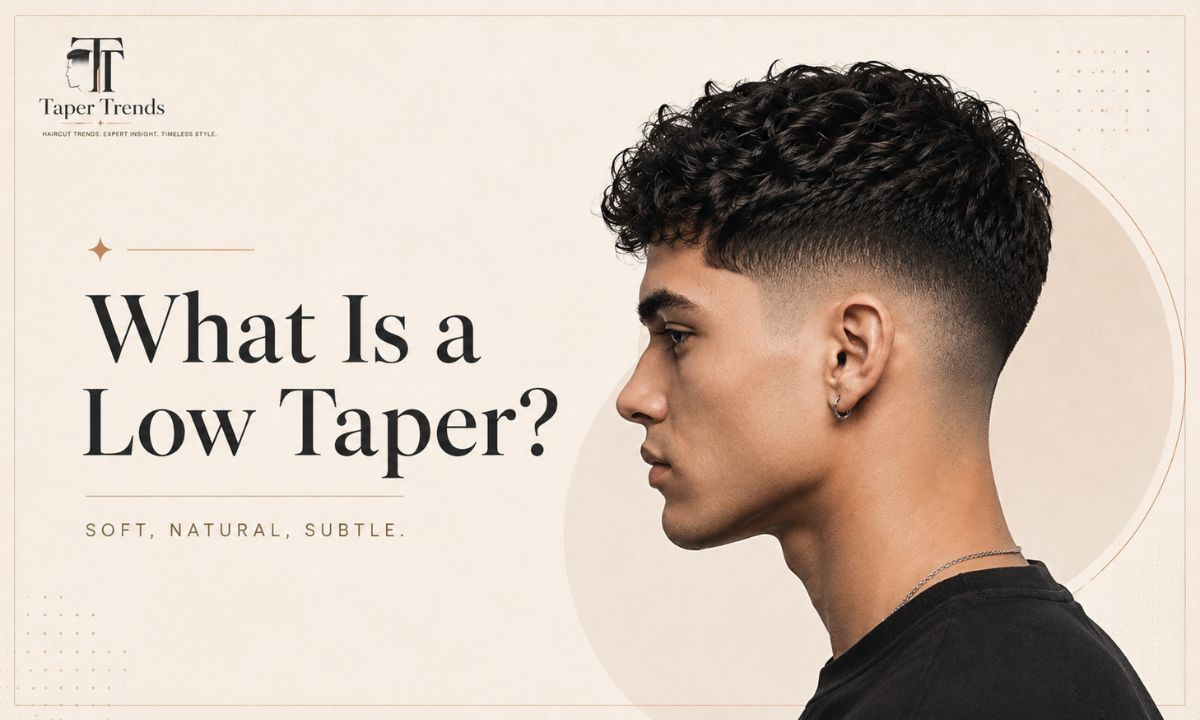
A low taper is one of the most forgiving cuts a barber can give you. It reduces the length around the sideburns and neckline in a smooth gradient instead of a hard line, and it rarely exposes much scalp. The result is neat without announcing itself.
That makes it a safe pick for almost any setting: work, school, a wedding, or a normal weekend. It also grows out gracefully. Because there is no sharp line to lose, the cut just gets slightly longer rather than looking ragged, so you are not booking a barber every couple of weeks to keep it presentable.
If you want something refined and easy that does not lean on heavy contrast, the low taper is hard to beat. If you're still picturing the shape, our guide on what a low taper fade looks like breaks it down from every angle.
What is a low fade?
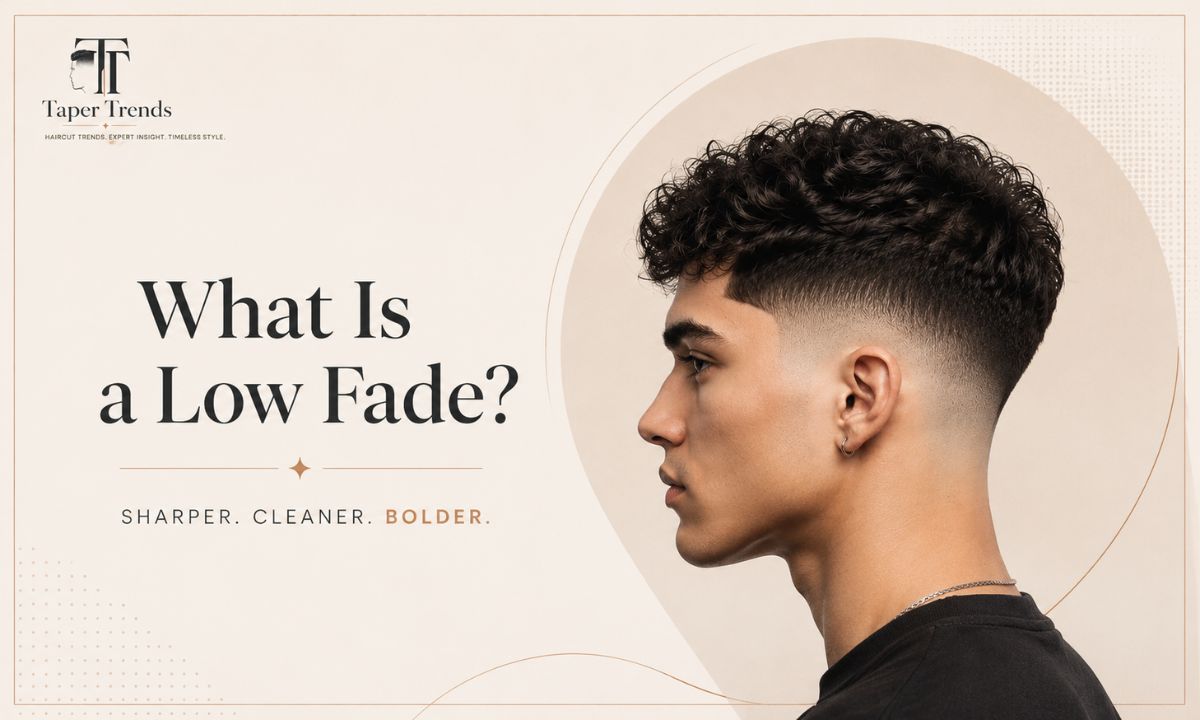
A low fade also starts around the ears and neckline, but it blends from longer hair on top down to very short or skin level hair at the base. That gradual but obvious drop in length is what defines any fade, and on a low fade it happens in a tight zone close to the bottom of the head.
The payoff is a cleaner, sharper finish than a taper, with clear separation between the top and the sides. It pairs especially well with styles that carry weight and texture up top, like a textured crop, curls, a quiff, or a deliberately messy top, where crisp sides make the shape pop.
The trade-off is upkeep. Because the contrast is so visible, a week or two of growth softens the lines. If you are happy to maintain it, a low fade gives you about the sharpest result a barber can deliver.
Low taper vs low fade at a glance
The pattern is simple. A taper is built around blending, a fade around contrast. Here is how the two compare on the things that actually matter when you sit down in the chair.
| Feature | Low taper | Low fade |
|---|---|---|
| Starting point | Low, near ears and neckline | Low, near ears and neckline |
| Contrast | Subtle and gradual | Strong and visible |
| Skin exposure | Little to none | Often down to skin |
| Overall look | Soft, natural, understated | Clean, sharp, defined |
| Best for | Office, school, formal, everyday | Modern, textured, statement looks |
| Grow-out | Stays neat as it grows | Loses sharpness quickly |
| Maintenance | Lower, lasts longer | Higher, frequent touch-ups |
A practical example: if you have a standing Monday meeting and cannot always get to the barber, a taper holds its shape longer. If you already book a fresh cut every two or three weeks anyway, the fade will reward you for it.
Which one looks more natural, and where each works best
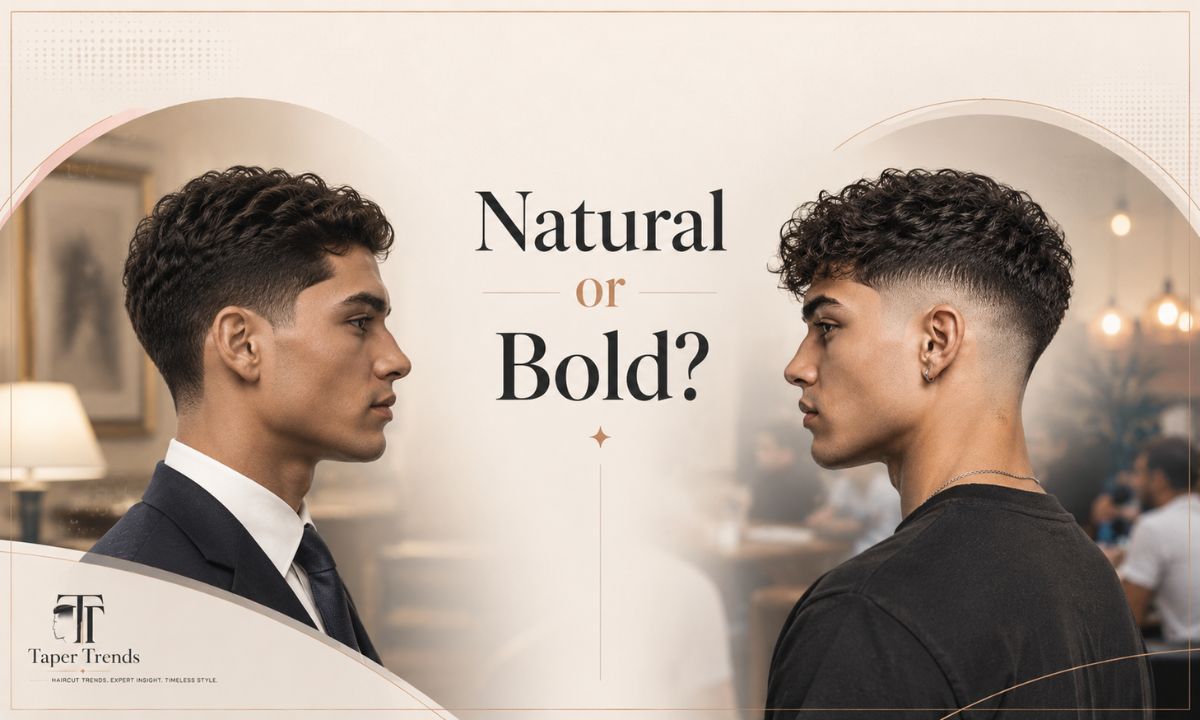
If a natural look is the goal, the taper wins almost every time. It follows the way hair grows, softening toward the sideburns instead of cutting a visible line into the side of your head. A fade does the opposite on purpose. The sharper it is, the more obvious the outline, which is exactly why people choose it.
Setting matters here too. For conservative workplaces, a taper is the safer call. It reads as polished without looking styled or trend led, which tends to sit better with formal grooming expectations. School is similar, where a taper looks appropriate across everything from class to a ceremony.
For casual and social settings, a fade earns its keep. Paired with a textured top, those sharp sides give you a finished, current look that a taper cannot quite match. For formal events like weddings or interviews, a fresh taper is tough to beat — it looks intentional without looking like you tried too hard. The short version: taper when you want to blend in, fade when you want to stand out.
Choosing based on your face shape
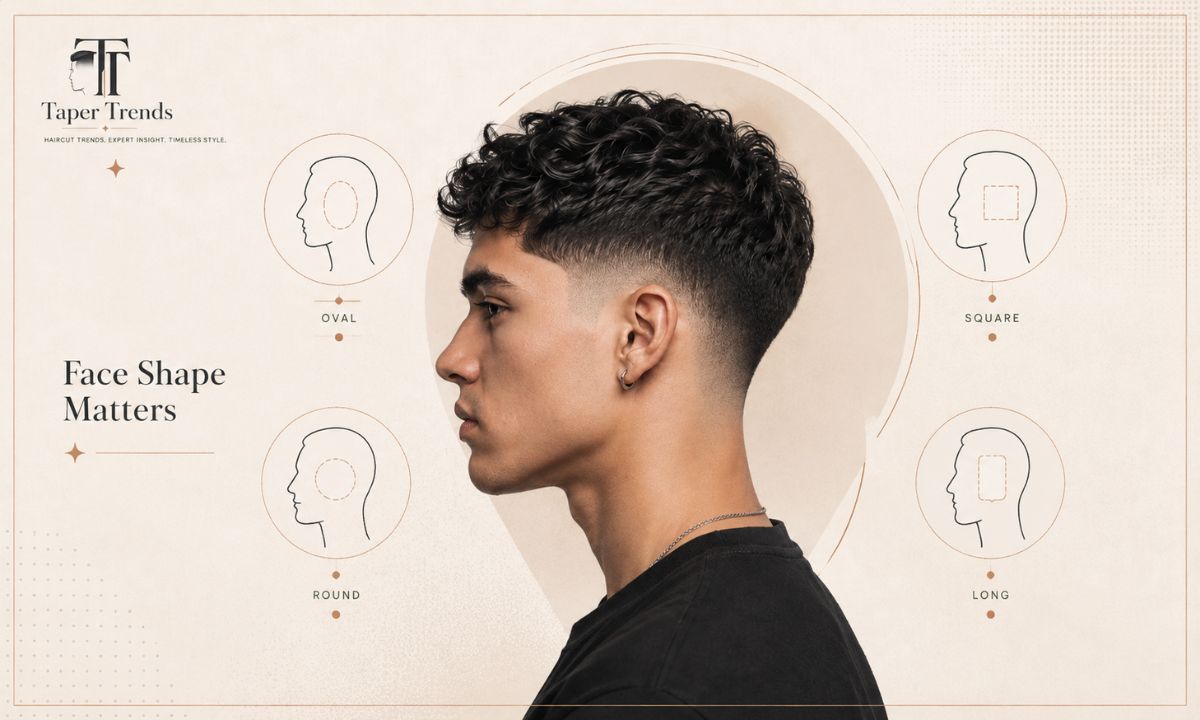
Face shape is worth a thought, but treat it as a guide, not a rule. Your barber's skill, your hair density, and what you keep on top all matter just as much.
- RoundA fade can add welcome definition, since the contrast at the sides makes the face look a little longer and more angular. A taper works too, especially with some height or volume up top.
- OvalThe most flexible shape. Both cuts suit it, so choose on looks alone.
- SquareA taper tends to flatter it, because the soft blend does not pile extra sharpness onto an already strong jaw. A fade can work with a softer, textured top to balance things out.
- Long / oblongA taper is usually kinder here. Subtle sides avoid stretching the silhouette further, and a shorter, fuller top helps.
- Heart-shapedWider at the forehead, narrower at the chin, so either can work. A taper keeps things balanced, while a fade with volume on top can emphasize the forehead width — talk it through first.
The reliable move, whatever your shape: bring a photo and name your concern. A good barber adjusts the height and blend to suit you.
Choosing based on your hair type
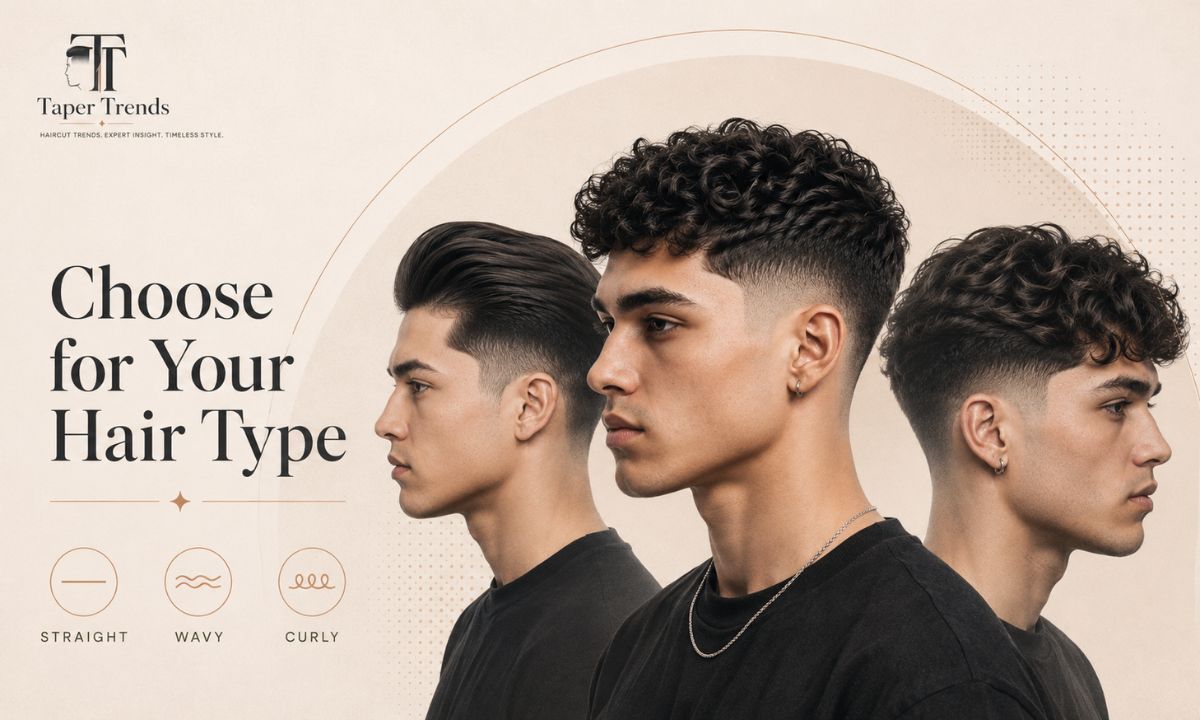
Both cuts work on most hair, but texture and density change how they land.
- StraightShows structure clearly, so both look clean. A fade shows off its lines especially well, while a taper gives a smooth, even finish.
- WavySuits either. Its natural movement makes a taper look effortless, and a fade under a textured wavy top gives the strong contrast a lot of people are after.
- CurlyLeans toward the fade for many people, because a clean faded base frames the curls and sharpens the overall shape — one of the most requested looks lately.
- Coily / texturedResponds really well to a fade, which carves a crisp outline and brings out the texture. A taper works, but the blend can be harder to see given the density.
- ThickHolds either shape with no trouble, and a fade looks bold on it because the contrast is so clear.
- Fine / thinOften does better with a taper. A heavy fade can leave the sides looking sparse, while a softer taper keeps the appearance of fullness.
Short version: a taper looks natural across the widest range of hair types, and a fade adds the sharpest definition, especially on curly, coily, and thick hair. If you have straight hair, our low taper fade guide for straight hair goes deeper on top styles and products.
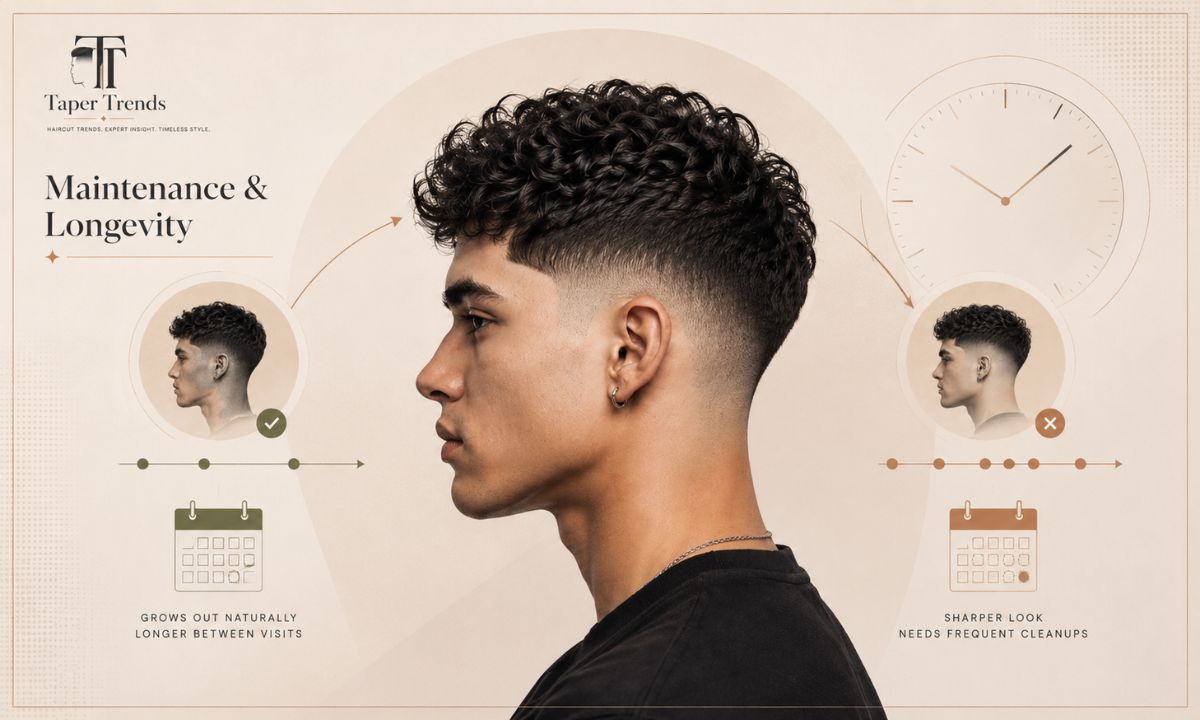
Maintenance and how long each lasts
This is the most practical question before you commit: how often will you be back in the chair?
A taper is forgiving. Because the blend is soft, it grows out looking longer rather than messy, and most people can stretch three to five weeks between visits before it looks overgrown.
A fade asks for more. The same sharpness that makes it look so good is the first thing to go as the hair fills in around the fade zone. Depending on how fast you grow, that can mean a touch-up every two to three weeks to keep the outline crisp.
It is even more demanding with a skin fade, taken all the way down to bare skin. Skin fades look striking when fresh, but new growth shows within days and the shape goes faster than almost anything else. A shadow fade, which stops just short of skin, lasts a little longer but still needs more attention than a taper. If your schedule is busy or barber visits are irregular, the taper is the practical pick.
Pairing with popular styles on top
The sides are only half the picture. What you keep on top decides a lot.
- Textured cropWorks with both, but a fade gives it a sharper, more modern frame. The contrast between cropped, textured hair and clean sides is one of the most popular combinations going right now.
- Buzz cutA taper keeps it uniform and understated. Go with a fade if you want stronger definition at the base.
- Curly topUsually a fade. The defined sides set off the volume in a way a softer taper sometimes does not match.
- FringeA taper keeps a fringe classic and uncluttered. A fade works too, especially with a textured or side-swept fringe.
- QuiffHigh contrast by nature, so a fade supports the volume nicely. A taper gives you a softer, more vintage version.
- Comb overA taper suits its traditional, refined feel, while a fade pushes it more contemporary.
- Middle partEither works. A taper keeps it relaxed, and a fade adds structure to a cleaner part.
- Messy topA fade is the standout here. Sharp sides against a loose, tousled top give you that balanced, intentional look.
Two of these have their own deep dives: the textured fringe with low taper fade and the middle part low taper fade, if you want to see how each pairs with a soft, low blend.
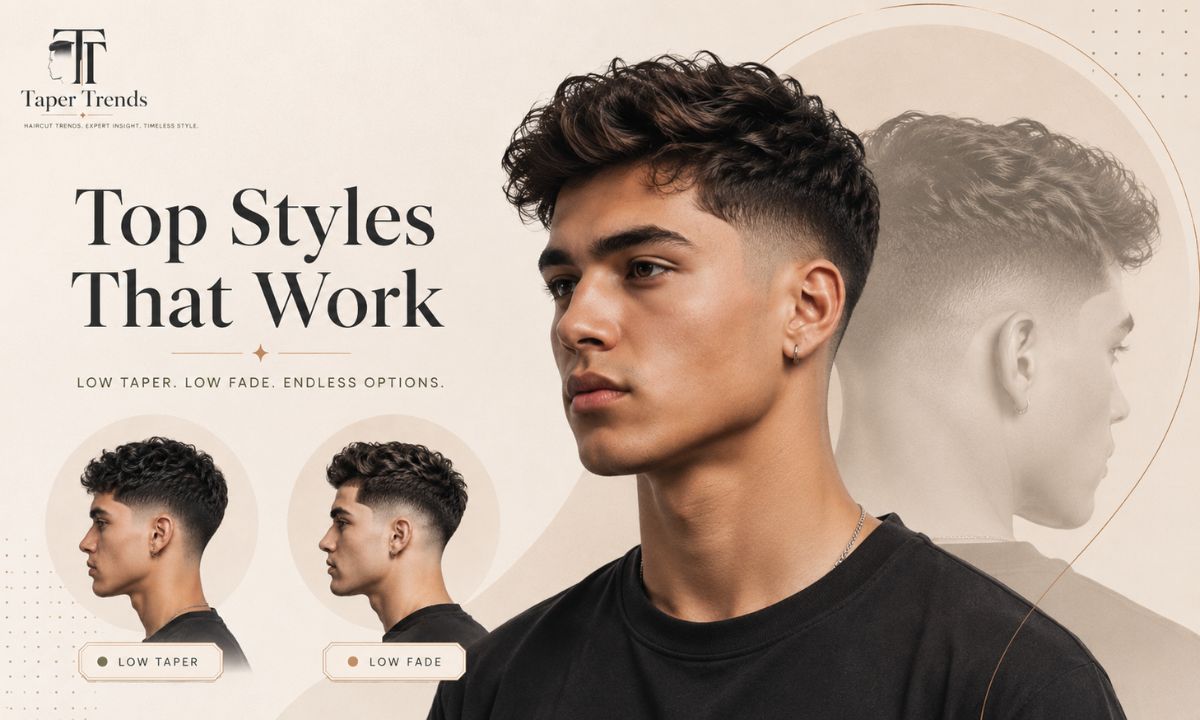
How to ask your barber
Walking in knowing what you want is half the job. A few specific words go a long way.
- Name the technique firstTell your barber whether you want a taper or a fade. These are different methods, and the distinction matters.
- Say how lowBoth can start at different heights, so for a low version, ask for the blend to stay down near the ears and neckline rather than climbing up the sides.
- Pin down the finishDo you want it down to skin, to a close shadow, or a soft blend that leaves no scalp showing? That one detail changes the whole result.
- Talk neckline and sideburnsSome people want the back tapered naturally into the neck, others want a squared or rounded outline. Say which.
- Mention the topWhether you're growing it out, keeping a length, or restyling, the top and sides have to work together.
And a few lines that work in the chair:
“Low taper around the sideburns and neckline, just a soft, natural blend.”
“Low fade starting just above the ears, taken down to a shadow.”
“Tapered into the neck at the back, nothing too sharp.”
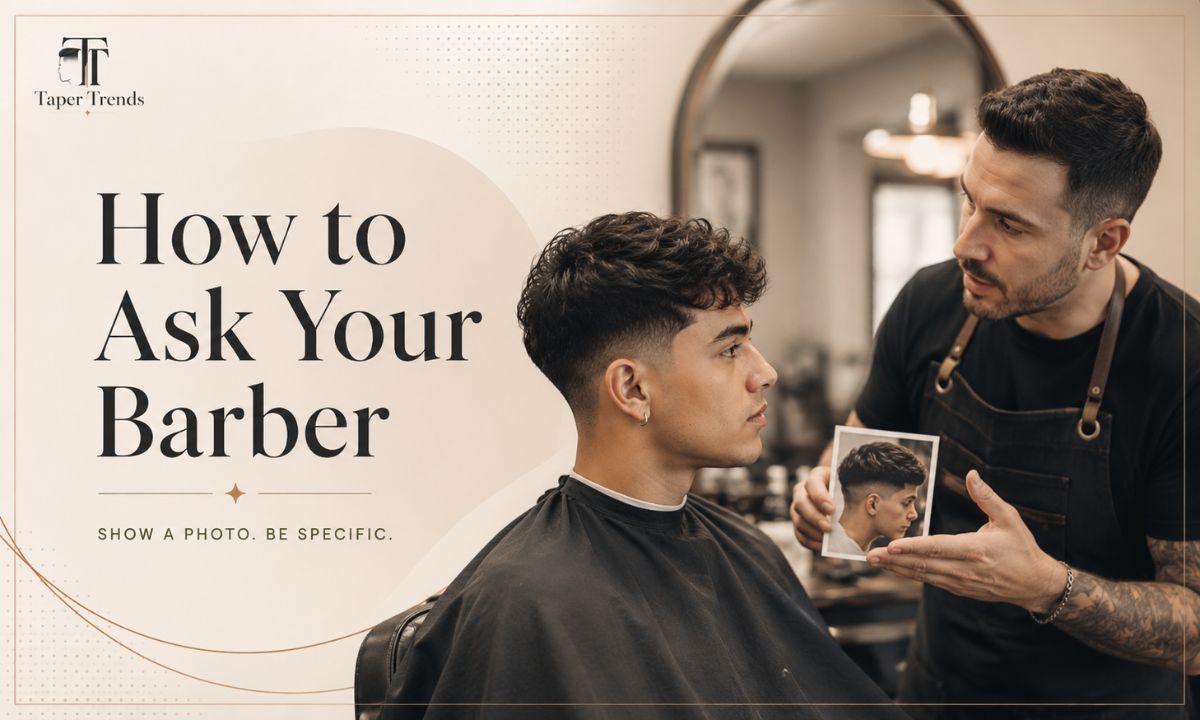
Bring a photo, too. Even experienced barbers like one, because it removes the guesswork.
So, which should you choose?
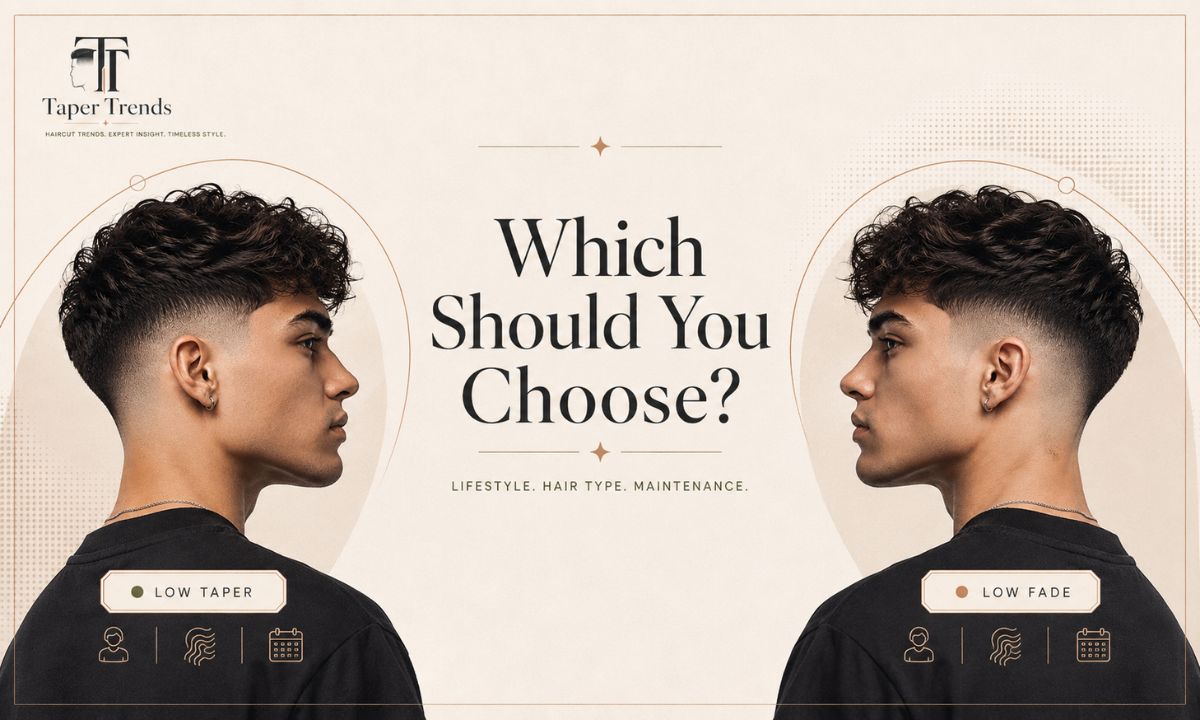
Both are great cuts. The right one is about you.
Lean low taper if
- You want a subtle, natural finish
- Your workplace or school expects conservative grooming
- You prefer a classic look over a trend-driven one
- You'd rather not visit the barber every two to three weeks
- You have fine or thin hair and want to avoid exposing the scalp
- You're new to tapers and fades and want a versatile start
Lean low fade if
- You want a sharper, more defined look
- You like modern, sharp styles
- You wear textured, curly, or high-volume hair on top
- You're happy to keep it up with regular visits
- You want strong contrast between the top and the sides
Your routine, your workplace, your face shape, and your hair type all feed into it. There is no universal winner. A taper is not better than a fade, and a fade is not better than a taper. They are different tools for different looks. If you are stuck, describe your lifestyle to your barber, show a photo, and let them make the call.
Conclusion
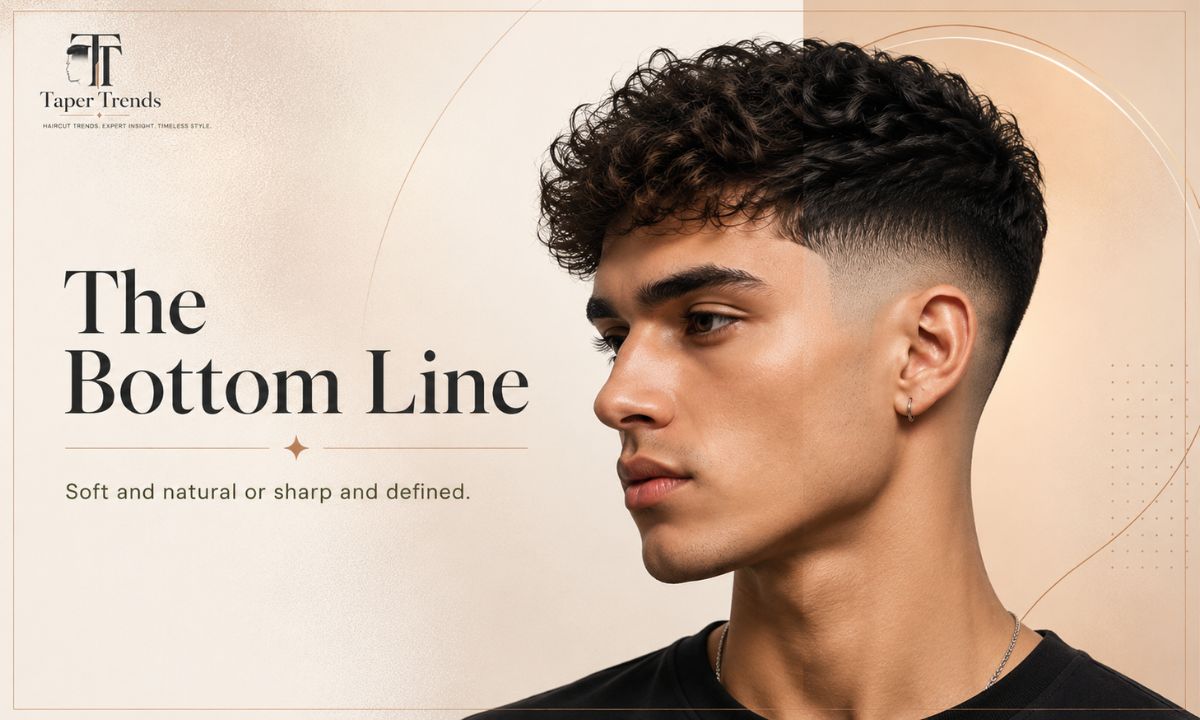
The whole decision comes down to one question: do you want a soft, natural blend or a sharp, defined edge? A taper suits people who want something understated and low maintenance that travels across settings. A fade suits people who want a bolder, modern look and do not mind the upkeep.
Know your routine, factor in your hair type, and tell your barber clearly. Either way, you are in good hands.
FAQs about low taper vs low fade
Is a low taper better than a low fade?
Neither is objectively better. A taper wins if you want a subtle look with less maintenance. A fade wins if you want sharper contrast and a more modern finish. It comes down to your routine, your hair type, and how often you get to the barber.
Does a low fade show more skin than a low taper?
Usually, yes. A low fade often brings the hair down to very short or skin level near the ears and neckline, so more scalp shows at the base. A taper normally stops short of bare skin for a softer, more covered finish. If you'd rather not show much scalp, go with the taper.
Which lasts longer between barber visits?
The taper. Its gradual blend grows out looking natural rather than untidy, so it can hold for up to five weeks or more. A fade, especially a skin fade, loses its definition faster, and most people need a touch-up every two to three weeks.
What should I say if I'm not sure which I want?
Be honest about that. Show a photo of a look you like and say how much contrast you want, soft and subtle or clean and sharp. A good barber will ask the right questions and suggest what suits your face shape, hair type, and routine. You can also ask them to start conservative and go shorter if needed.
Want more taper fade guides?
Browse clean, barber-ready breakdowns for every hair type.