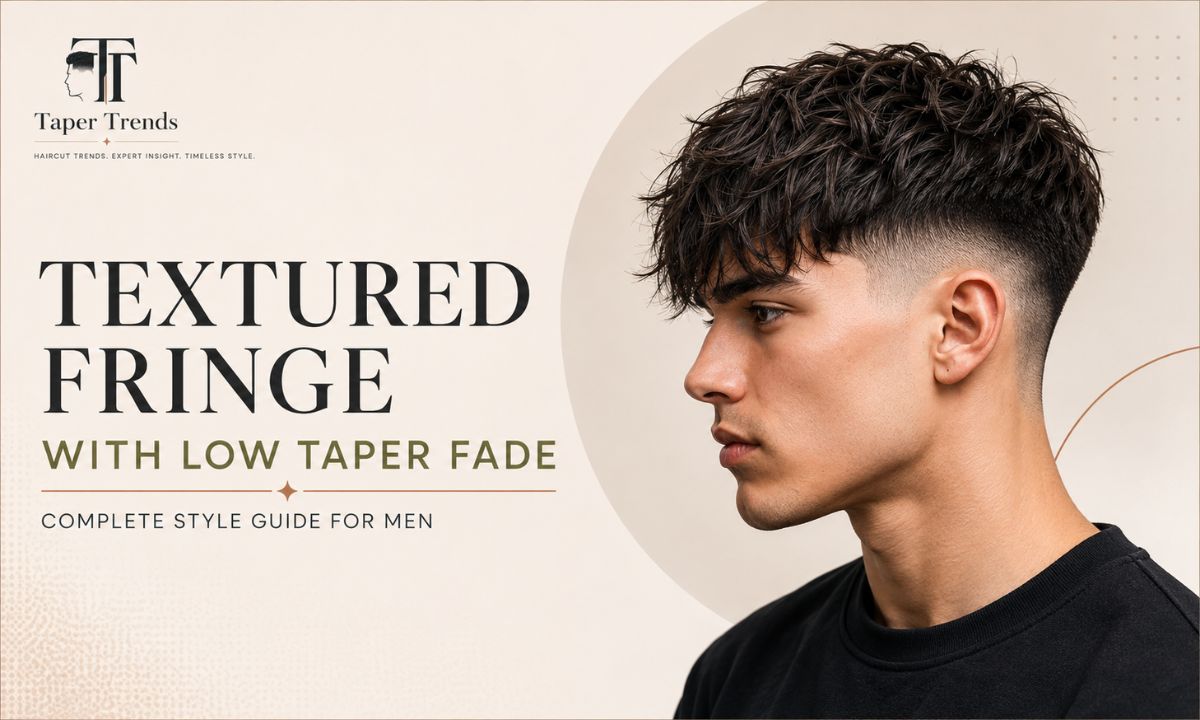
The textured fringe with low taper fade is everywhere right now. Scroll through any barber's feed and you'll see the same shape: loose, slightly messy hair on top, clean sides that fade gently into the skin near the ears. It looks deliberate without looking fussy, and in 2026 it's become one of the most requested men's cuts across every age group.
The appeal is balance. The top carries the personality, while the sides stay tidy without going extreme. This guide covers what it is, who it suits, how to ask for it, and how to keep it sharp at home.
What a textured fringe with low taper fade actually is
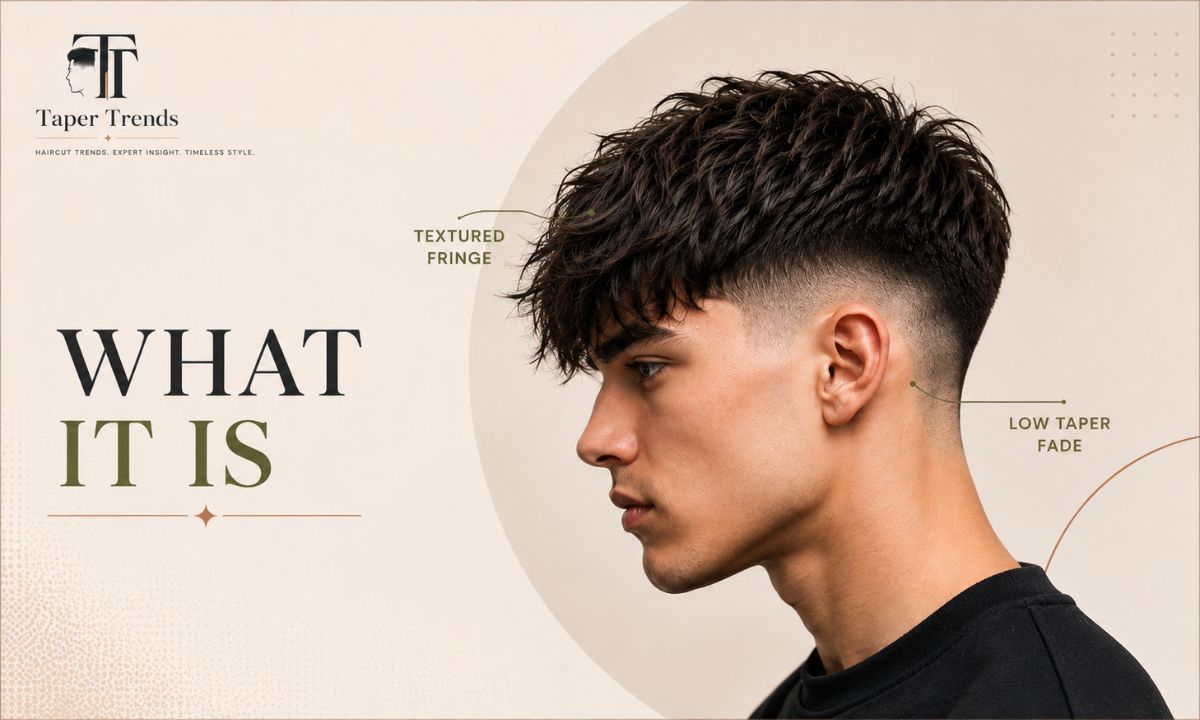
The textured fringe is the hair on top, specifically the section that falls forward toward your forehead. “Textured” means it's cut and styled to have movement and a slightly uneven, natural finish rather than lying flat or slicked back. Barbers create this with point cutting, razoring, or texturizing shears, removing weight so the hair sits loose and a little tousled. The fringe falls forward instead of sweeping fully to one side, which gives the cut its casual, modern feel.
The low taper fade is what happens at the sides and back. A taper means the hair gets gradually shorter as it drops toward the neckline. “Low” tells you the fade starts close to the ear and neckline rather than partway up the head, which keeps the transition subtle. The result is clean and sharp without the hard contrast of a high or skin fade.
A few related terms get mixed up. A crop is a shorter fringe, usually cut blunt and sitting higher on the forehead. A taper on its own just means a gradual shortening with no skin showing. A fade blends the hair down to the skin, and the “low” label only tells you how far up the blend begins.
Why the cut is everywhere in 2026
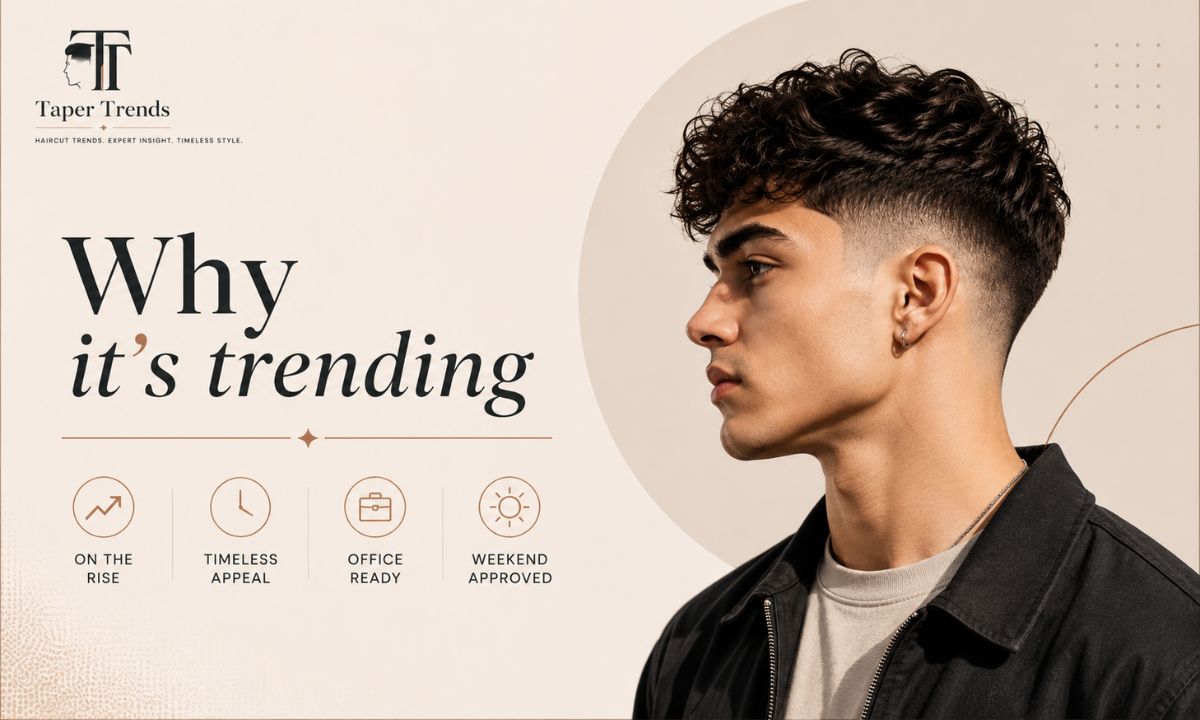
Men's grooming has moved away from heavy, product-loaded looks. The gelled spikes and wet-look styles of past decades feel dated, and the shift this year is toward cuts that look intentional but natural. Matte finishes are beating high shine, and soft, blended fades are replacing razor-sharp lines. This cut sits right in the middle of that.
It's also low effort. A small amount of matte clay or light cream, a quick rough-up with your fingers, and you're done. No precise styling, no heavy product.
The low taper helps too. High skin fades look sharp but blur within a couple of weeks. A low taper holds its shape longer, so you're not back in the chair every fortnight. And it goes anywhere, from lectures to the office to a weekend event. Relaxed but groomed is a hard balance to strike, and this cut manages it.
Who it suits
This is one of the more forgiving men's cuts, but it still fits some people better than others.
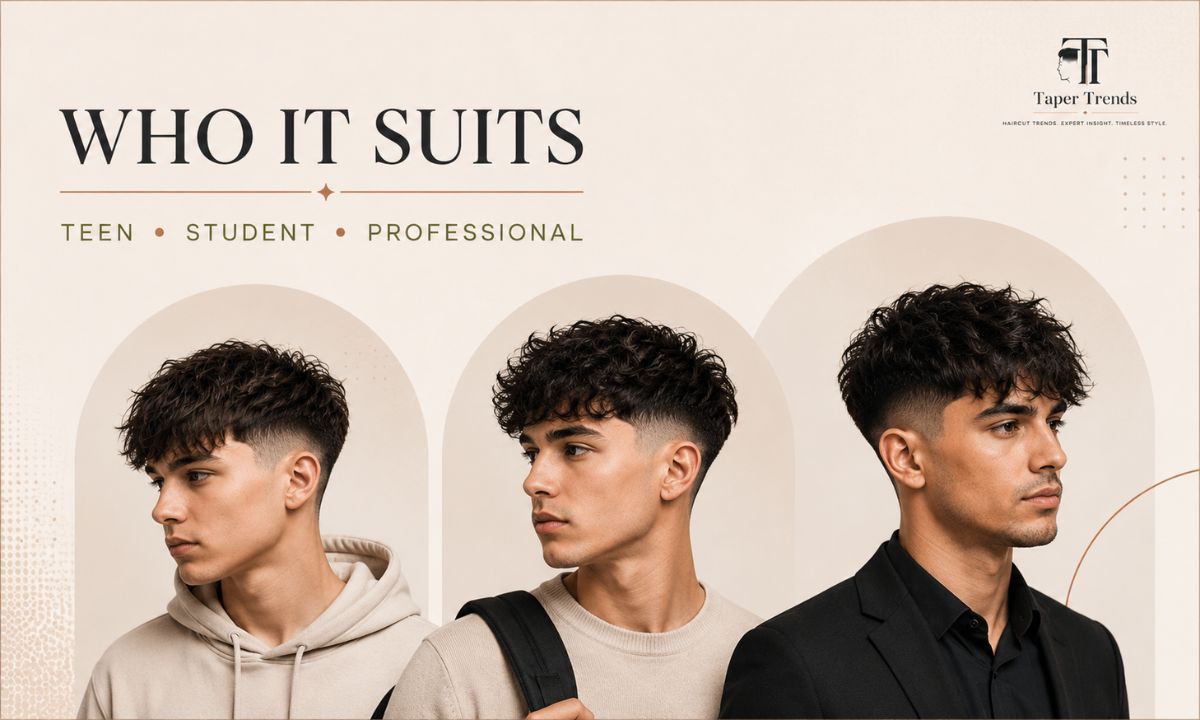
It's a strong pick if you want a modern look without a strict daily routine, you prefer volume on top with slim sides, or you're wary of very short fades that expose a lot of skin. It also covers teenagers, students, and working professionals who want one cut for most situations.
You might need barber input if your hair is very tightly coiled, since the fringe behaves differently on coily hair and may need a modified version. Very fine or thin hair also calls for a lighter touch, because too much layering leaves it flat instead of full.
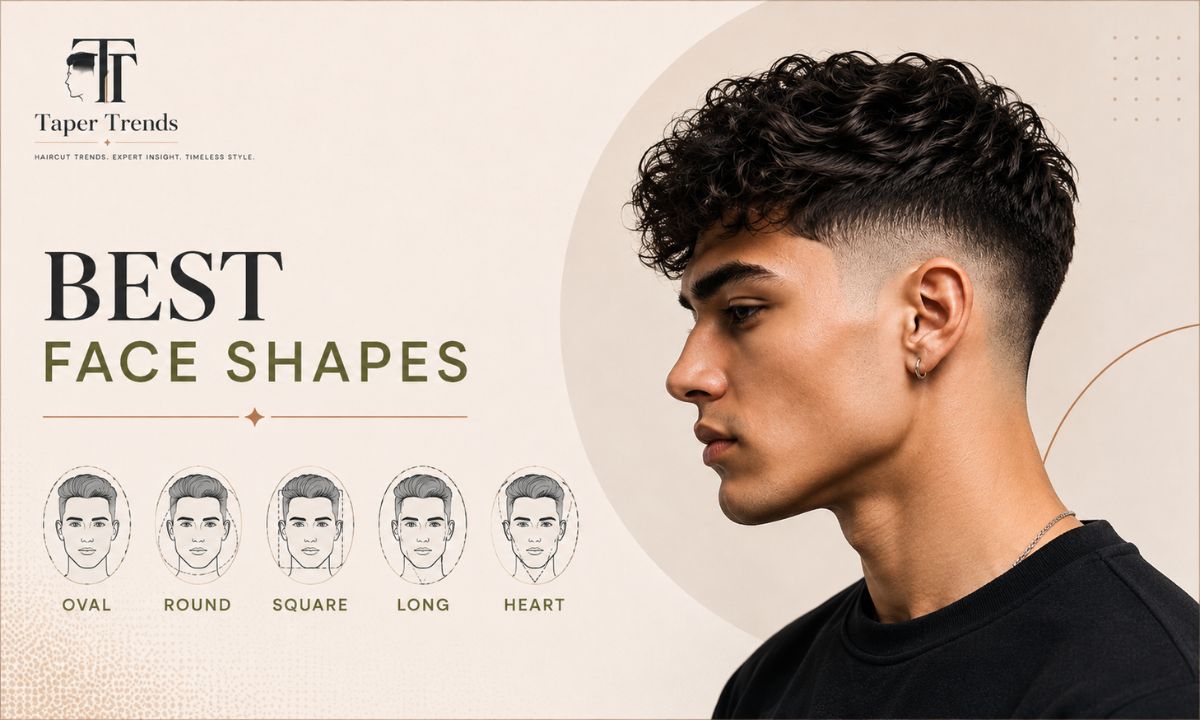
Best face shapes
Small tweaks to fringe length, top volume, and taper height shift the whole look, which is why it flatters nearly every face shape.
- OvalThe most room to play. The proportions are already balanced, so short, medium, or longer and messier all work.
- RoundKeep the fringe a little longer with some root volume for vertical lift; avoid cutting it too short or flat. The slim low taper sides are a real advantage.
- SquareThe clean low taper plays off a strong jaw. Go for a softer, relaxed fringe rather than a blunt one; drop the taper lower if your jaw is very wide.
- Long / oblongWidth, not height. Keep the fringe medium length, skip the extra top volume, and let it sit more horizontally; blend the taper a touch higher for fullness.
- HeartWider forehead, narrower chin. A fringe worn forward draws the eye down; keep the sides clean, the taper low, and the crown free of heavy volume.
Best hair types
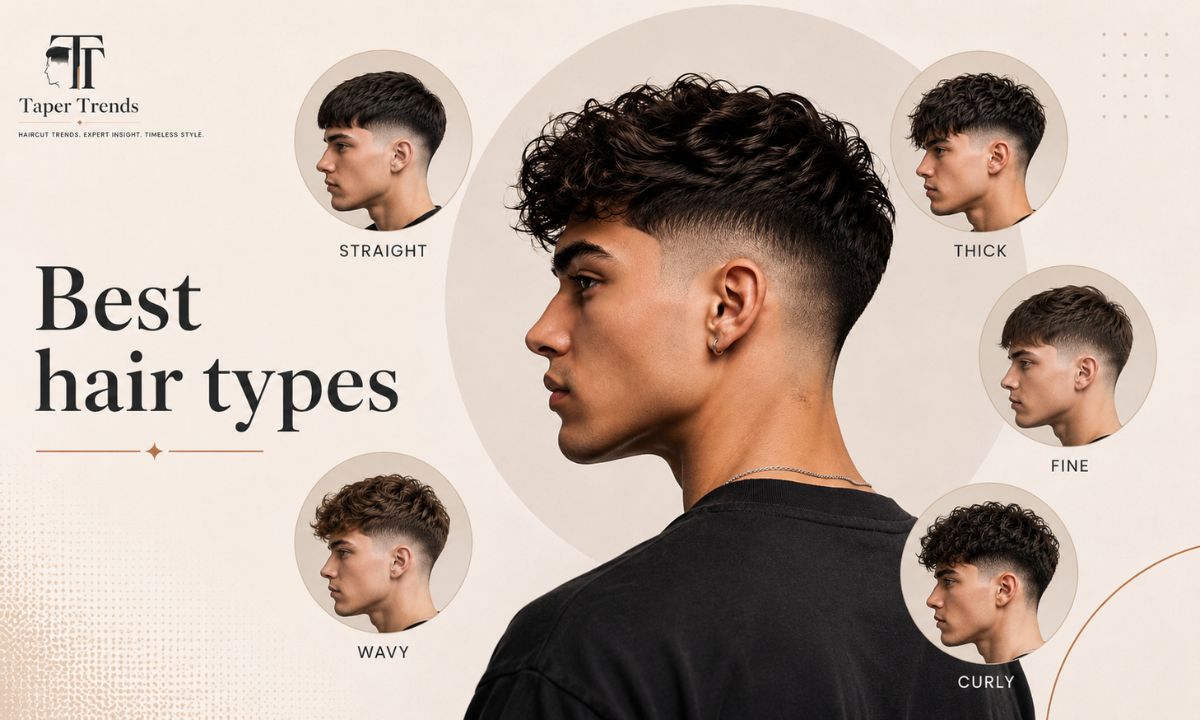
The textured top works across most hair types, but the technique changes with each.
Straight hair
Straight hair takes texturizing cleanly. Point cutting and light razor work remove weight, and the fringe falls in a natural, slightly uneven way.
Wavy hair
Wavy hair is arguably the easiest match. The wave adds movement on its own, so the barber mainly manages length and removes bulk so the waves don't bunch up. It tends to hold the shape all day with barely any product.
Thick hair
Thick hair looks especially full with this cut. The main job is thinning the bulk so the fringe doesn't sit heavy or stiff, usually with texturizing shears through the top.
Fine or thin hair
Fine or thin hair needs a careful hand. Over-texturizing makes it look flatter, not fuller, so a good barber keeps it light. Hold the fringe at a styling length that fakes volume without going so short it lies flat. A light sea salt spray or mousse at the roots before drying helps lift it.
Curly hair
Curly hair carries the fringe well, but curls shrink as they dry, so the barber should cut slightly longer than the target length to compensate. The texture takes care of itself; the trick is controlling it, so find someone who cuts curly hair dry, or at least checks it dry before finishing.
The main variations
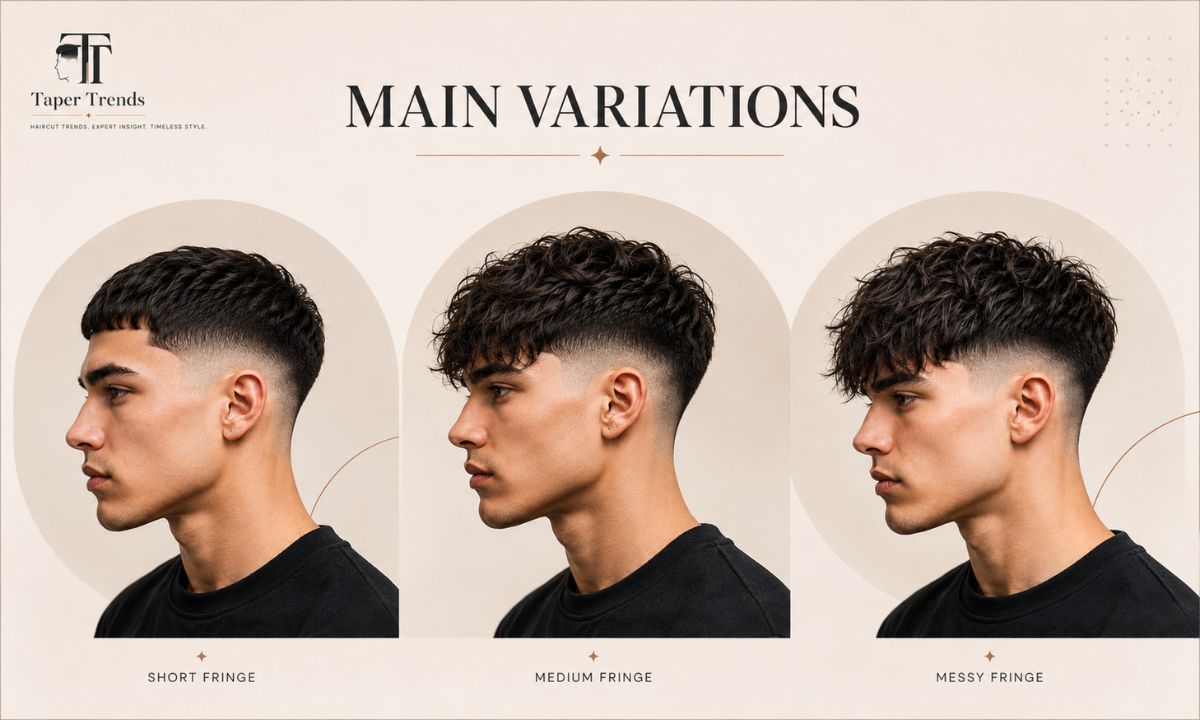
There's no single version of this cut. Length on top, fringe angle, and how much skin shows at the sides all change the feel.
- ShortFringe kept close, around 1.5–2.5 cm, with subtle texture. The lowest-maintenance option, good for warm climates or active routines.
- MediumRoughly 3–5 cm on top — the one most people picture. Enough length to fall forward with real movement, suiting the widest range of faces and hair types.
- MessyThe same cut worn longer and more deliberately undone, falling unevenly across the forehead. Work a little texture clay through with your fingers. The off-duty look.
- Blunt fringeCut with a straighter front edge before being texturized through the top, for a more structured shape that still reads modern. Sits cleanest on straight hair.
- Skin low taperFades all the way to the skin at the neckline and ear instead of leaving a little hair, sharpening the contrast while the top stays relaxed.
How to ask your barber
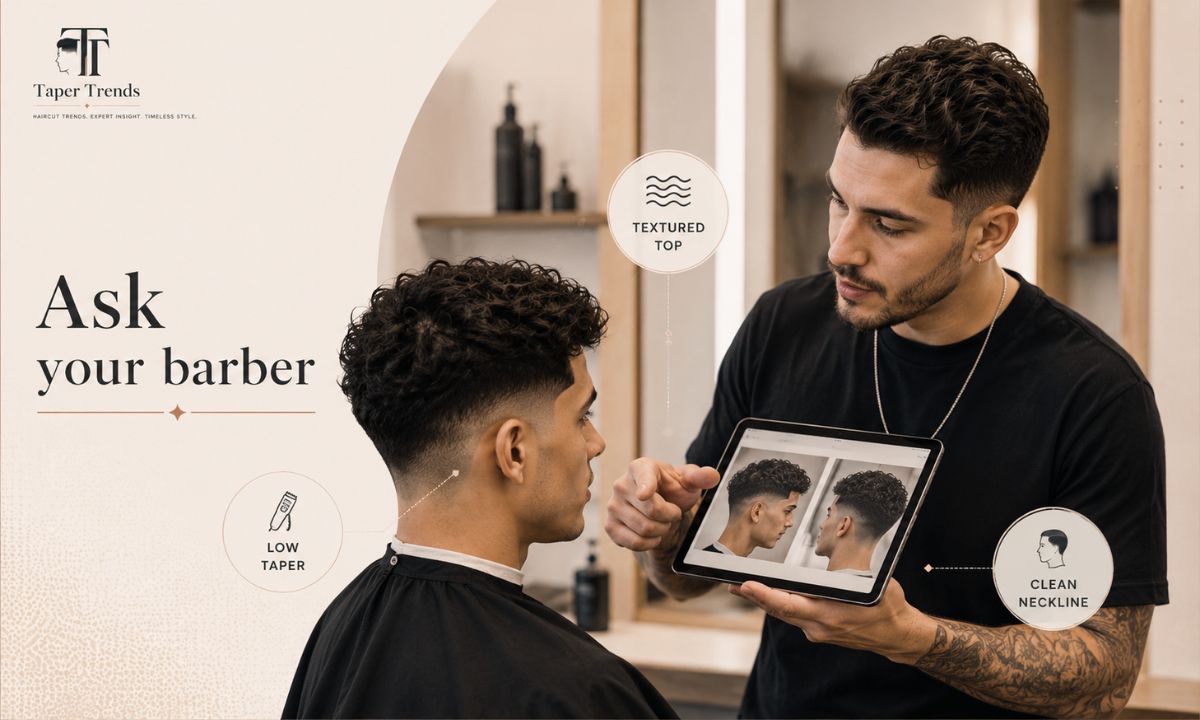
A clear brief beats walking in and hoping.
Start with the top. Say how long you want the fringe, and be specific. “Enough length to fall forward naturally” tells a barber more than “medium.” If you have a reference photo, use it, but talk through what you like about it too: the length, how it falls, how heavy the texture is.
Then the sides. Ask for a low taper, meaning the fade starts close to the ear and neckline, not partway up. If you want skin at the neckline, say so. If you'd rather keep some hair, say you want it tapered but not faded to the skin.
Ask for texture specifically. Plenty of men ask for a “textured cut” and walk out with thinned-out hair that's lost its body. What you want is point cutting through the top to remove weight and create movement, not thinning. Use those words.
“Textured fringe on top with a low taper fade around the ears and neckline. Keep the fringe natural, not too blunt, with enough texture to fall forward. Point cut the top to remove weight rather than thinning it.”
Skip the vague stuff like “a bit shorter on the sides” or “keep it natural on top.” It leaves too much to interpretation — the line above is one you can borrow word for word.
How to style it at home
This cut was built to be easy. You're encouraging the hair, not forcing it.
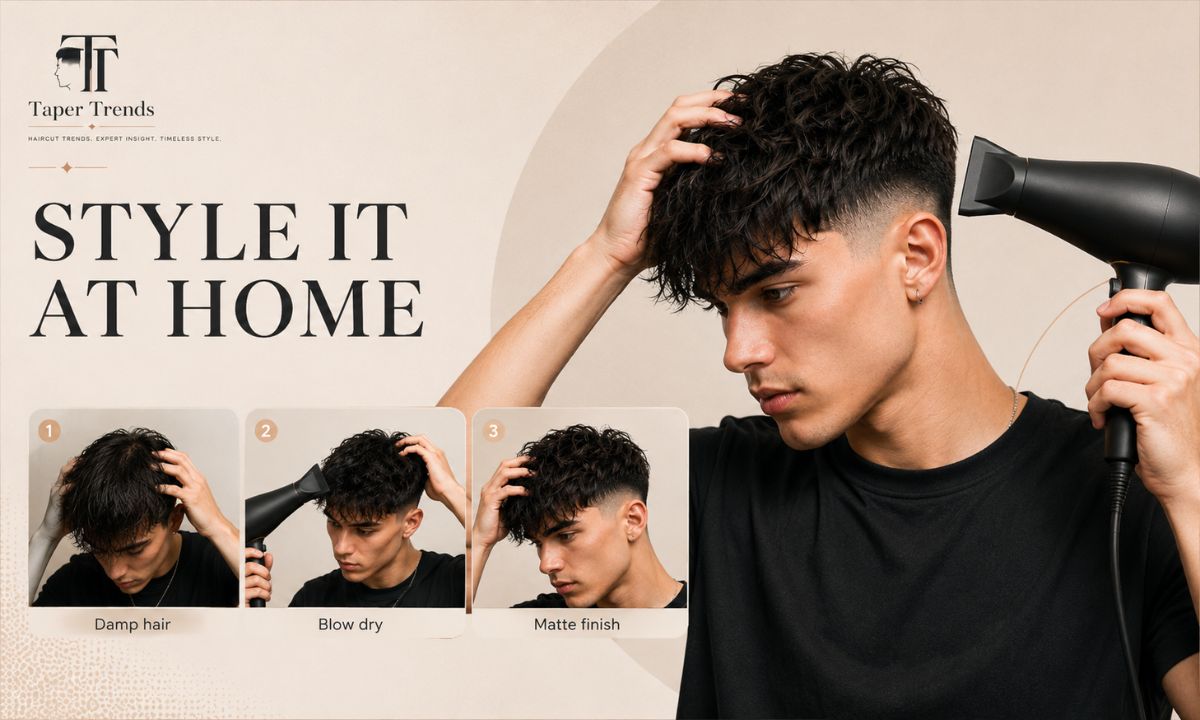
Start with slightly damp hair. Bone-dry hair goes stiff or frizzy when you add product, so towel-dry until damp or mist it with a spray bottle first. You want a little moisture, not dripping wet.
Use less product than you think. Start with a pea-sized amount, warm it between your palms, and work it through. You can always add more, but too much too early is what creates that stiff, clumped look.
Use your fingers, not a comb. A comb flattens the exact dimension you're trying to keep. Push the fringe forward and slightly to one side, or straight down, whichever way your hair naturally falls, and scrunch lightly through the top. If your hair lies flat, lift the roots before the product sets; on fine hair especially, that small change makes the fringe look fuller all day.
Air drying suits wavy and thick hair, which hold shape on their own. For straight or fine hair, sixty seconds with a low-heat dryer while pushing the fringe forward locks in more volume. Keep the heat low; too much dries the product out before it sets. You're aiming for matte, light, and slightly undone. If it looks shiny or sculpted, ease off the product next time.
Best products
You don't need a shelf of products. One or two will do.
- Sea salt sprayThe workhorse for natural texture. Mist onto damp hair before styling for grip, separation, and a rough finish. Great on wavy and straight hair; go easy on fine hair.
- Matte clayThe most versatile finisher — light to medium hold with no shine, exactly what a textured top needs. Thick hair may want a slightly bigger amount.
- Texture powderWorth knowing if your hair falls flat. A small pinch at the roots, worked in with your fingers, adds grip and lift without weight.
- Lightweight creamSoft, flexible hold without crunch — the gentlest option for natural movement with minimal definition, and it works nicely on wavy hair.
Skip heavy gel, wet-look pomade, and anything shiny. They weigh the hair down, look dated, and clump the fringe together instead of separating it.

Maintenance and trim schedule
How long it holds depends on your growth rate, and the top and sides run on different clocks.
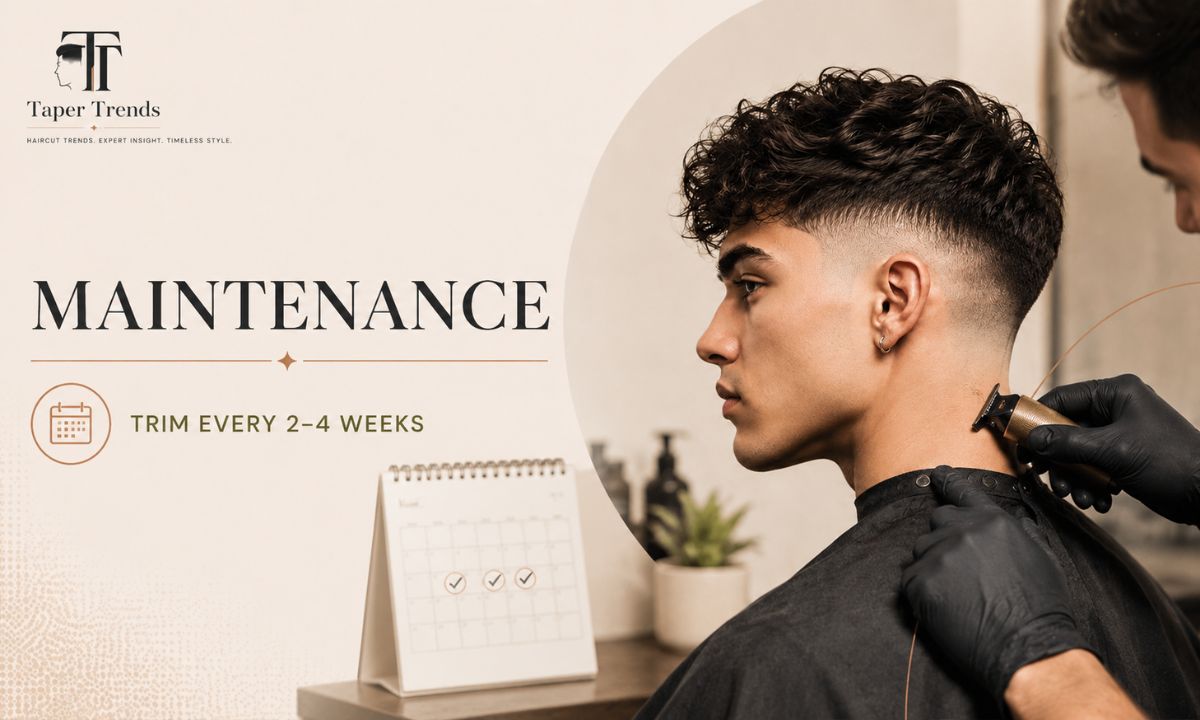
The low taper needs attention every two to four weeks. The faded area near the ear and neckline grows out fast, and within three weeks most people notice the neckline going soft and the graduation blurring. A trim around the three-week mark keeps the sides sharp.
The fringe and top can usually stretch four to six weeks between full trims. The textured top is forgiving, since a little extra length adds to the relaxed look rather than ruining it. Once the fringe hangs into your eyes or loses its shape, it's time for a proper cut rather than a sides cleanup. A home neckline and sideburn tidy with a trimmer between visits stretches how long the whole thing looks sharp.
If the fringe starts feeling heavy or lying flat, the bulk is building back. Ask the barber to point cut through the top and remove weight without losing length. If you're growing it out, ask them to raise the blend point gradually each visit so the sides fill in without a hard line.
Common mistakes to avoid
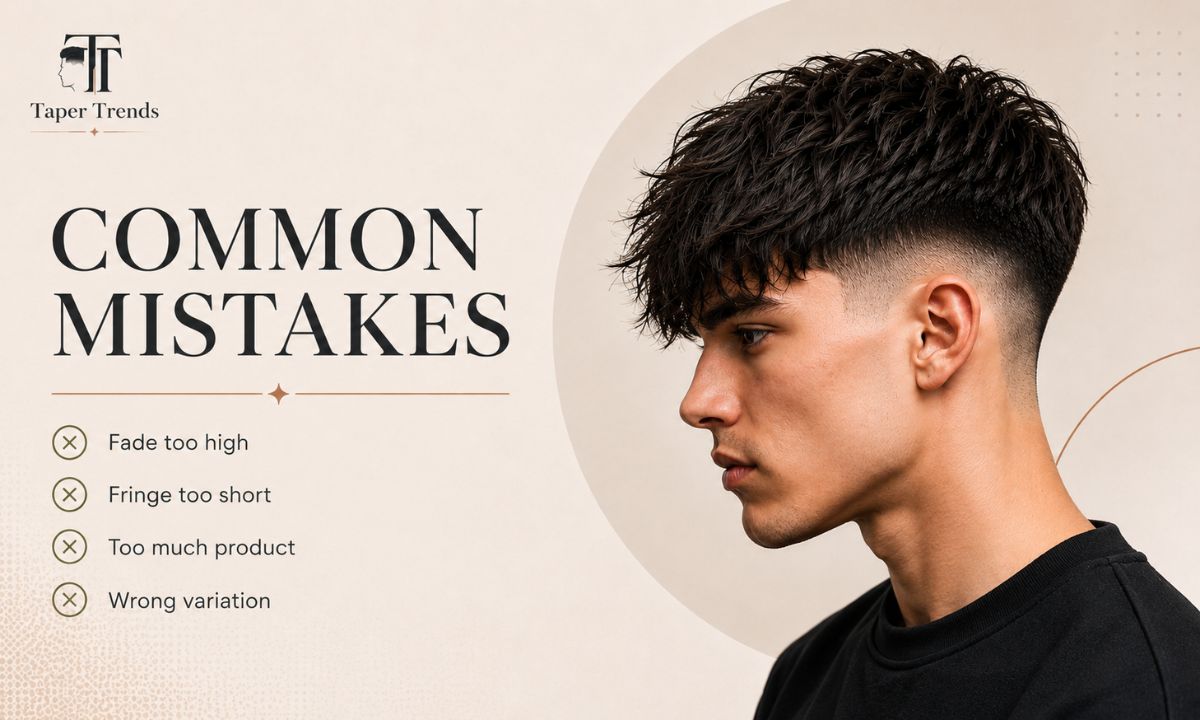
Asking for the fade too high is the big one. Many men confuse a low taper with a mid or high fade, and starting too high changes the whole character of the cut. Say “low” and point to where your ear meets your head.
- Cutting the fringe too short — it needs at least 3 cm to fall forward and move. When in doubt, keep more length and trim it down next time.
- Using too much product, which turns a natural fringe stiff and clumped.
- Flattening the top against your forehead, so it reads as a flat cap instead of a fringe.
- Picking the wrong variation for your hair type, like a blunt fringe on very curly hair or a long messy one on very fine hair.
- Skipping the reference photo — bring one, ideally front and side.
- Pushing past five or six weeks without at least a sides cleanup.
Final thoughts
The textured fringe with low taper fade earns its popularity. It balances relaxed and groomed in a way few cuts manage, suits a wide spread of ages and settings, and adapts across hair types with small adjustments.
Pick your fringe length around your face shape, match your product to your hair type, and stay on top of the taper between visits. Get those three right and you've got one of the easiest good-looking cuts going.
FAQs about the textured fringe with low taper fade
Is a textured fringe with low taper fade good for straight hair?
Yes. Straight hair responds well to point cutting, which gives the fringe its movement and separation. A little matte clay or sea salt spray keeps the finish natural rather than flat.
How long should the fringe be?
Most people land between 3 and 5 cm on top. Around 2 cm works for a more minimal look, while past 5 or 6 cm you're into a longer, messier fringe. Round faces benefit from a touch more length for added height.
How often should I trim a low taper fade?
The taper and neckline usually need a cleanup every two to four weeks, since that area grows fastest. The top can go four to six weeks, and a home neckline tidy in between keeps it sharper for longer.
Is it hard to style every day?
No. On most hair types, a little product worked through damp hair with your fingers takes under two minutes. Looking good without precision styling is the whole point.
Want more taper fade guides?
Browse clean, barber-ready breakdowns for every hair type.