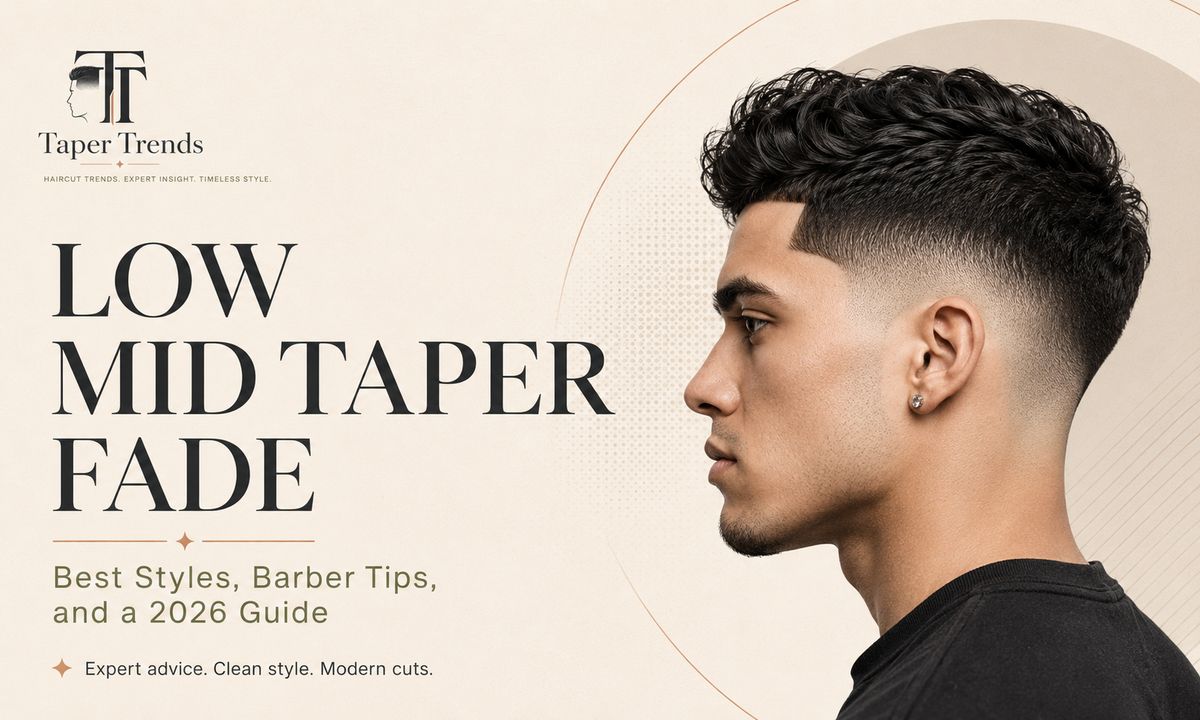
Walk into a busy barbershop and ask what gets booked most. The answer almost always involves a taper fade, and the low mid taper fade sits near the top of that list. It looks clean and structured without demanding a fresh cut every two weeks, and it reads well at the office and on a Saturday — more than you can say for a tight skin fade.
The trouble is that “low fade,” “mid taper,” and “blended cut” get thrown around like they mean the same thing. They don't, and the difference shows up on your head. What follows is a plain breakdown of what the cut is, how it differs from its close relatives, why barbers can't stop reaching for it this year, and which version fits your hair and face. Read it before your next appointment.
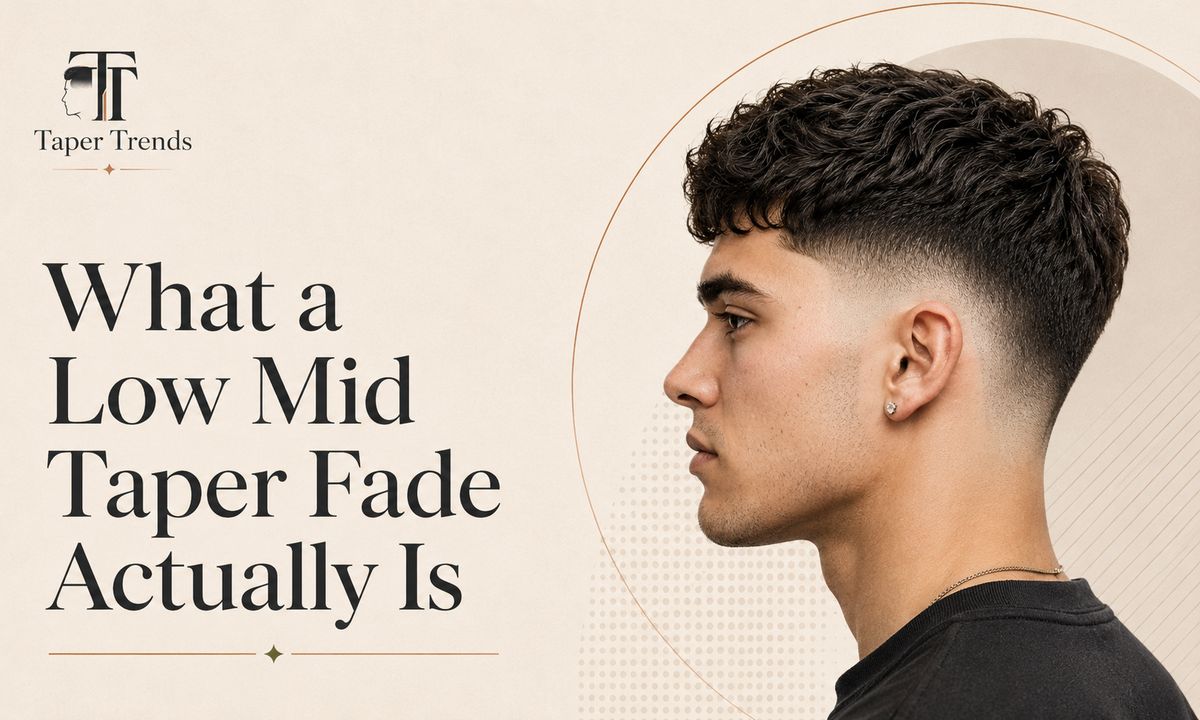
What a low mid taper fade actually is
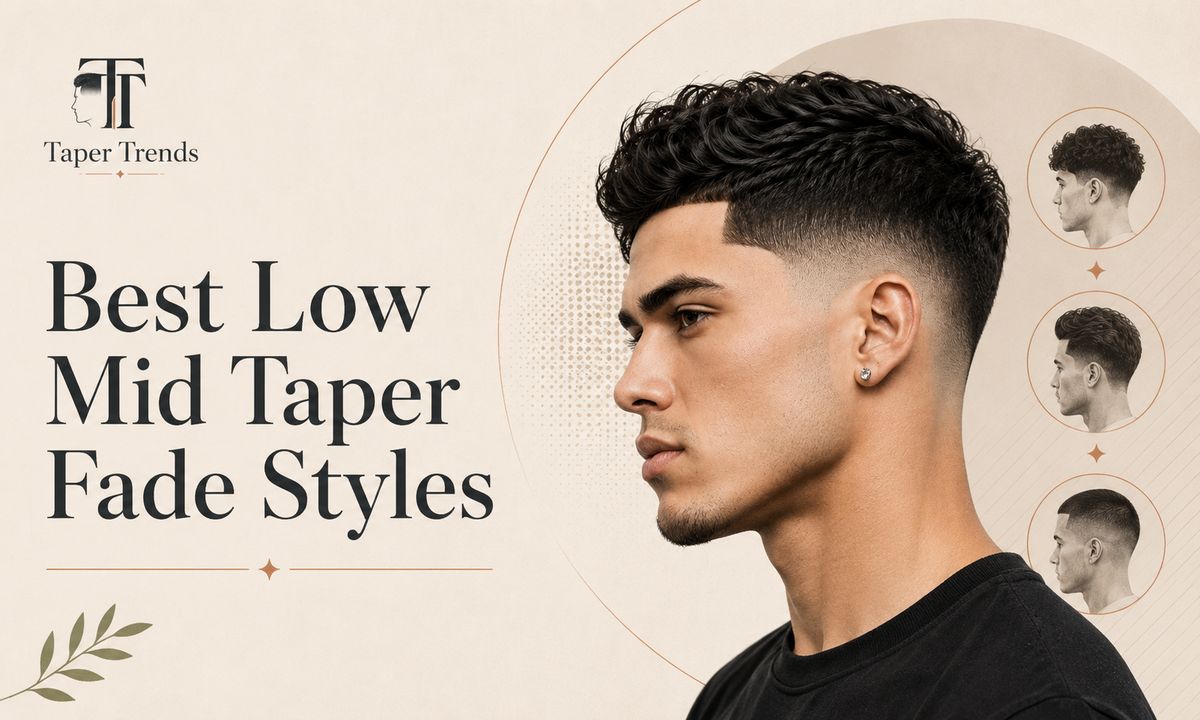
A low mid taper fade is a men's cut where the hair gets gradually shorter from the top down toward the ears and neck. The fade kicks in around the mid-temple on the sides and finishes tight and clean at the sideburns and neckline.
The blend is the whole point. No hard line, no sudden jump between lengths. The barber works through clipper guards in decreasing sizes to build a smooth gradient — the thing most people just call a clean fade. Done right, the hair looks like it simply grows shorter as it travels down your head.
The structure is easy to picture. The top stays at whatever length you want, from a short crop to a textured quiff. The sides start fading around the temple and shorten toward the ear. The neckline and sideburns finish tight, which is what gives the cut its groomed edge. One reason barbers like recommending it: almost any hair type takes it well, and it grows out more gracefully than a high or skin fade. If you want to picture the base shape from every angle first, our guide on what a low taper fade looks like breaks it down, and the complete low taper fade haircuts guide covers every style and hair type in depth.
Low taper vs mid taper vs low mid
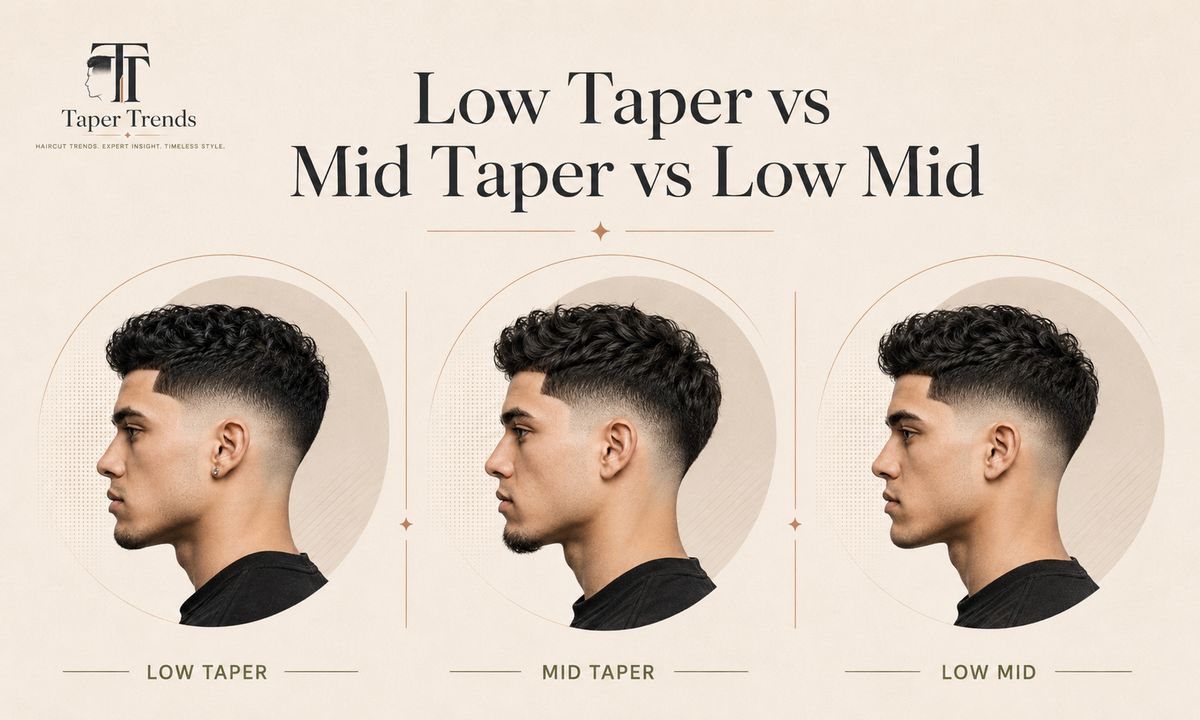
Both “low” and “mid” describe where the fade begins on the side of your head, and that starting point sets the whole mood of the cut.
A low taper fade starts just above the ear, along the natural hairline. The sides stay mostly full, and only the hair near the ear and neck goes tight. It's the quiet option — clean without shouting about it, which is why it suits offices and men who'd rather not look like they're trying.
A mid taper fade starts higher, up around the temple. Since the fade covers more of the side, you get a stronger contrast between the length on top and the short sides below. It looks sharper and more deliberate.
The low mid taper fade lands between the two. The fade begins at a mid point but stays controlled instead of climbing toward the crown. You get more contrast than a plain low taper without the full bite of a high mid fade. That middle ground is exactly why it's a safe first fade for someone who's never sat down for one. If you're still weighing how much contrast you want, our breakdown of low taper vs low fade walks through exactly how each starting point reads on the head.
Why it's everywhere in 2026
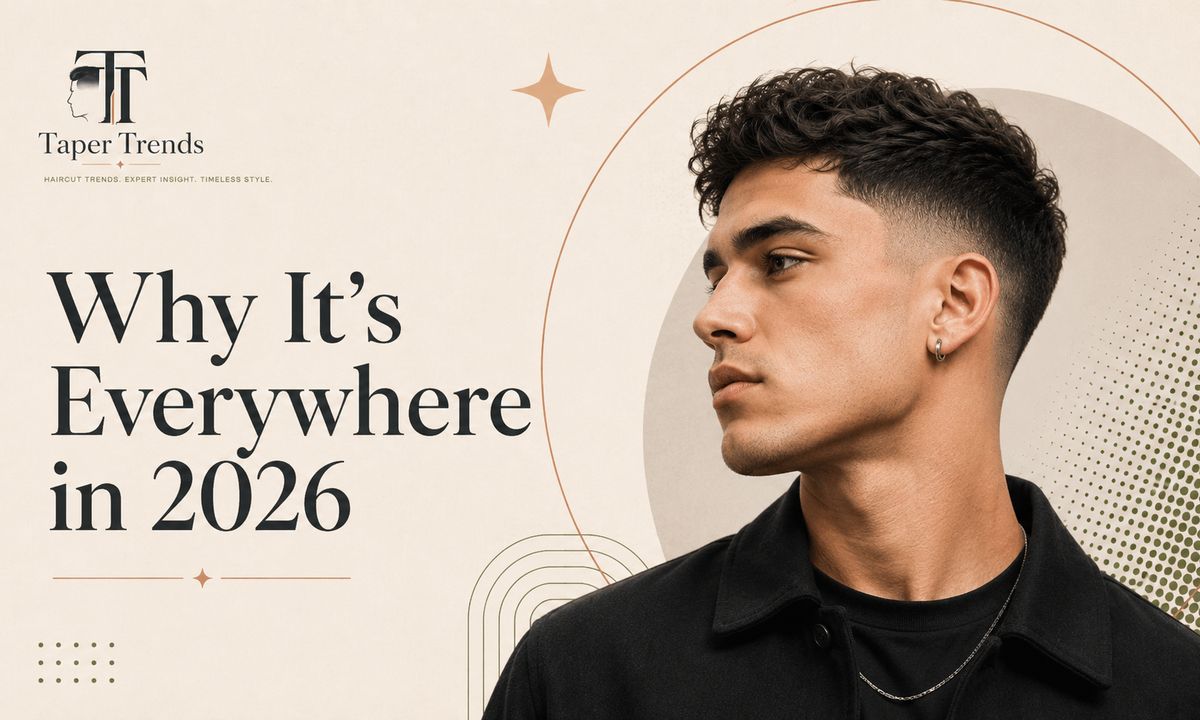
This cut has been building for a couple of years, and in 2026 it's a genuine barbershop staple. A few things keep it in rotation.
It pairs with nearly any top style — a textured crop, a buzz, longer curls, or waves all sit fine above it, and you can change the top later without ever touching the fade. It also holds up between visits. With no single hard line to betray a week of growth, most men get a few solid weeks before it needs attention, longer than a high fade tends to give you.
Then there's the skill question. This is core barbering, not a specialty trick, so you don't have to hunt down one specific chair to get it done well. Social media does the rest: the smooth gradient photographs cleanly, men save the screenshots, and they bring them in. The other shift worth noting is the finish — matte, lived-in styling has replaced the glossy, slicked look that defined the last decade, and the low mid taper fits that mood perfectly because it's practical: modern, easy to wear anywhere, and light on upkeep.
Best low mid taper fade styles
The fade stays the constant. The variety happens up top. These are the combinations men are asking for most this year.
- Textured cropThe runaway favorite. One to three inches on top, pushed forward or left a little messy, with the fade keeping the sides tight underneath. Quick to style and put-together with almost anything you wear.
- QuiffHeight at the front, sweeping up and slightly back. Over a mid taper, the contrast between the full top and short sides gives the shape some swagger. A light-hold pomade or clay keeps it lifted without going stiff.
- Forward fringeThe top falls flat toward the forehead instead of standing up — softer and less sculpted. It plays nicest with straight or slightly wavy hair, and the fade underneath stops the sides from looking heavy.
- Side partCombed clean with a defined line, it pairs naturally with the taper for a polished finish that holds up in professional settings. Ask for a hard part if you want a sharp line, or let it blend for something softer.
- Buzz on topThe no-effort option. Sharp, grows out well, suits nearly every face shape, and skips the styling routine entirely.
A forward fringe over the taper is one of the most-requested versions right now — our guide on the textured fringe with low taper fade goes deeper on length and styling. And if you're leaning toward a longer, center-parted top instead, the middle part low taper fade covers that shape in detail.
Matching the cut to your hair type
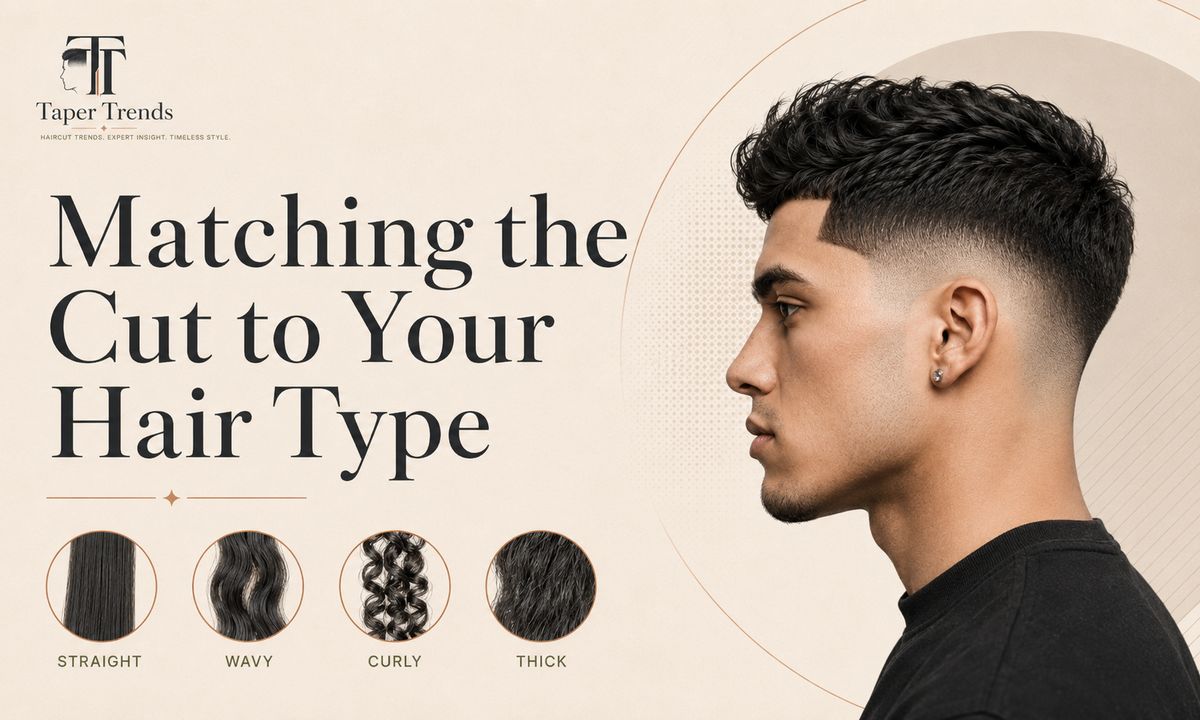
Texture changes how the fade is cut and how it looks once you're out of the chair.
- StraightShows the gradient cleanly because it lies flat against the scalp, so the transition reads crisp around the neckline and sideburns. If your straight hair is fine, keep some length on top — a crop or a side part — so it doesn't look sparse.
- WavyBrings movement up top that plays off the clean lines below, and it needs little product to do it. Tell your barber to leave a touch more length than feels right, since waves shrink as they dry.
- CurlyMaybe the best match of all. The tight sides frame full, textured curls without fighting them, and the contrast is striking. Keep the curls moisturized with a curl cream or leave-in so dry frizz doesn't blur the line.
- ThickHolds shape well but turns heavy if the sides aren't managed. The taper pulls weight off the sides gradually so the silhouette stays controlled. Ask the barber to thin the top with shears for a lighter, more textured finish.
If your hair is poker-straight, our dedicated low taper fade guide for straight hair covers the best top styles, products, and step-by-step styling for both fine and thick straight hair.
Which face shapes it suits
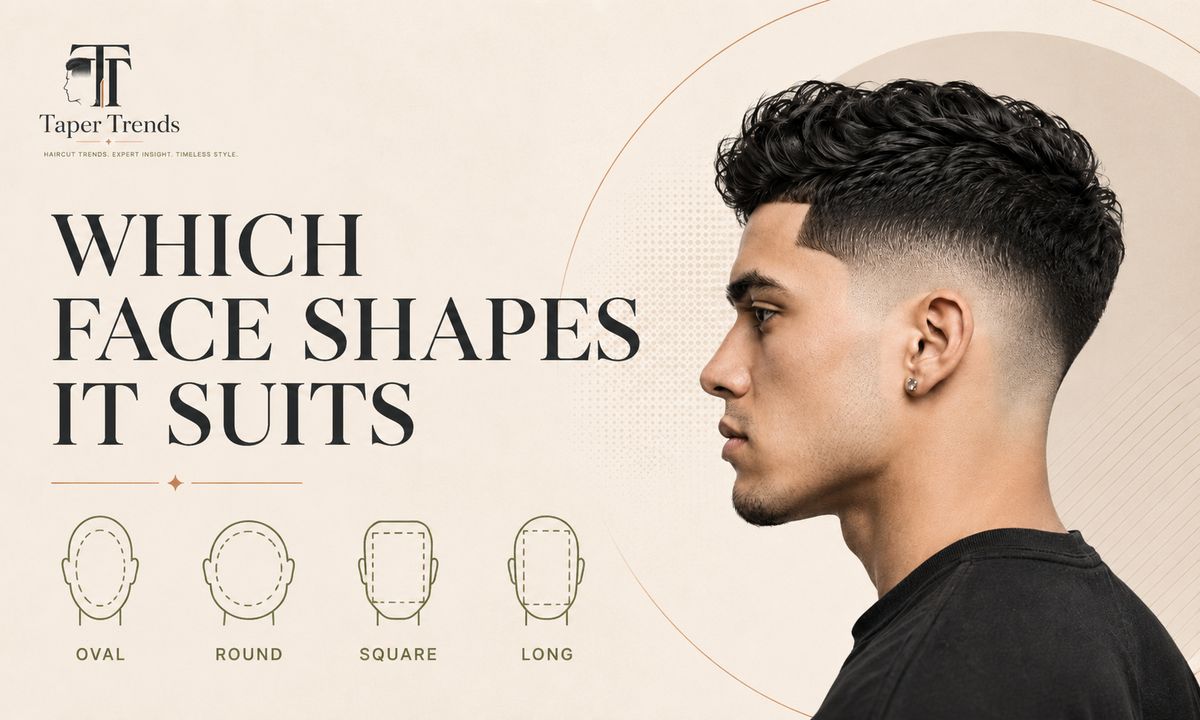
A well-cut taper works on most faces. Small tweaks to the top are what keep things balanced.
- OvalHas it easy. Almost anything works, and the cut won't add unwanted width or length, so style the top however you like.
- RoundWants height up top and tight sides. Add vertical volume with a quiff or a crop swept upward to stretch the face a little. Skip flat tops, which only add width.
- SquareLooks naturally sharp next to a clean fade, since the structured taper sits well against a strong jaw. Short crops and longer styles both work; a forward fringe softens the jaw.
- DiamondNarrowest at the forehead and chin, widest at the cheekbones, so a bit of width on top — a quiff or a voluminous side part — evens out the proportions. Avoid very tight sides that pinch the shape further.
- LongWants width over height. A shorter, flatter top beats a tall quiff, and the low element of the fade keeps the sides from looking too narrow.
These are starting points, not rules. A good barber reads your head shape, hair texture, and growth pattern and adjusts as they go, so if you're unsure, just ask.
How to ask your barber for it
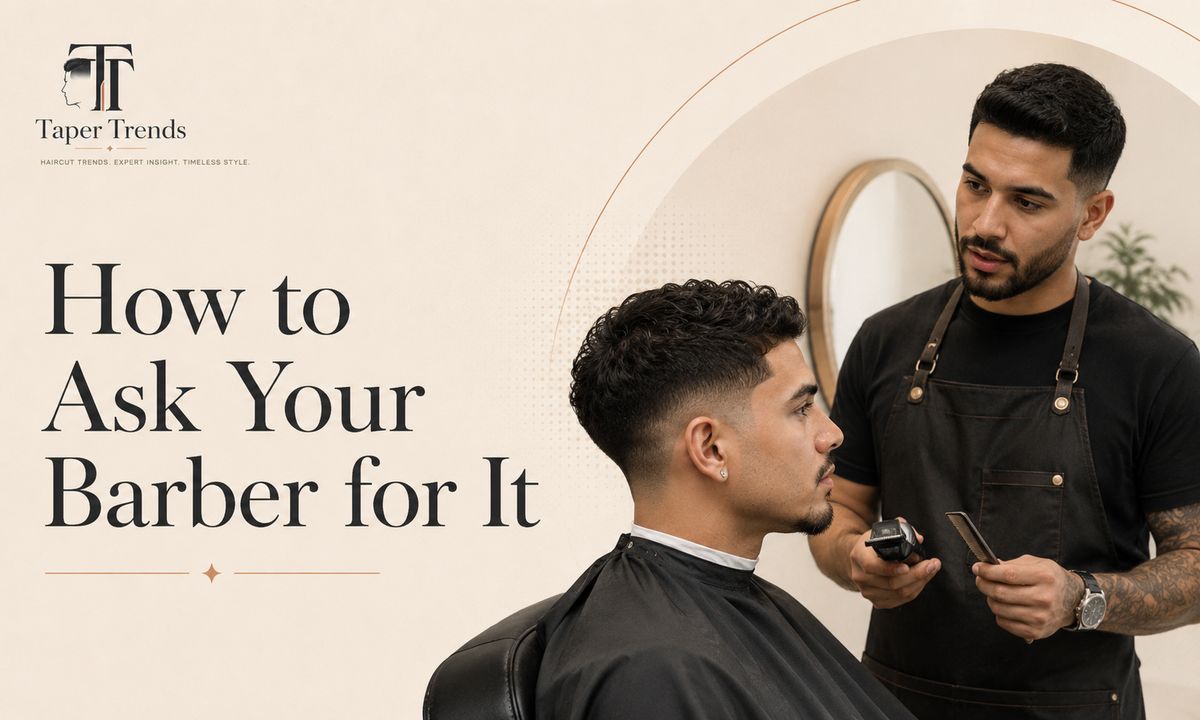
Most bad haircuts are decided before the clippers switch on. If you can't say what you want, you're handing the result to chance. The good news is you don't need barber vocabulary. One line covers it.
“I'd like a low-to-mid taper on the sides and neckline, blended naturally, with the top left at [your length].”
If you want to be precise, tell them where the fade should start — around the temple, not too high. Say whether you want a natural blend for a gradual transition or a tighter, skin-close finish near the sideburns. Mention if your hair is thick or fine, and whether you want a hard part or a natural one. If you wear a beard, ask them to connect the fade into your beard line so the sideburn doesn't end in a hard stop — a clean blend between the two is one of the details that makes a 2026 cut look finished rather than just short.
And bring a photo. This is the single most useful thing you can do, more useful than anything you'll say. A screenshot takes the guesswork out completely, and no barber minds. What they do mind is “just a trim” or “clean it up a bit,” because those mean something different to every person holding the clippers.
Styling it at home
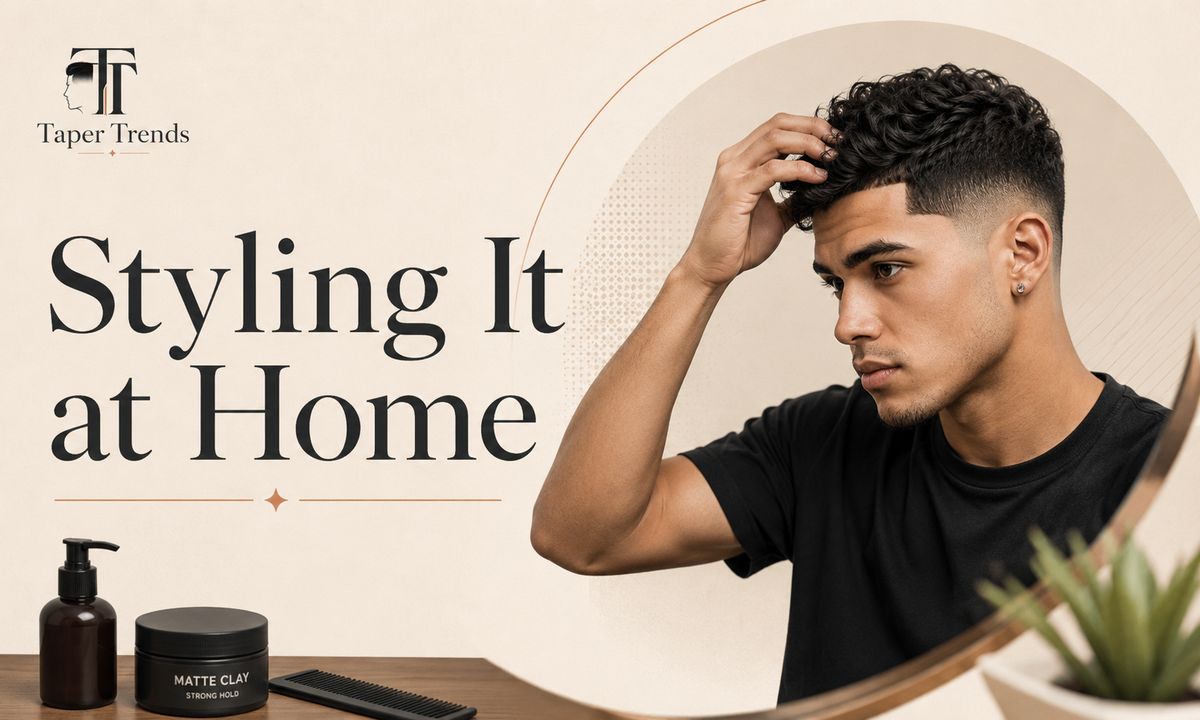
The fade is the barber's job. What you manage at home is the top, and the right approach depends on your hair and the look you're after.
For a textured or messy crop, work a small amount of matte clay through slightly damp hair and push or scrunch it forward — matte products give that lived-in finish without shine. For a quiff or anything swept back, use a light-hold pomade or styling cream on damp hair, blow dry with your fingers to build height at the front, then add a little product to set the shape. For a side part, a small amount of pomade combed through dry or slightly damp hair does the job, and a water-based formula washes out clean without grease.
For curls, skip the clay and pomade — a curl cream or light leave-in on damp hair, left to air dry, keeps the pattern defined without weighing it down. For thick or wavy hair, a blow dryer on medium heat plus a styling cream gives you the most control: rough-dry first, then work the product in and direct it into place. The one rule that covers all of it: use less product than you think you need. Start with a thumbnail-sized amount and build up only if you have to.
How often to get it trimmed
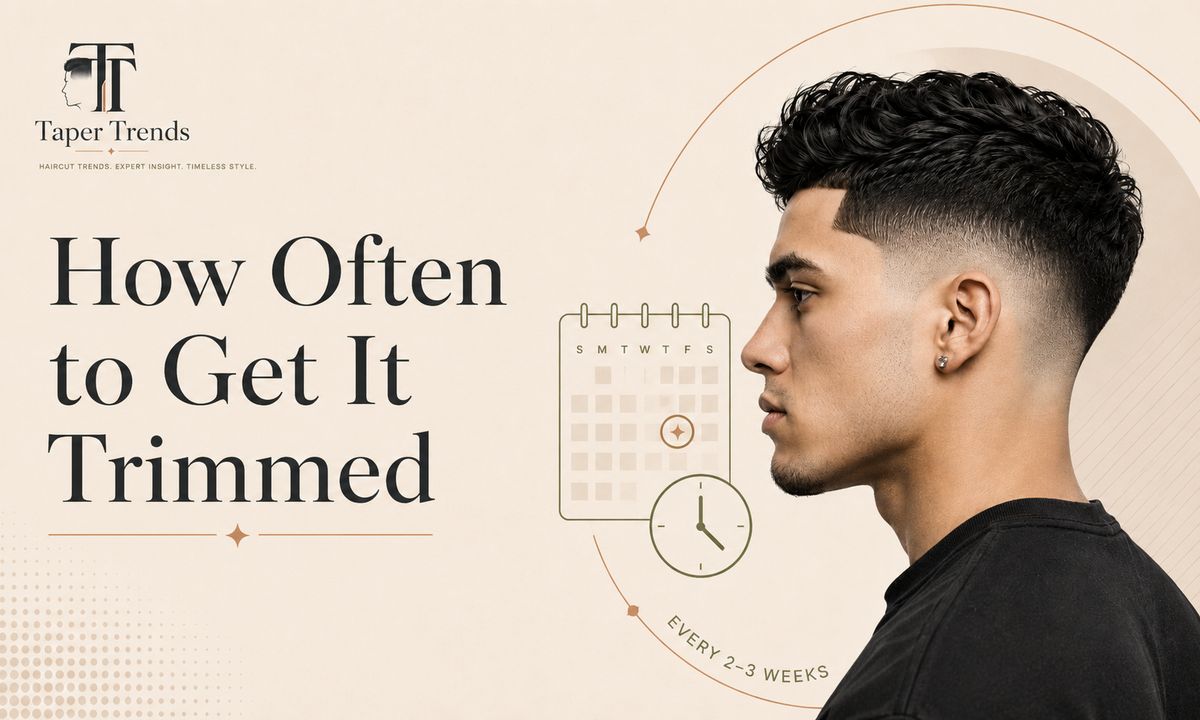
A taper looks its best in the first week or two. After that the blend softens as the hair grows.
Roughly speaking, every two to three weeks keeps the fade crisp and the neckline clean, which is the schedule for men who want it looking fresh. Stretch to three or four weeks and the blend softens but the overall shape still reads intentional on most hair types. Push to four or five and the fade settles into more of a natural taper — neat, but less precise.
If a full cut every couple of weeks isn't realistic, ask your barber about a neckline cleanup: a shorter, cheaper visit that tidies the neck and sideburns without reshaping the whole thing. Plenty of shops offer it between appointments. Fast-growing hair needs more frequent visits and fine hair tends to hold longer, so watch how yours behaves after a couple of cuts and adjust from there.
Mistakes worth avoiding
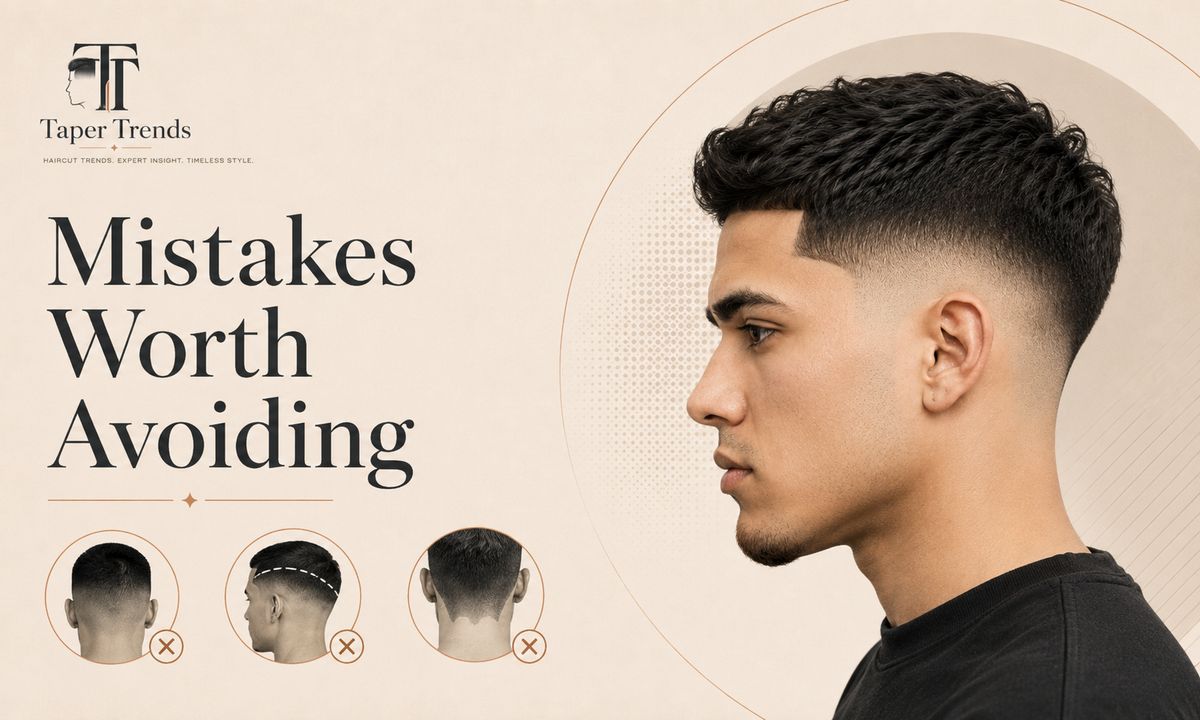
A good cut still goes wrong, usually over something avoidable. These are the common ones, and all of them are easy to dodge.
- Going too short too fastIf you've never had a taper, skip the skin fade and ask for a longer blend first. You can always take it shorter next time, but you can't put length back.
- Skipping the necklineSome men obsess over the sides and forget the back, but a clean neckline is what makes the cut look finished. Tell the barber exactly how tight you want it there.
- Leaving the fade height to chance“Whatever you think” is how you end up higher or lower than you wanted. Name the start point — around the temple for a low mid — and you take the guesswork out.
One more, if you're tempted to go bolder: a carved line can look sharp, but get the fade right first. Our low taper fade design guide covers where a line sits best and what to ask for.
The short version
The low mid taper fade has earned its spot as one of the most reliable men's cuts going in 2026. It's structured without being needy, pairs with nearly any top, and works across hair textures and face shapes.
Getting it right comes down to three things: knowing what to ask for, picking a top style that suits your face and hair, and trimming on a schedule that matches how sharp you want to look. Show the barber a photo, describe the blend, and you'll walk out with something that works whether it's your first fade or your fortieth. Cutting one for a younger family member? Our low taper fade haircut for boys guide covers school rules and kid-friendly styling.
In short
The low mid taper fade is structured without being needy, pairs with nearly any top, and works across hair textures and face shapes — which is why it's a 2026 barbershop staple.
Name where the fade should start, pick a top that matches your hair and face, bring a photo, and book a trim every two to three weeks. That's the whole formula.
Go deeper: low taper fade guides
Picked a direction? Each style, hair type, and decision below has its own dedicated guide with photos, products, and barber wording:
- Low taper fade haircutsThe complete overview of the cut
- Low taper vs low fadeWhich to choose, by contrast and upkeep
- What it looks likeEvery angle, before you book
- Textured fringeThe fringe-forward version
- Middle partCenter-parted, longer top
- For straight hairTop styles, products, and styling
FAQs about the low mid taper fade
What is a low mid taper fade?
It's a men's cut that fades gradually from the mid-temple down to a tight finish at the neckline and sideburns. It sits between a low taper and a full mid fade: structured, but not dramatic.
How do I ask my barber for it?
Say you want a low-to-mid taper on the sides and neckline with a natural blend, add your preferred top length, and show a reference photo if you have one.
How often should I get it trimmed?
Every two to three weeks for a sharp look, or three to four if you're fine with a softer blend. A neckline cleanup in between stretches the time between full cuts.
Does it work for curly hair?
Yes. The tight sides frame curls cleanly and give the whole cut a defined shape, which is why it's one of the more popular curly combinations.
Which face shape suits it best?
Most of them. Oval faces have the most freedom, round faces should add height on top, and long faces do better with shorter, flatter styles up top.
What's the difference between a low taper and a mid taper fade?
A low taper starts just above the ear and keeps the sides mostly full. A mid taper starts higher, around the temple, for more contrast. The low mid version splits the difference: a mid starting point with a controlled, gradual blend down.
Want more taper fade guides?
Browse clean, barber-ready breakdowns for every hair type.