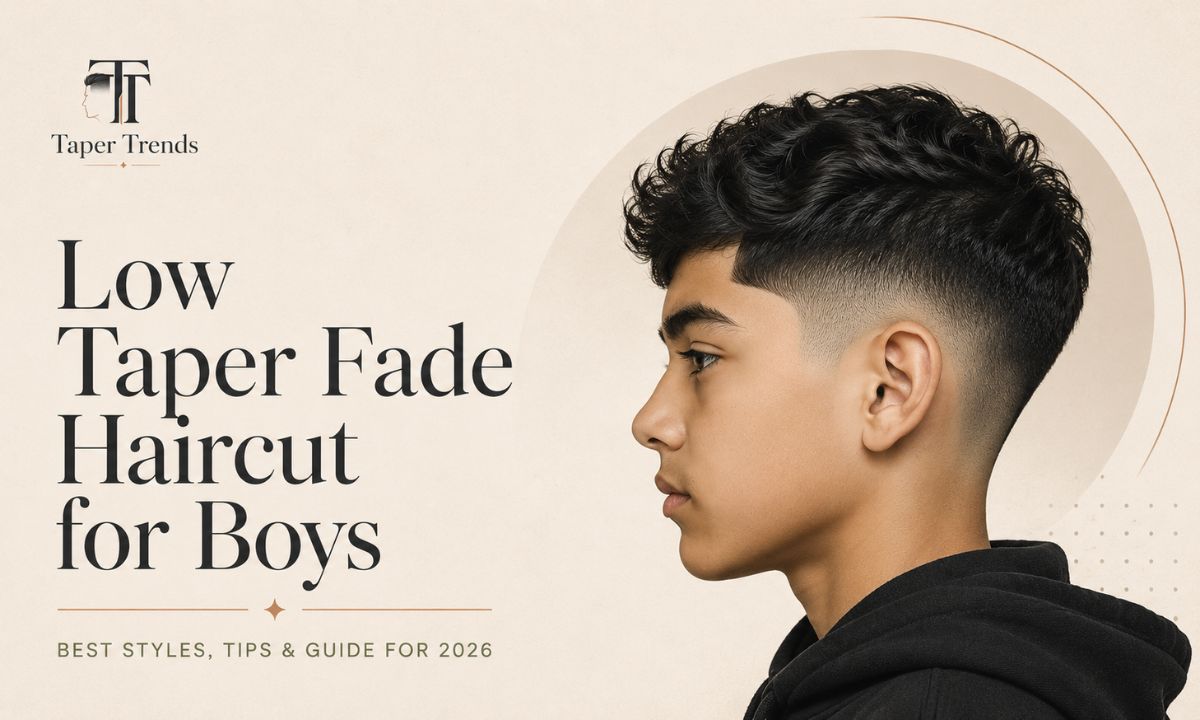
If you want a haircut that stays neat without much fuss, the low taper fade haircut for boys is hard to beat right now. It is clean, modern, and easy to look after, which is why parents, younger boys, and teens all keep asking for it. The sides stay tidy and well blended while the hair on top can go almost any direction depending on the day.
School run, birthday party, lazy afternoon at home: the cut handles all of it without a restyle. Barbers have been fielding this request more than almost any other boys' cut over the past couple of years, and it shows no sign of slowing down.
What is a low taper fade haircut for boys?
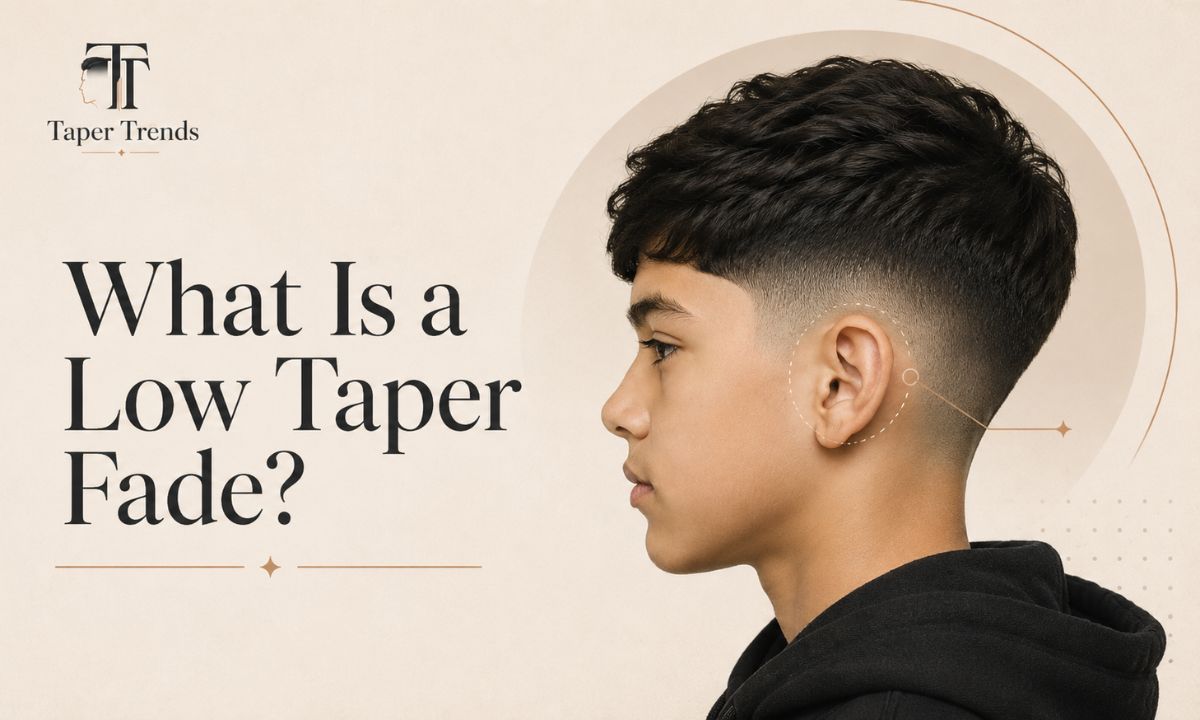
A taper is the way the hair gradually gets shorter as it moves down towards the ears and neck. Instead of one blunt length at the sides, it shifts smoothly from longer at the top to shorter at the bottom, which is what makes a tapered cut look deliberate rather than accidental.
A fade pushes the same idea further. The hair shrinks from one length to the next so gradually that you can barely see where one stops and the next begins, often tapering down to very short near the neckline and sideburns. Done well, it takes real skill from the barber, and the payoff is a cut that looks sharp without looking try-hard.
Put the two together and “low” tells you where the blend sits. On a low taper fade, the blend starts low on the head, just above the ears and around the natural neckline, rather than climbing high up the sides. That keeps the whole thing soft and clean. It looks groomed without making a statement, clears most school dress codes, and hides the scruffy, overgrown look that creeps in around the ears and neck between visits. If you want to picture the base shape from every angle first, our guide on what a low taper fade looks like breaks it down.
Why the low taper fade is so popular for boys in 2026
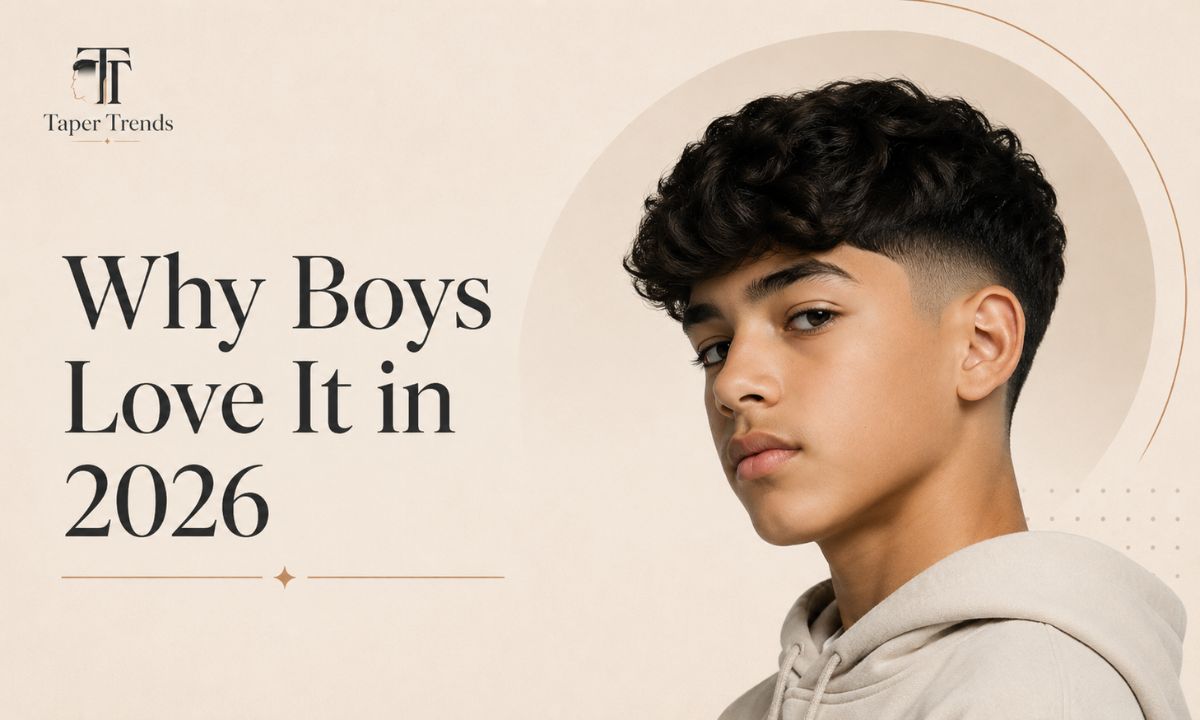
Trends come and go, but this one has stuck around, and in 2026 it is still one of the most requested boys' cuts.
It stays presentable for weeks. Because the fade blends instead of leaving a hard line, it does not look grown out as fast as sharper styles, which parents quietly love. It also works under almost any top: textured crop, side part, curly puff, or a plain natural finish all sit happily above the low fade, so it acts as a clean base that lets the top do the talking.
It is also never loud. Some fades climb high or go right down to skin, which can feel a bit much on a younger kid, whereas the low taper keeps things quiet and works with the natural shape of the head. Best of all, a good barber can tweak how gradual the blend is, how much length stays on top, and how tightly the neckline is cleaned up, all to suit the boy's hair texture and face shape.
Low taper fade vs regular fade: what's the difference?
People use these terms as if they mean the same thing, and they do not quite. Knowing the gap helps you ask for the right one.
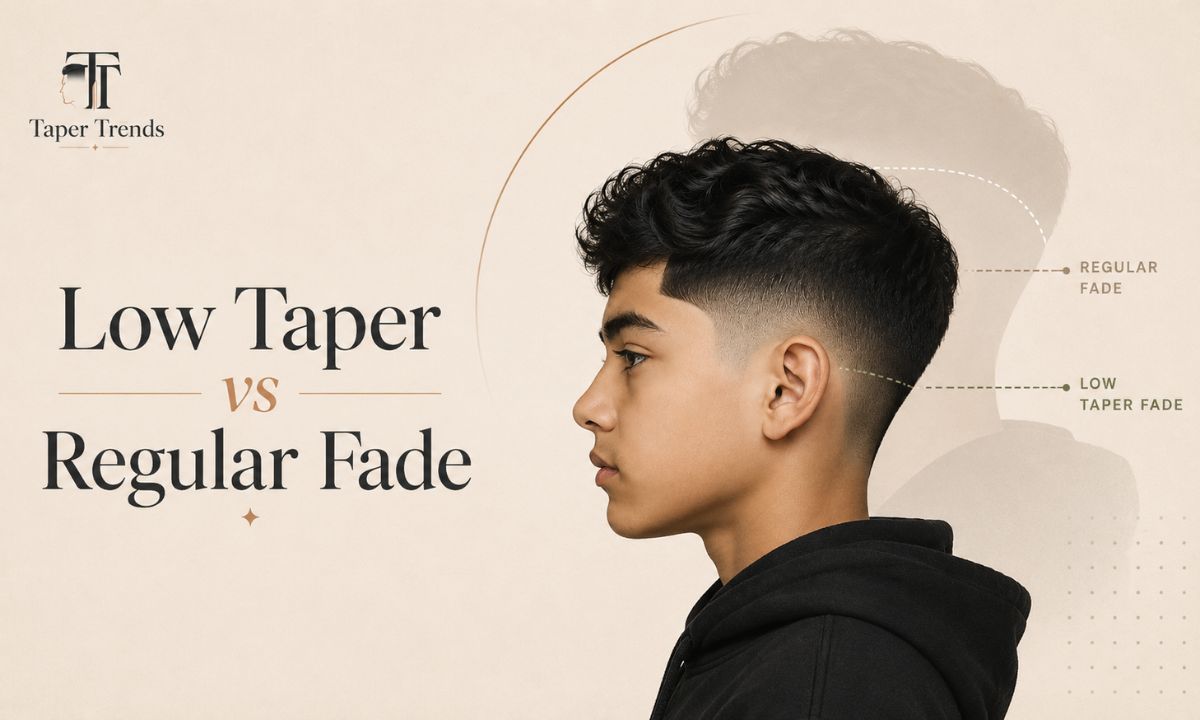
A regular fade, usually a mid or high fade, starts blending much higher up the sides, sometimes halfway up the head or more, creating a stronger contrast between the long top and short sides. It is a striking look, but it can feel intense for everyday school or for a boy who prefers something natural.
A low taper fade starts the blend far lower, around the ears and along the neckline. The sides stay closer in length to the rest of the hair, with only a gentle drop towards the skin at the very bottom, so the overall shape stays fuller and more natural. For a boy who wants a tidy modern cut without looking like he made a big style decision, the low taper is almost always the better pick: softer, easier to wear day to day, and slower to look grown out. If you want the full side-by-side, our breakdown of low taper vs low fade covers exactly how much contrast each one gives.
Best low taper fade styles for boys
Most of the variety lives on top. The fade on the sides stays roughly the same; the top is what changes the whole look.
- Textured topThe most popular version going around. Hair left at a medium length and worked with a little product for natural movement — it carries a boy from school days to weekends with no restyle.
- FringePushed forward or swept to one side. A good middle ground for boys who want something current without going bold, and it sits especially well on straight or wavy hair.
- Curly topWhere this cut really earns its keep. The fade keeps the sides controlled while the curls up top are left to do their own thing — the contrast looks good with almost no product or heat.
- Side partThe smarter, more put-together option, ideal for school photos or family events. A little pomade keeps the part in place.
- Messy topThe relaxed one: hair left a touch longer and styled loosely, but still reading as a choice rather than bed hair because the sides are clean.
- Short cropAbout as low effort as it gets, suits thick or dense hair, and ages well. For teens who want length, four to six centimetres over a low fade gives a balanced shape and room to experiment.
A fringe pushed forward over a low taper is one of the most-requested versions for boys right now — our guide on the textured fringe with low taper fade goes deeper on length and styling if that's the direction you're leaning.
Choosing a style and products by hair type
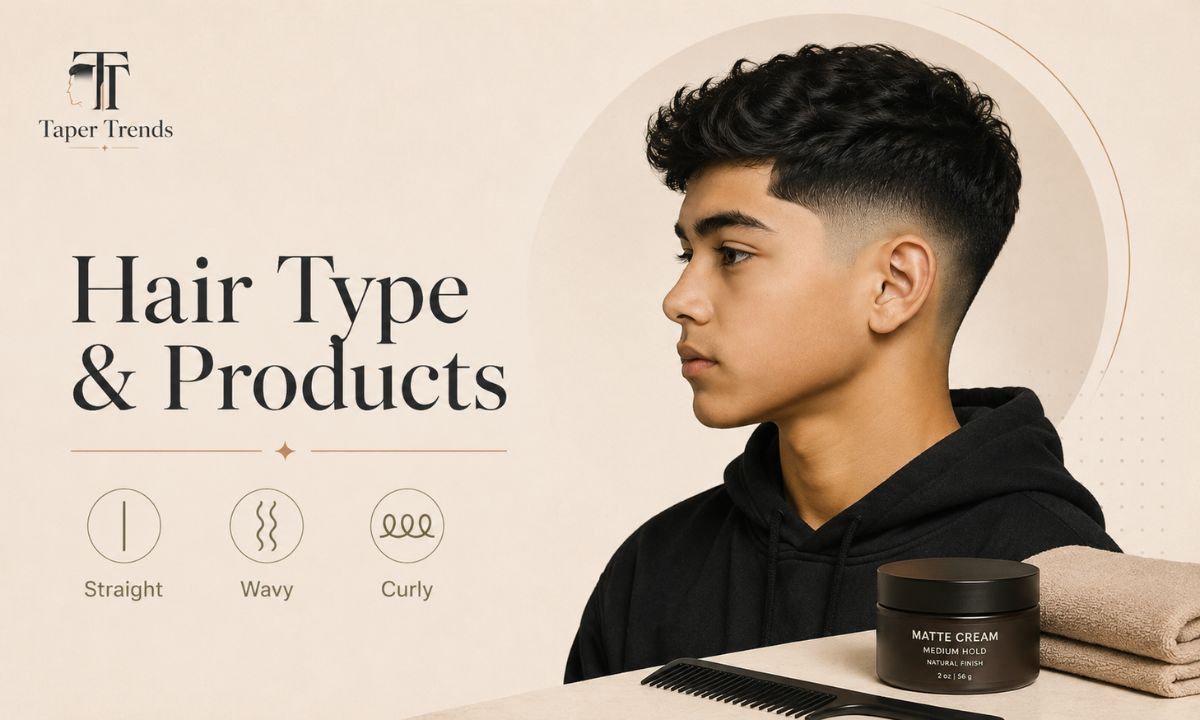
The cut itself barely changes between hair types. What changes is how much length to leave on top and what you reach for to style it.
- StraightTakes the low taper well — clean sides and a sharp neckline stand out against smooth hair. A side part or fringe holds neatly; a light styling cream or matte pomade combed through slightly damp hair is usually all it needs.
- WavyGets a lift from the cut, because the fade removes the bulk around the ears without flattening the wave on top. Let it air dry, work in a little texturising cream or sea salt spray, and scrunch gently with the fingers.
- CurlyWhere the low taper is genuinely useful. The fade tidies the wild sides and neckline instantly while the top stays full. Use a lightweight curl cream or leave-in on damp hair and separate the curls with your fingers rather than brushing them dry.
- ThickBenefits because the fade strips out the bulk that makes the sides puff and lose shape. If the top stacks, ask the barber to thin it slightly, then use a medium-hold cream or light wax.
- FineNeeds the opposite approach — cutting it too short looks sparse. Leave a bit more length and use a volumising product to fake fullness.
For younger boys, keep it simple: a quick towel dry, a pea-sized bit of product, and a light comb is all most styles need. If your boy has poker-straight hair, our dedicated guide to the low taper fade for straight-haired boys keeps the whole routine low-maintenance, and the broader low taper fade guide for straight hair covers top styles and products in more depth.
Which face shapes suit a low taper fade?
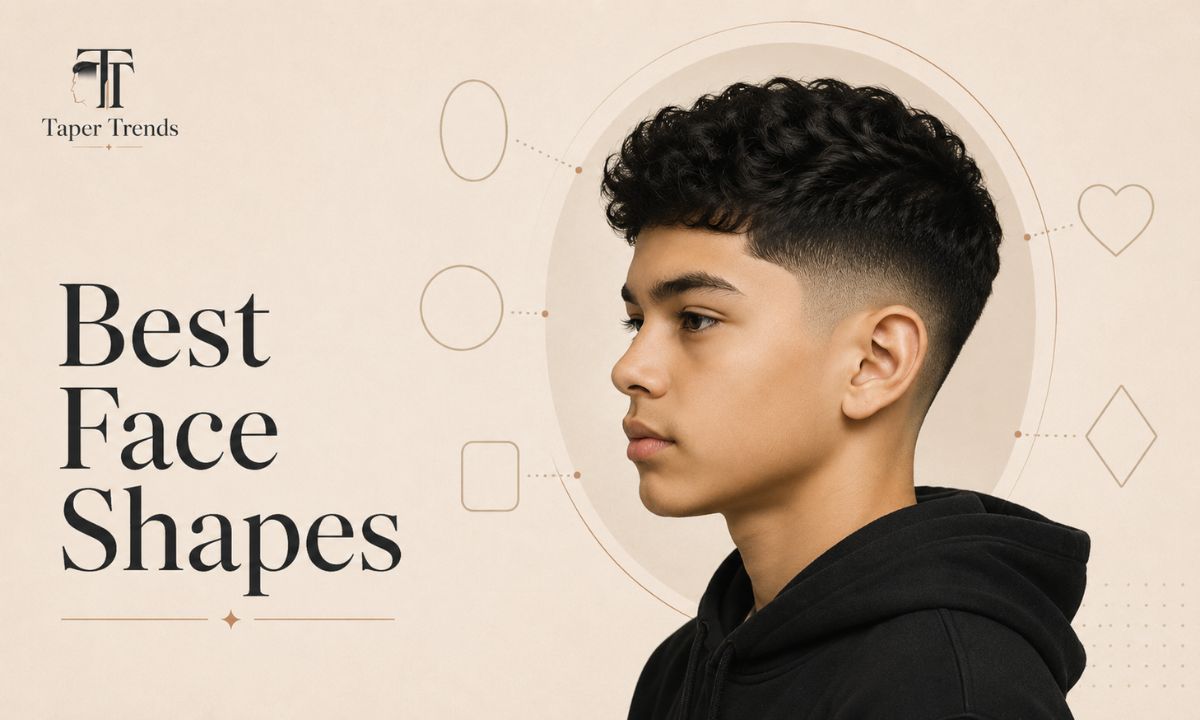
The cut works across most face shapes, but small tweaks to the top make a real difference.
- RoundBenefits from height or texture on top to stretch the face a little. A textured crop or a curly top styled upward works better than anything flat.
- OvalThe easy one. Almost any version sits well, so side parts, fringes, messy tops, and crops all work with little adjustment.
- SquareWith a strong jaw and wider forehead, it responds nicely to the clean, structured sides the low fade gives, balanced by a medium top with light texture.
- LongThe one to watch — too much height makes it look longer still. A fringe or a flatter, wider top helps.
- Heart-shapedWider at the forehead and narrower at the chin. Balanced by a fringe or textured top that pulls attention away from the top of the head, plus sides kept full rather than faded too tight.
These are starting points, not rules. A good barber reads the head shape, hair texture, and growth pattern and adjusts as they go, so if you are unsure, just ask.
Keeping it school-friendly
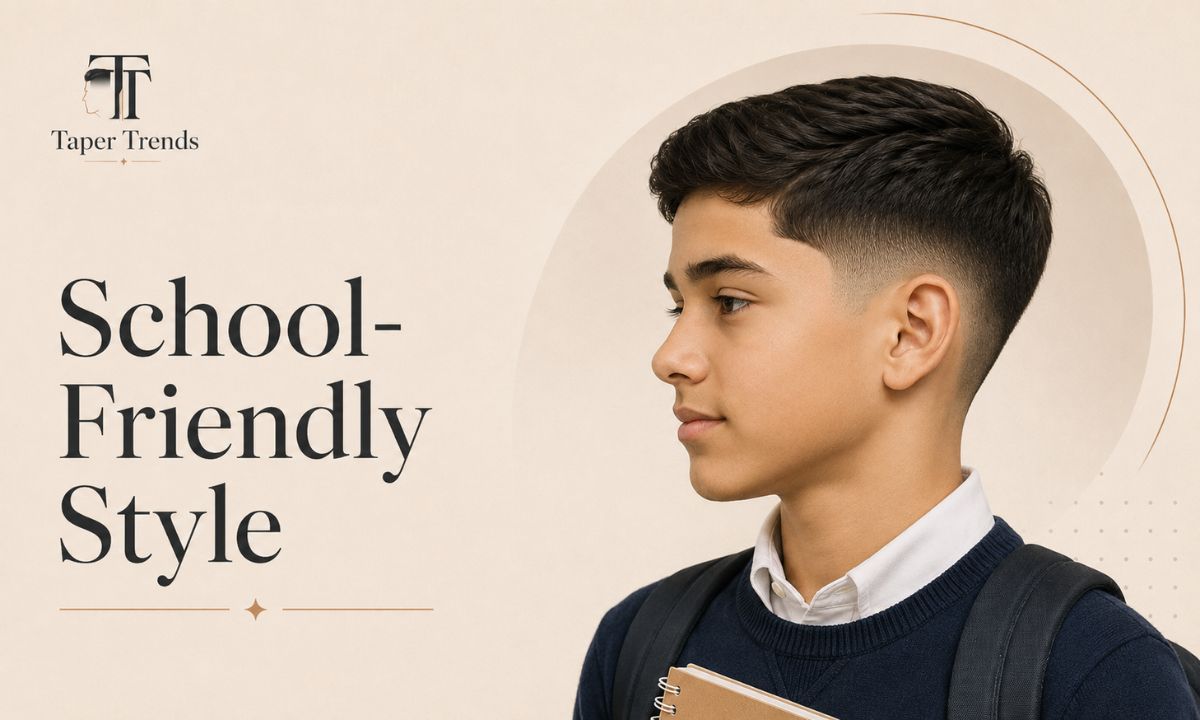
For most boys, the cut has to pass one test first: will school be fine with it? The low taper usually clears that easily, with a few things worth keeping in mind.
Keep the fade low and natural, sitting just above the ears and blending gently into the neckline, which reads as tidy rather than dramatic. Skip shaved lines, geometric patterns, and other design work cut into the sides, since plenty of schools treat them as a distraction and ask for them to go. Choose a sensible top length too, since very long tops that flop over the face might catch a stricter teacher's attention.
If the school is conservative, leave out the skin fade, where the hair blends right down to bare skin. A low taper that fades to a short but still visible length is the softer, safer call. Go easy on product, since a matte cream gives shape without the wet or spiky look some schools frown on, and ask the barber to square off or gently taper the neckline for a more finished look. If you are eyeing a bolder version, check the grooming policy first, because knowing the rules beats a last-minute scramble before term.
How to ask your barber for a low taper fade
Walking in knowing what to say makes everything smoother, and barbers appreciate clear direction.
Start with the placement. Something like “I would like a low taper fade around the ears and neckline” tells the barber where the fade should sit and how far up to take it. If you do not say “low,” some barbers default to a mid fade, which lands noticeably higher. Then describe the top: textured crop, messy and natural, a defined side part, curls left full. “Medium length on top with some texture” gives a barber far more to work with than “not too short.”
Mention school rules if they apply. Asking for “a natural blend, nothing too sharp or skin-tight” signals that you want clean but conservative, and most barbers pick up on that straight away. If you are worried about the fade creeping up, set a boundary: “keep the fade low, nothing above the temples.”
“I'd like a low taper fade around the ears and neckline, medium length on top with some texture, kept natural — nothing too sharp or skin-tight.”
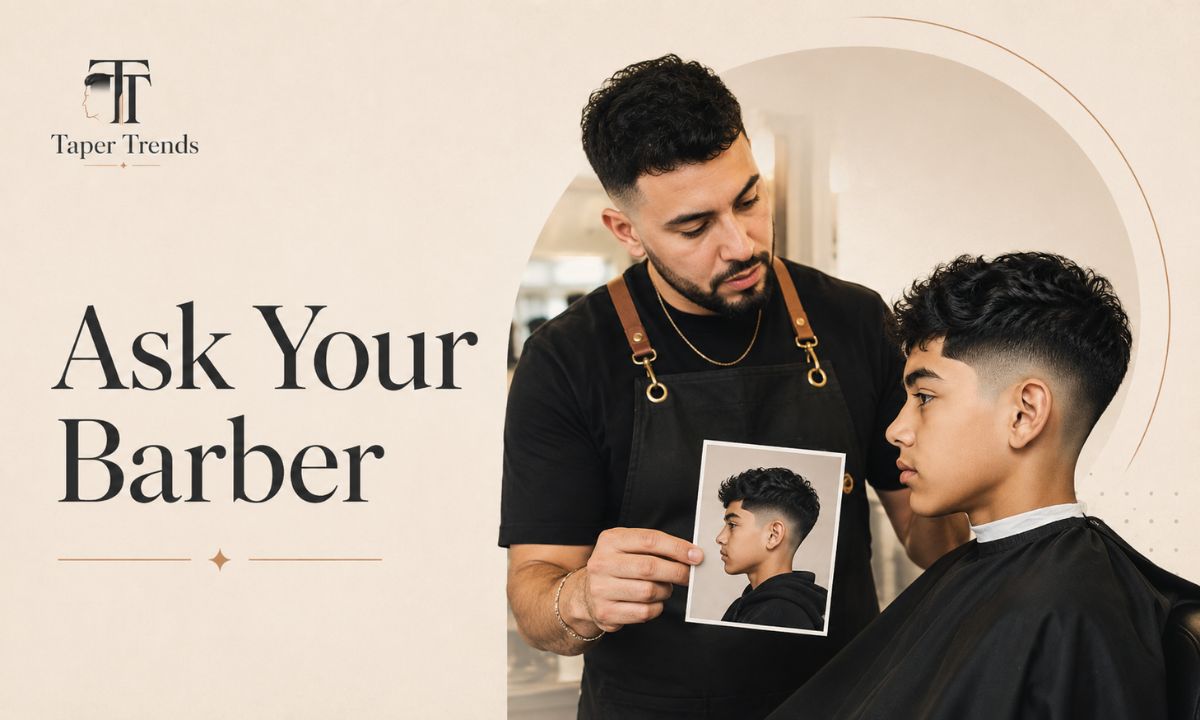
Best of all, bring a photo. It takes the guesswork out, and it does not need to be the exact style; even a rough reference shows the length, the blend, and the overall feel better than words can. Just remember that no two boys have the same hair or head shape, so the result will be a personalised version of the photo rather than a carbon copy. That is normal, and it is how good haircuts work.
How often do boys need a trim?
A low taper looks its sharpest in the first week or two. After that, how fast it grows out depends on the boy, since hair growth varies a lot.
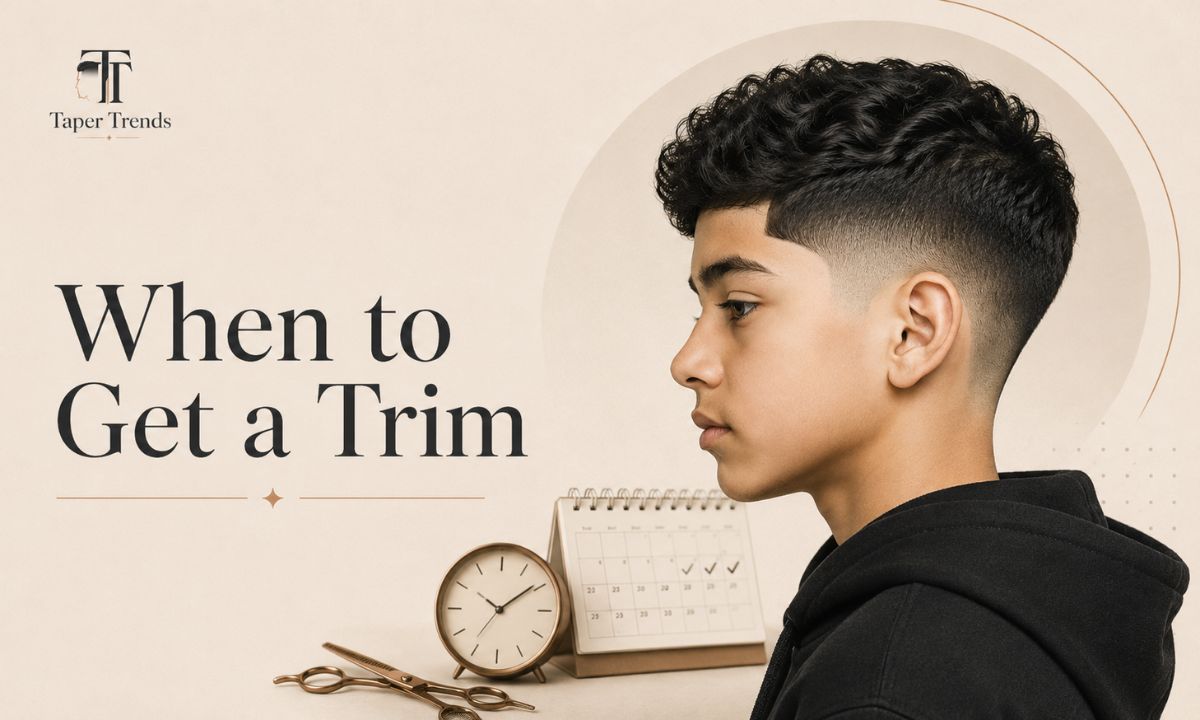
As a rough guide, most boys keep the fade looking crisp with a trim every two to four weeks. The neckline and sideburns show new growth fastest, so those areas often need attention before the rest of the cut does. A longer top buys you more time, because the extra length blends more forgivingly as the sides grow, while a short crop is the opposite: the contrast between the fade and the top is obvious, so it looks grown out sooner.
Thick and curly hair usually needs more frequent shape-ups, since it grows outward as much as down and loses its shape quickly. It is also worth timing a cut around the things that matter — a day or two before school photos, a family event, or the start of term. None of this is a hard rule. Some boys are happy stretching the gaps if the style allows for natural growth; the right frequency is whatever keeps him comfortable and confident.
Common mistakes to avoid
Even a simple cut can go sideways without a little thought. These slip-ups are the common ones, and all of them are easy to dodge.
- Saying “fade” without “low”The quickest way to end up with a mid or high fade that is more dramatic than you wanted. Clarify the placement up front.
- Going too short on topOnce it is cut, it has to grow back, and a textured or curly top needs length to work. Be clear before the clippers start.
- Copying a style that doesn't match the hairWhat looks great on thick, straight hair may fall flat on fine or curly hair. Ask the barber what suits the texture instead of pointing at a photo and hoping.
- Piling on productHeavy gel or wax on a young boy usually looks overdone. Start small and add only if needed.
- Expecting an exact match to a photoOnline shots use professional products, good lighting, and sometimes editing. The aim is a great haircut, not a replica.
The bottom line
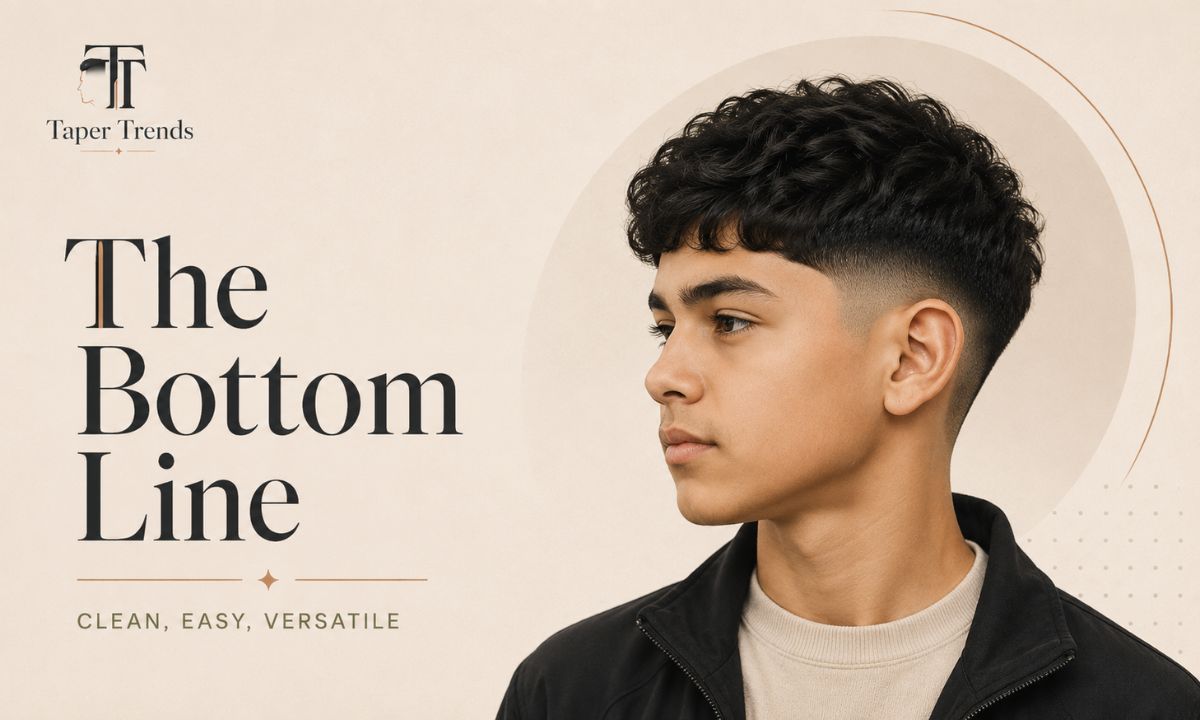
A well-cut low taper fade simply works, across ages, hair types, face shapes, and occasions. It is clean without being severe and modern without being over the top, and it fits everyday school life without complications. Whatever a boy wants on top — curls, a textured crop, a side part, or a messy finish — the low fade gives him a tidy, consistent base. With a clear word to the barber, a little product at home, and a trim every few weeks, it stays one of the easiest and best-looking boys' cuts around in 2026.
In short
The low taper fade is the rare boys' cut that keeps everyone happy: tidy enough for school and parents, current enough for the boy, and forgiving enough to stretch a few weeks between visits.
Say “low” clearly, pick a top that matches his hair and face, bring a photo, and book a quick trim every two to four weeks. That's the whole formula.
FAQs about the low taper fade for boys
Is a low taper fade good for boys?
Yes. It is one of the most suitable fades for boys of any age, clean and neat without being dramatic, which makes it work for school, casual days, and special occasions alike. It also suits a wide range of hair, from straight to curly to thick.
Is a low taper fade allowed in school?
Usually, yes. Because the fade sits low around the ears and neckline, the look reads as tidy and conservative rather than bold. Still, check your school's grooming policy before adding any shaved designs or skin-tight fades, since the rules vary from one school to the next.
How long does a low taper fade last?
It looks sharpest in the first one to two weeks. Most boys need a trim every two to four weeks to keep the fade and neckline clean, and boys with faster-growing or thicker hair may want to go more often.
What should I tell my barber for a low taper fade?
Ask for a low taper fade around the ears and neckline, say how much length you want on top, describe the style you are after, and bring a reference photo if you can. The phrases “natural blend” and “keep the fade low” do a lot of work in setting clear expectations from the start.
Want more taper fade guides?
Browse clean, barber-ready breakdowns for every hair type.