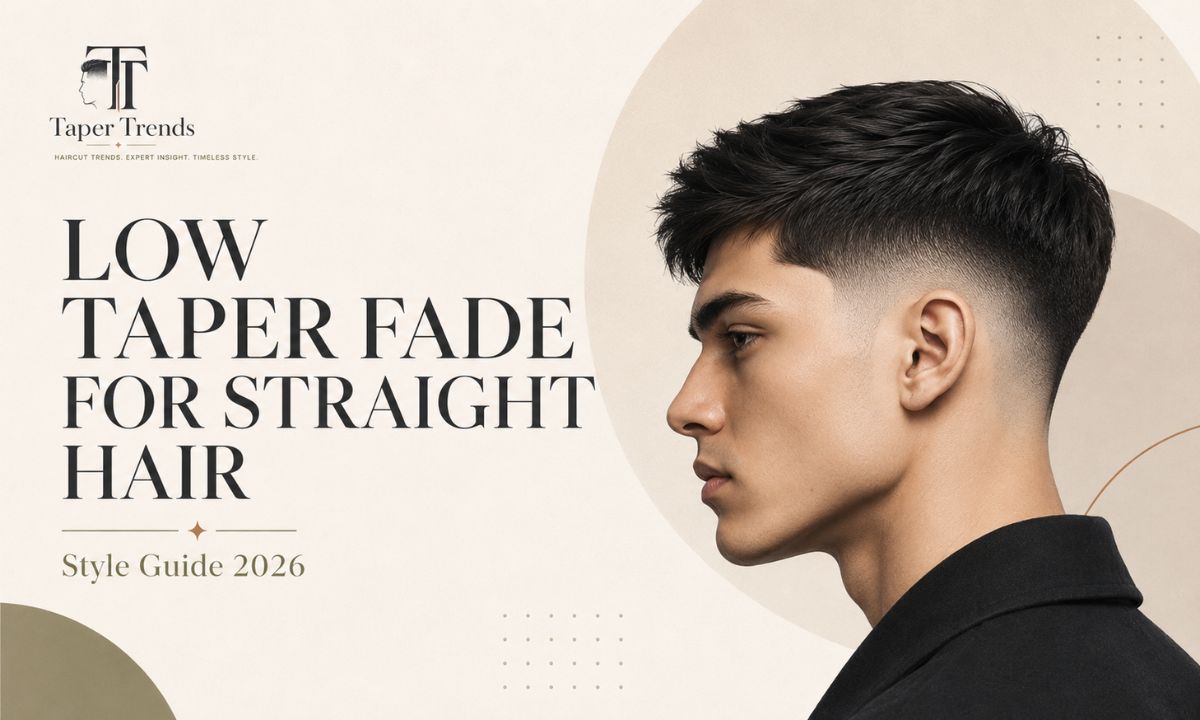
The low taper fade haircut for straight hair keeps showing up in men's style feeds for a reason. Clean sides, a sharp neckline, and a top you can wear a dozen different ways. On straight hair it looks especially crisp, and going into 2026 it has become one of the most requested cuts at the barbershop. It suits almost every setting and doesn't ask much of you in the morning.
Whether you're considering it for the first time or just trying to describe it more precisely, this guide covers what it is, why straight hair suits it so well, how it differs from a plain low fade, and how to style and maintain it.
What is a low taper fade?
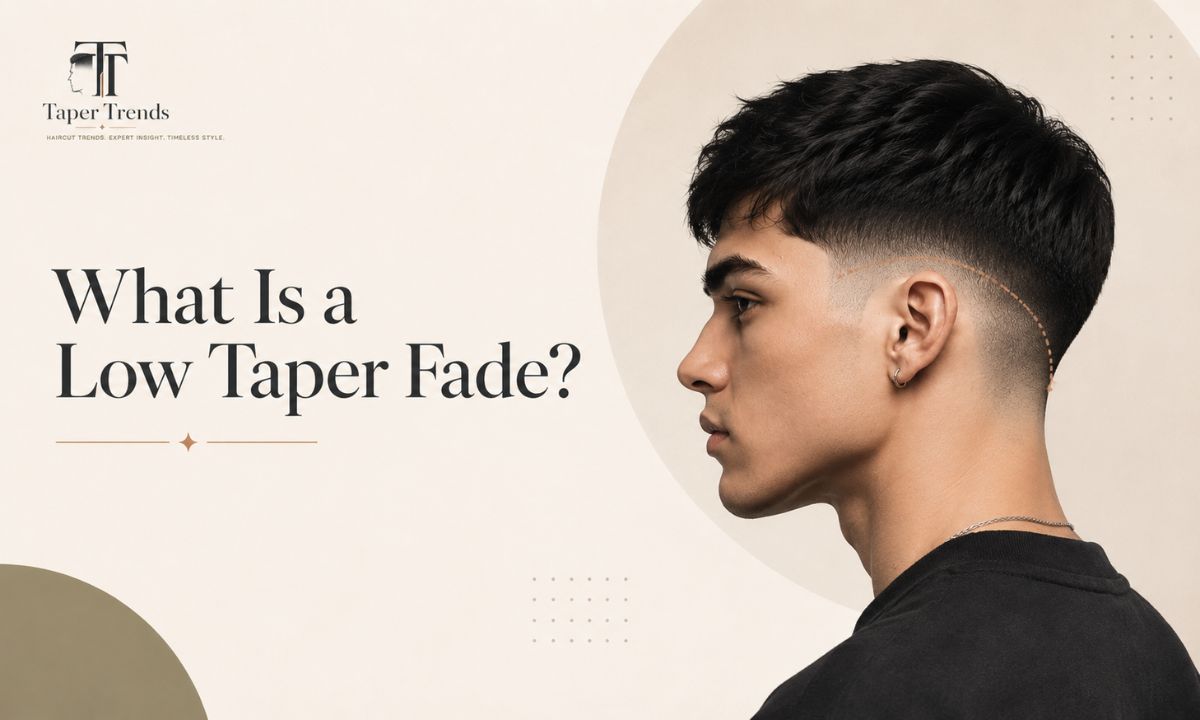
A low taper fade is a clipper technique where the sides and back get gradually shorter as they move down, while the top stays full. The “low” part is the key detail: the fading happens close to the ears and the neckline, not far up the sides of the head.
The sides and back stay longer through the middle and upper sections, then blend smoothly into shorter lengths as the hair reaches the ear line. The barber works this gradient with clippers and a comb, so it reads as a transition rather than a hard line. Around the ears the hair follows the natural curve with no harsh edges, and the neckline gets cleaned up, either squared off or tapered to a point depending on your head shape.
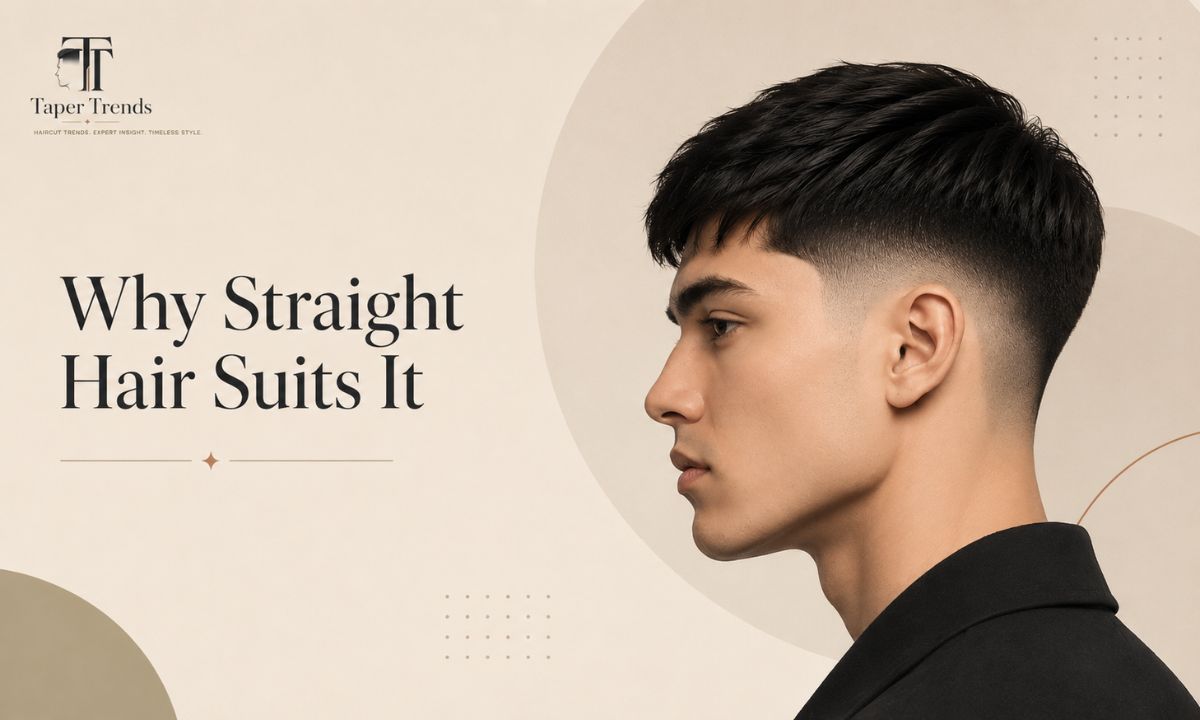
On straight hair the result is sharp. Because straight strands lie flat and uniform, every length change in the blend is visible, so the gradient reads clearly from any angle. There's no curl or wave breaking up the transition. If you want a closer look at the shape from every angle, see our guide on what a low taper fade looks like.
Why straight hair suits this cut
A few things make straight hair a good match for the low taper.
The blend looks cleaner than it does on almost any other texture. Each length change is precise and visible, so the cut still looks sharp days after you leave the chair.
The top also gives you room to play. With the length left longer up top, you can brush it back, part it on the side, push it forward, or rough it up with a matte paste. Straight hair takes most products predictably, which makes switching between looks easier than on wavy or coarse hair.
And because the fade is kept low, the cut stays understated. The sides look neat rather than shaved, which makes it a strong pick for anyone who wants a clean style that doesn't shout for attention.
One caveat: fine to medium straight hair can sit flat on top. If that's you, a light texturizing or volumizing product helps, and you can ask your barber to add a bit of texture or graduation during the cut to lift the hair without changing the overall shape.
Low taper fade vs low fade vs taper
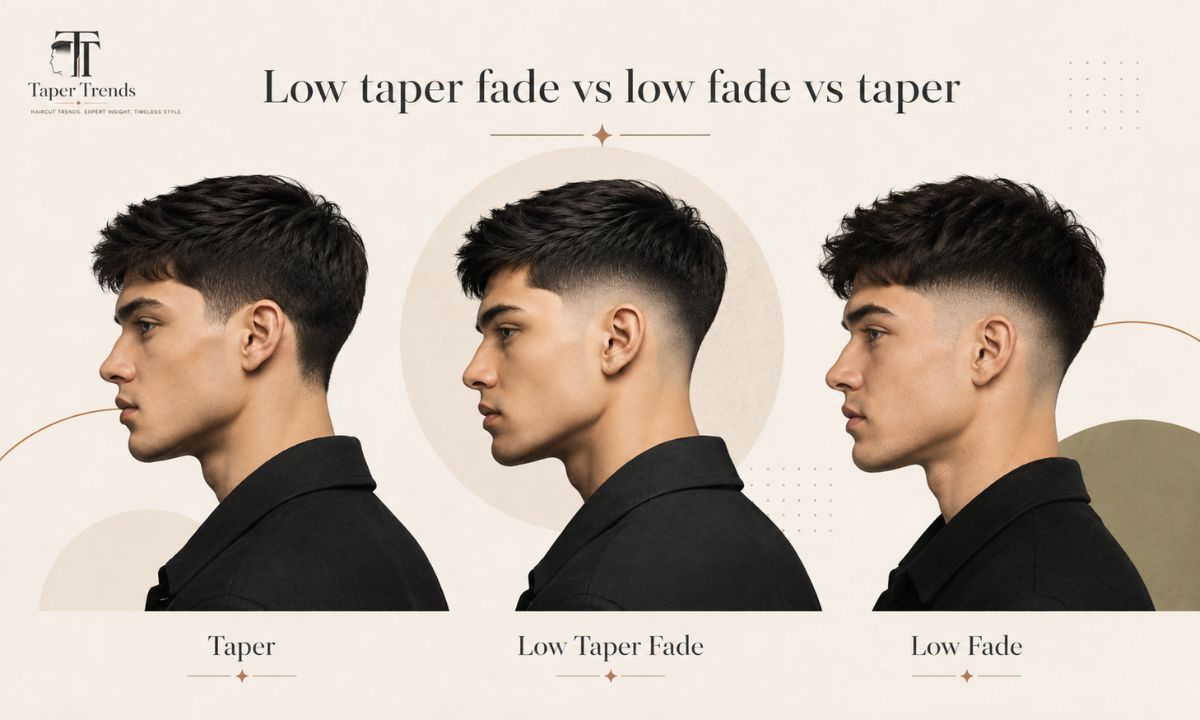
These three terms get mixed up constantly, even in barbershops, and knowing the difference helps you walk out with the cut you actually wanted.
- TaperOn its own, simply means the hair gets shorter toward the neckline and ears without necessarily fading into the skin. The softest and most conservative of the three — good if your workplace or school has stricter rules.
- Low fadeBlends down to the skin and tends to start slightly higher up the side. The gradient is bolder and the contrast between top and sides more dramatic. It looks sharper but needs more frequent upkeep.
- Low taper fadeSits between the two. It combines the gradual shortening of a taper with a clean fade near the ears and neckline, while the mid and upper sections stay full.
The 2026 leaning has been toward softer, more blended fades rather than sharp high-contrast lines, which is part of why the low taper has pulled ahead. When you sit down, ask for a low taper fade with the fade kept low around the ears and neckline, and say you want the blend soft and gradual rather than dramatic. Mention that you have straight hair so the barber can adjust the guard sizes and blending to suit it.
Best top styles for straight hair in 2026
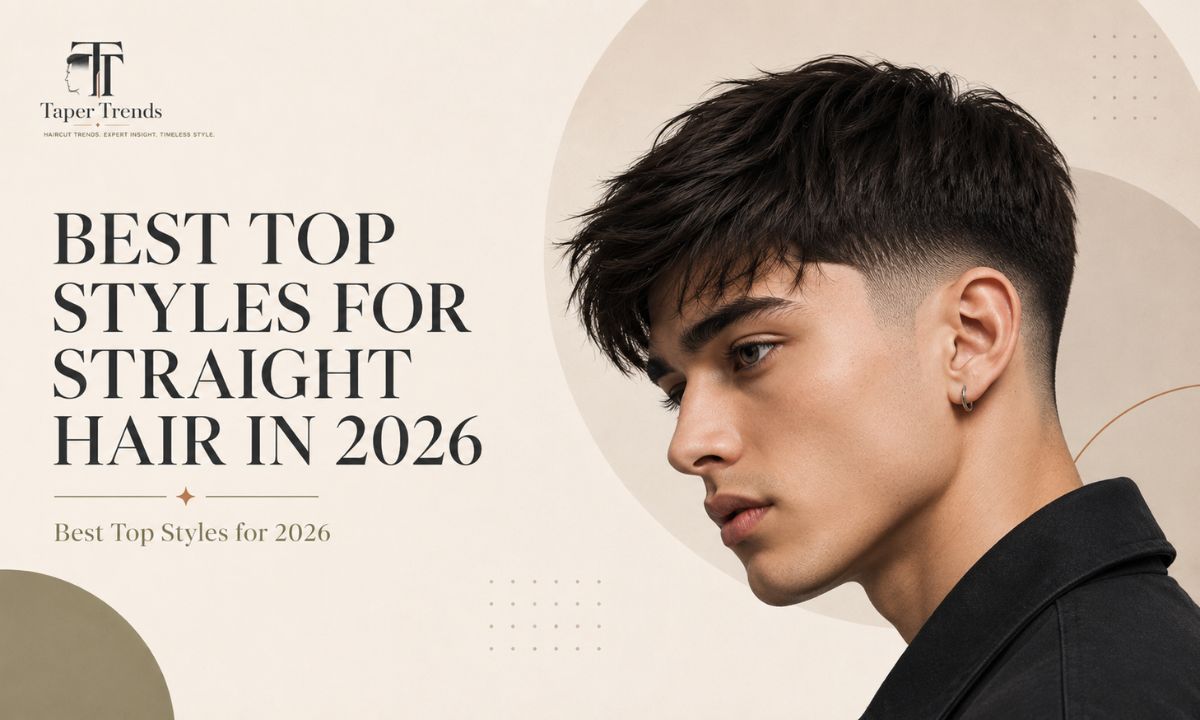
Once the sides are sorted, the top is where the personality of the cut lives. A handful of variations are leading the way for straight hair this year.
- Classic / naturalKeeps the top natural with minimal product. Clean sides, neat neckline, hair worn mostly as-is. The most versatile option and the go-to for something tidy that holds up all week.
- Textured fringeOne of the most requested looks right now. The top is cut slightly forward and worked with a matte clay or paste for separation and movement — somewhere between polished and casual.
- Side partSuits offices and formal settings, and straight hair makes the part crisp without much effort.
- Middle partGrown to medium length and split down the center, falling loosely on either side. It surged over the past couple of years and stays on trend into the back half of 2026.
- Brush-up / quiffAdds height at the front using a stronger-hold product. Works best on thicker straight hair with enough body to hold the lift.
- Short cropThe lowest-maintenance choice: short and flat on top, styled forward with a soft matte product. Popular for school and casual settings.
Two of these are big enough to deserve their own breakdowns: the textured fringe with low taper fade and the middle part low taper fade, both of which sit especially cleanly on straight hair.
Best face shapes and hair types
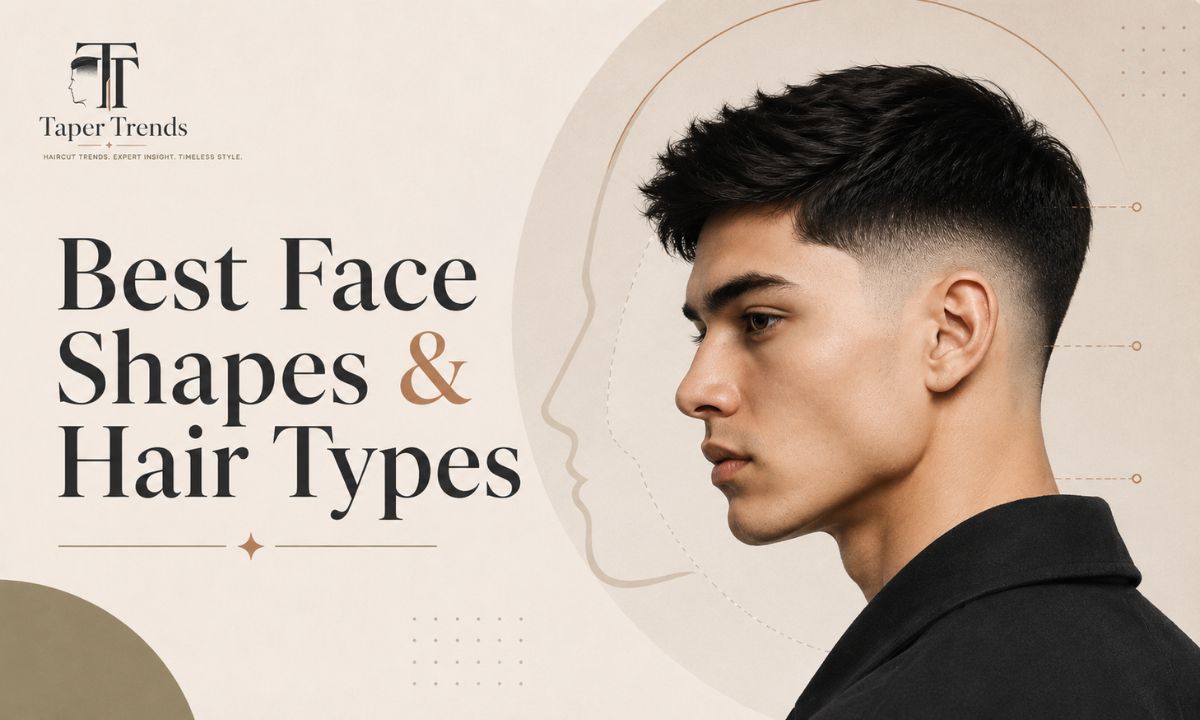
The low taper is one of the more forgiving cuts when it comes to face shape, but small adjustments from your barber make a real difference.
- OvalHandles almost any version, so you can experiment with top length and parting without much risk.
- RoundBenefits from height on top — a quiff, brush-up, or styled fringe — rather than a flat or middle-parted top that can make the face look wider.
- SquareWith a stronger jaw, pairs well with softer styling such as a textured fringe or loose side part. Avoid boxy tops.
- LongLooks better with moderate length and less height. A short crop or a side part worn with some width beats anything that elongates the face further.
Hair density matters too. Thick straight hair holds shape well and blends cleanly, though it may need a bit of thinning on the sides to sit flat. Fine straight hair can look flat if the top is cut too short, so ask for some length plus internal texture, and reach for a volumizing product or sea salt spray to lift the roots. Dense hair — lots of volume even when the strands are fine — tends to bulk out on the sides, and a clean taper removes that gradually for a more balanced shape. Mention your density at the start so the barber can pick guard sizes accordingly.
How to ask your barber for a clean low taper fade
Clear communication does most of the work here. Tell the barber you want a low taper fade kept low around the ears and neckline, with a soft, gradual blend rather than something high up the sides.
Be specific about the top length. “Keep it around two to three inches” is far easier to act on than “not too much off.” If your hair sits flat, ask for texture during the cut through point cutting or light graduation, so movement is built in before any product. And if you're unsure what suits your face, just ask; most barbers are happy to weigh in.
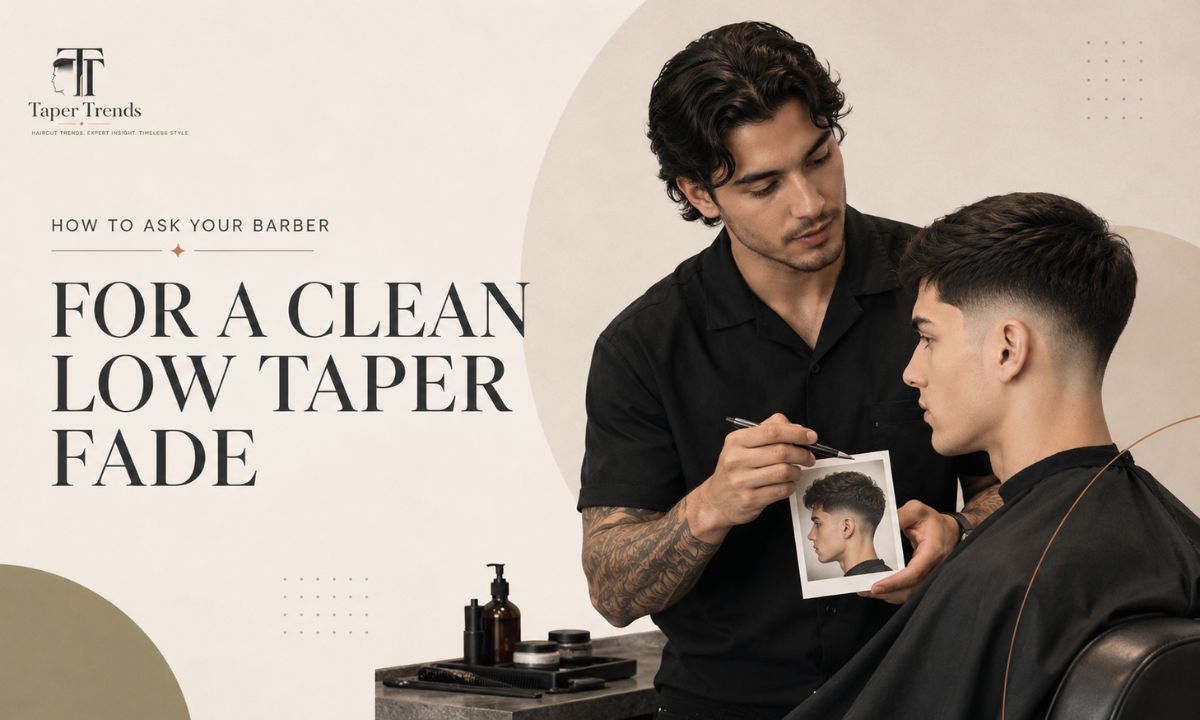
The single most effective thing you can do is bring a reference photo. It removes the guesswork and gives you both a shared target. A line that covers it:
“I'd like a low taper fade, kept low around the ears and neckline. Soft, natural blend, nothing dramatic. Leave some length on top and add a bit of texture so it doesn't sit flat. I've got straight hair, so let me know if you'd adjust anything for that.”
Short, medium, and long variations
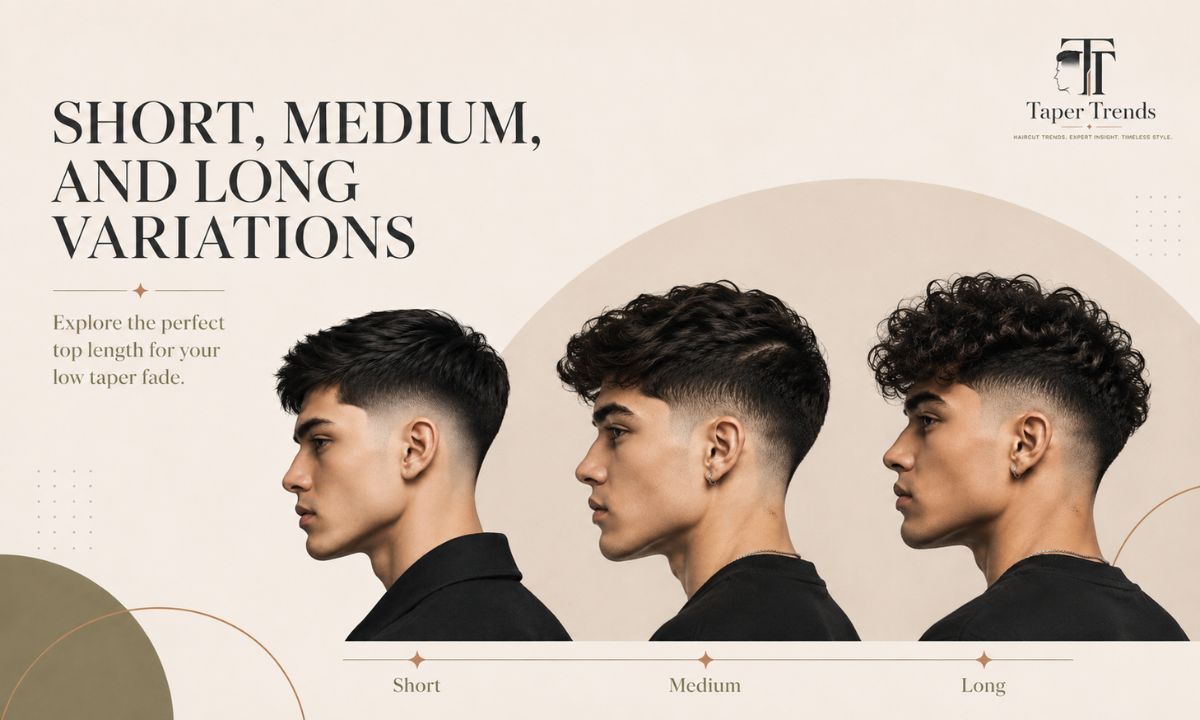
The cut adapts well across top lengths, and each suits a slightly different lifestyle.
- ShortThe cleanest, fastest version. The contrast between fade and top is minimal, it takes seconds in the morning, and it fits school dress codes and conservative offices. The trade-off is limited styling room.
- MediumRoughly two to four inches — opens up the most options: natural, side-parted, textured, or swept forward depending on the day. The most versatile version and the most popular length among men getting this cut in 2026.
- LongLonger than four inches shifts into more expressive territory like middle parts, curtains, or loose flow. It suits a relaxed or creative setting but asks for more product and morning effort to look intentional.
For school or a strict workplace, short to medium is the safer call. For everyday or fashion-forward wear, medium to long gives you more to work with.
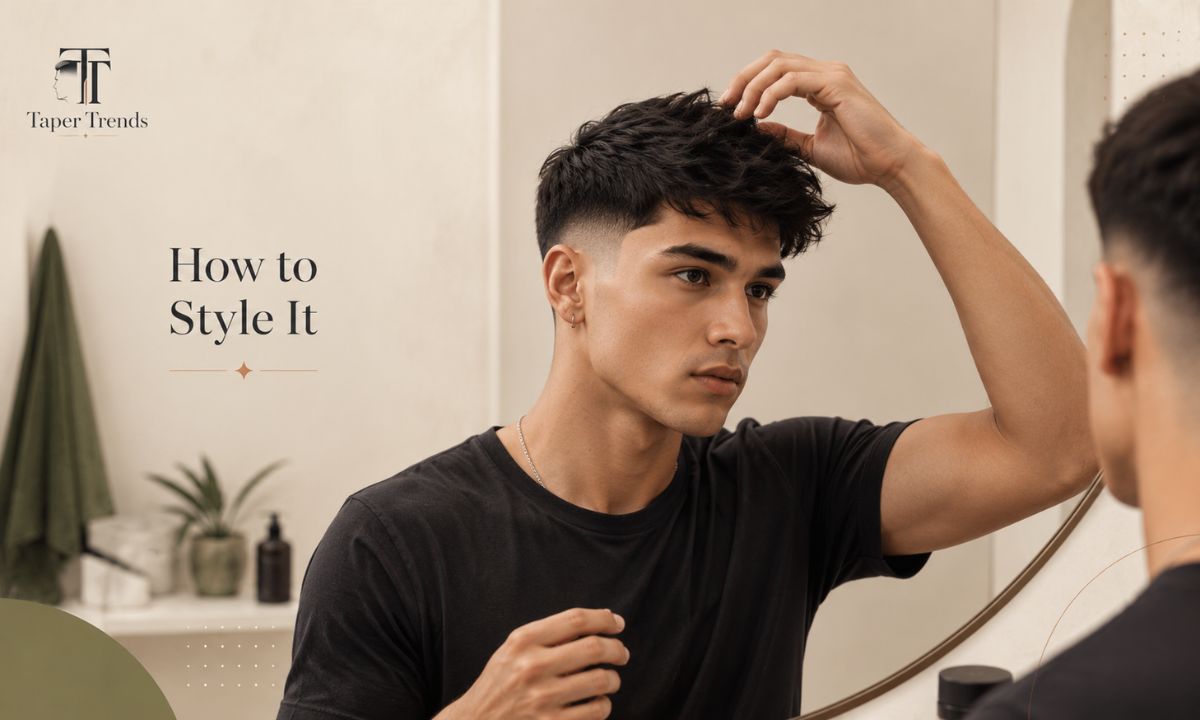
How to style it
Getting the cut is only half of it. How you style it each morning decides whether it looks intentional or slept-in. Straight hair is one of the easier textures to work with here: it dries fast, holds most products, and behaves predictably.
Start with slightly damp hair rather than soaking wet, which is harder to control and distributes product unevenly. Towel-dry after washing, or mist dry hair with a water bottle first. If your hair is fine or flat, a quick blast with a blow dryer on medium heat while lifting at the roots with your fingers or a round brush builds volume before any product goes in. Keep the dryer moving so you don't damage fine strands.
For a casual or textured look, work the product through with your fingers. For a side part or anything polished, a fine-tooth comb or styling brush gives more precision. Whatever you reach for, start with less than you think you need; you can always add more, but you can't take it back once it's in.
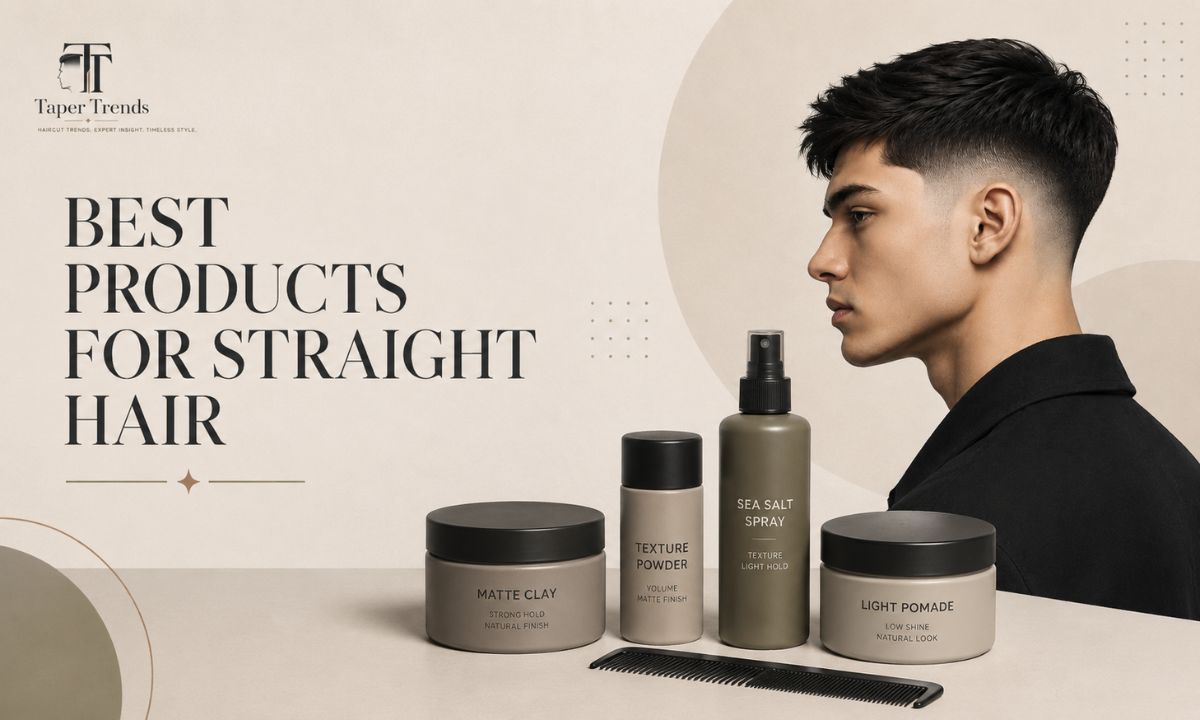
Best products for straight hair
- Matte clayThe most versatile pick for this cut. A natural, non-shiny finish with medium hold — strong enough to keep a textured style in place but flexible enough to reshape through the day.
- Texture powderSuits fine or flat hair that needs lift. A light dusting at the roots adds volume with no residue, and it works on its own or layered under another product.
- Sea salt sprayGives movement and a slightly undone, beachy texture on medium to longer tops. Spray into damp hair and scrunch before drying. Not ideal for very fine hair, which it can leave looking stringy.
- Water-based pomadeA light pomade gives a defined finish with low to medium shine, which suits side parts and brush-backs, and washes out easily.
- Styling creamThe softest option — smoothing and lightly conditioning without stiffness, and works well on thicker hair.
Whatever you choose, skip heavy waxes and oil-based pomades, especially on fine hair. They flatten straight strands and look greasy by midday.
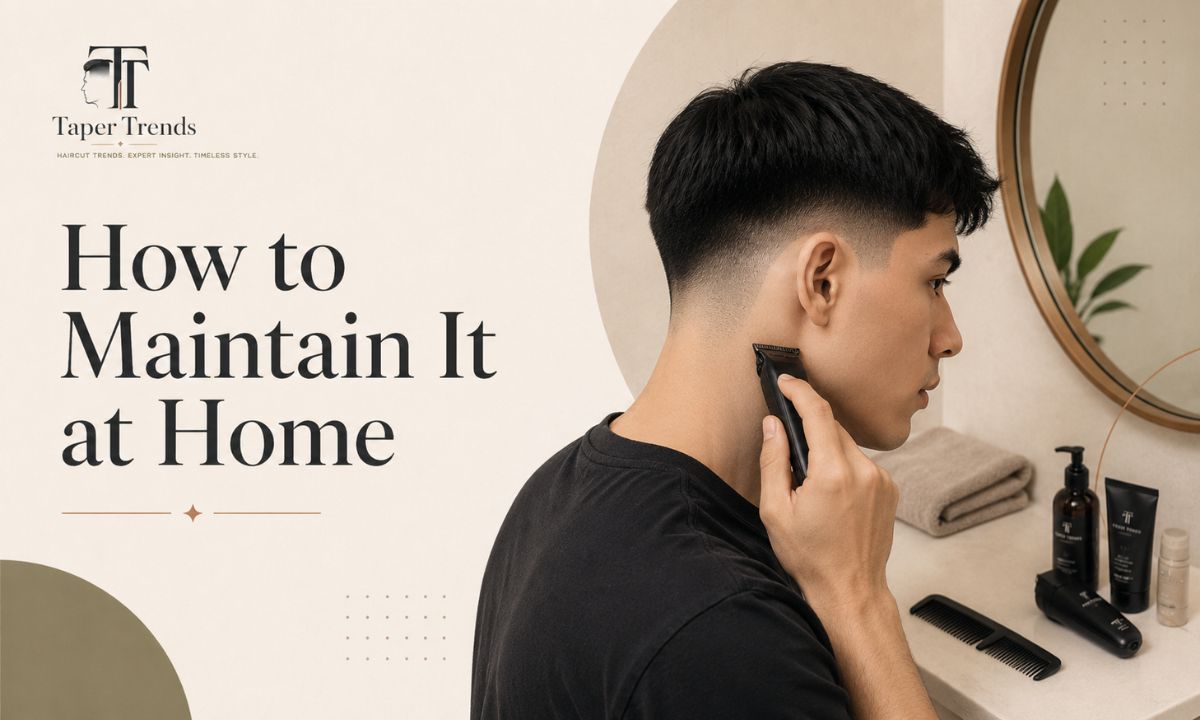
How to maintain it at home
A low taper fade looks its best in the week or two after a fresh cut, and a few habits stretch that window.
See your barber every three to four weeks. The fade around the ears and neckline grows out faster than the top and loses its shape quickly, so waiting six or eight weeks means spending half your time with a grown-out cut. If the neckline gets fuzzy between visits, a careful clean-up along the natural neckline with a trimmer is fine, but stick to the neckline only. Don't try to re-blend the fade yourself — that takes consistent clipper technique and guard changes, and a home attempt is far more likely to leave uneven patches.
Wash every two to three days rather than daily, since daily washing strips natural oils and can flatten fine hair further. Use a light conditioner on the mid-lengths and ends, not the roots, where it adds weight. If you use product daily, a clarifying shampoo once a week clears the buildup that otherwise leaves hair dull and limp.
Common mistakes to avoid
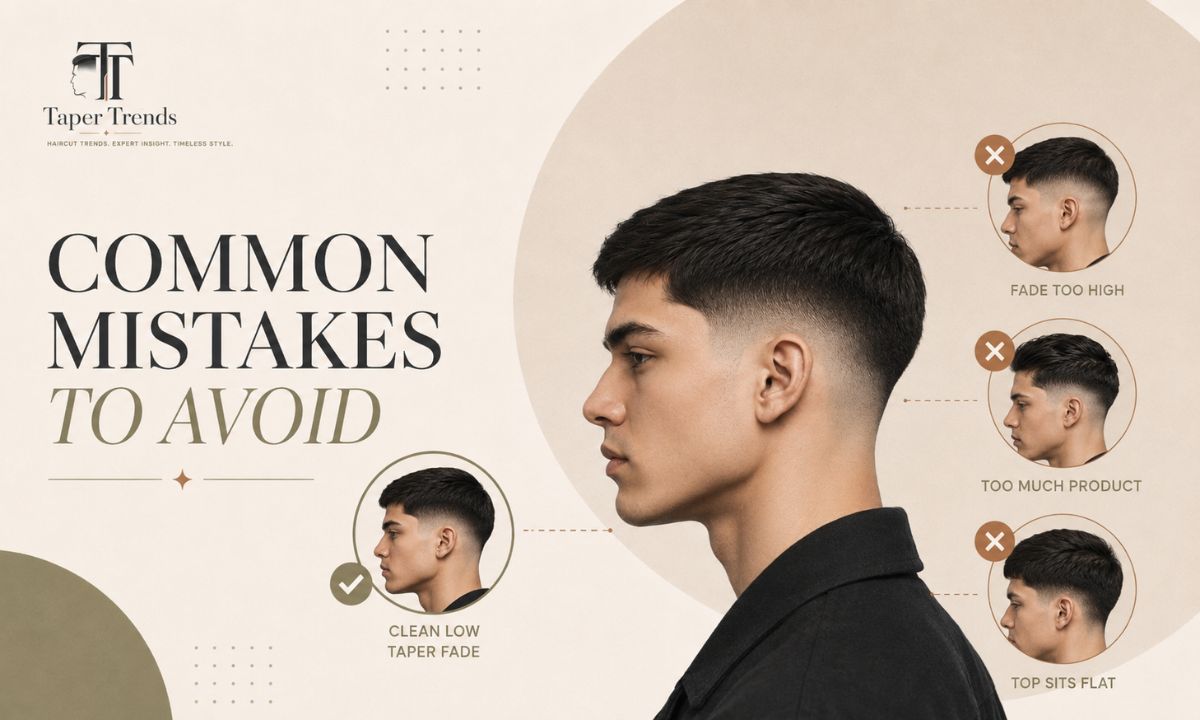
Even a great cut can go sideways with the wrong choices. A few of the most common:
- Asking for the fade too high — a low taper should sit close to the ear and neckline. If the barber starts fading above the temple, speak up.
- Leaving the top too flat. Straight hair lies flat naturally, so ask for internal texture and use a product that adds body rather than weight.
- Using too much product, which usually means more grease rather than more hold. A small amount applied well does more than a large amount worked in carelessly.
- Describing the length vaguely. “Not too short” means something different to every barber, so say what you actually want.
- Picking a style that fights your face shape, like a brush-up on a long face or a flat crop on a round one.
- Waiting too long between trims. A cut that’s five or six weeks old has usually lost most of its shape.
Conclusion
The low taper fade is one of the most practical cuts for straight hair. The clean lines look sharper thanks to how straight strands lie, and it holds up whether you're heading to school, an office, or a weekend out.
Get two things right and the rest mostly takes care of itself: pick a top style that works with your face shape and hair type, and tell your barber clearly what you want, ideally with a reference photo in hand.
FAQs about the low taper fade for straight hair
Is a low taper fade good for straight hair?
Yes, it's one of the best matches. Straight hair shows the blend cleanly because the uniform strands make each length change easy to see, so the result usually looks more defined than it does on wavy or coarse hair.
How long does a low taper fade last?
It looks sharpest for about one to two weeks after a fresh cut. The fade around the ears and neckline starts growing out noticeably after three to four weeks, which is why most men go back to the barber on that schedule.
What should I tell my barber for a low taper fade?
Ask for a low taper fade sitting just around the ears and neckline, say how much length you want to keep on top, request a soft and gradual blend, and bring a reference photo. If your straight hair tends to sit flat, ask for texture to be added during the cut.
Is a low taper fade better than a low fade for straight hair?
It depends on the look you're after. The low taper is softer and more natural, with a gradual transition. A low fade is sharper, with more contrast between the sides and top. For a professional setting or a first fade, the low taper is the safer starting point. If you want something bolder, the low fade may suit you better.
Want more taper fade guides?
Browse clean, barber-ready breakdowns for every hair type.