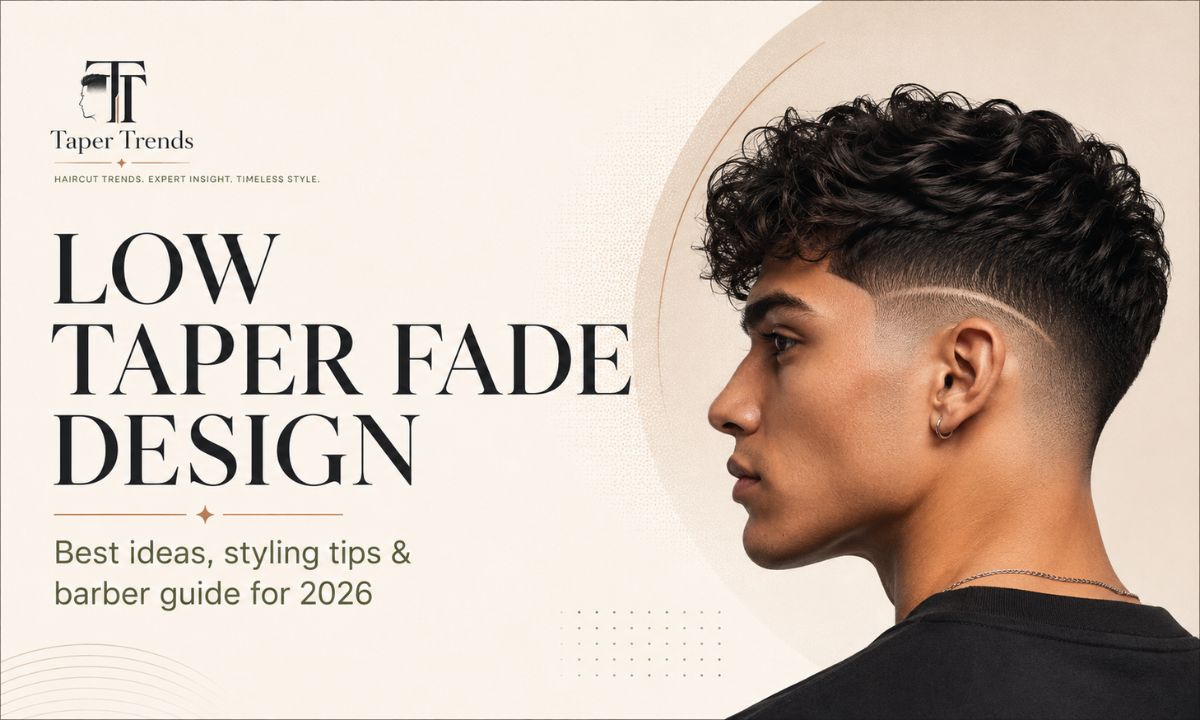
Scroll through any barbershop feed right now and you'll see the same thing on repeat: clean cuts with one small, deliberate detail carved in. The low taper fade design is the cut driving a lot of that. It takes a regular low taper fade — the gradual blend along the sides and neckline — and adds a razor line, a curve, a geometric shape, or a custom neckline. The cut stays sharp and easy to wear. The detail is what gives it a personality.
That balance is the whole appeal. You're not signing up for a dramatic new look. You're taking a haircut that already works and giving it a signature. And going into 2026, it's one of the most requested combinations in the barbershop.
What a low taper fade design actually is
It helps to split the name in half.
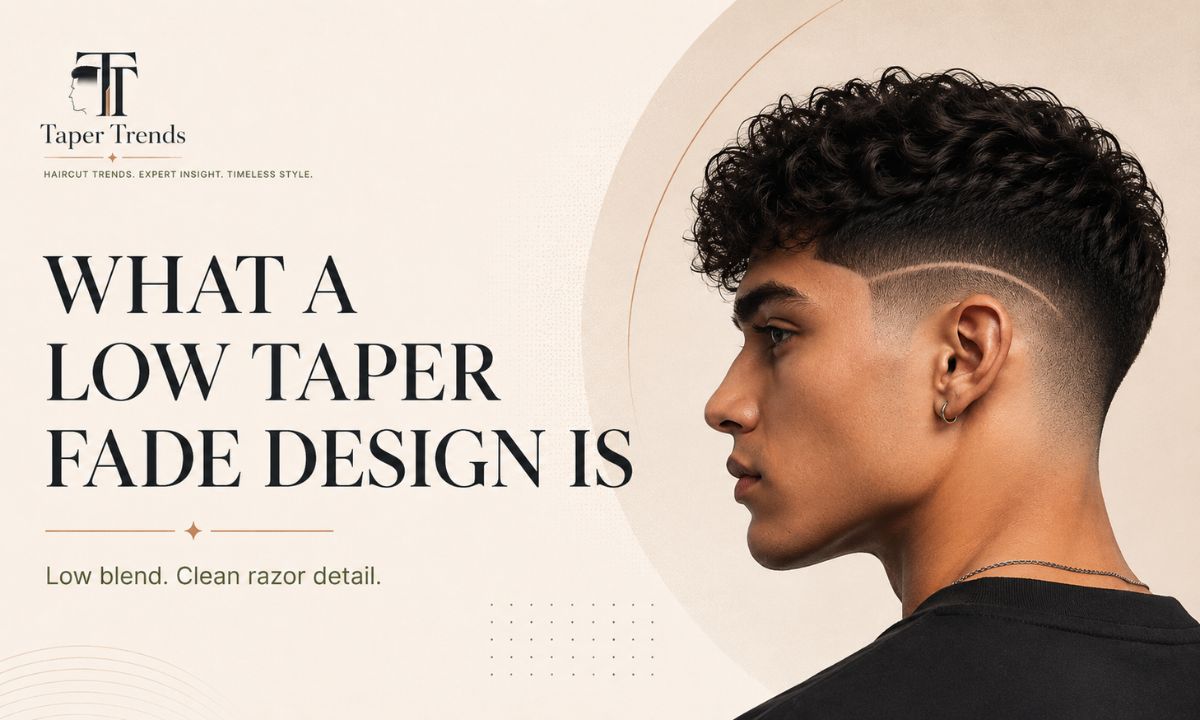
A low taper fade is a blend where the hair gets gradually shorter as it moves from the top of the sides down toward the skin. The “low” tells you where that blend starts: down near the natural hairline, around the ears and the neckline. A high fade begins well above the ear; a low one hugs the bottom, so you keep more length and fullness on the sides while still getting a tight, clean edge. That's why it suits so many people. If you want to picture the base shape first, our guide on what a low taper fade looks like breaks it down from every angle.
The design is the part a barber carves in with a razor or trimmer. Most land in one of three spots: a line or small shape near the temple, a line running down the side parallel to the hairline, or something at the neckline like a V or a curve. How loud it reads comes down to size and placement. A single thin line at the temple can go completely unnoticed in a meeting; a curve sweeping from the temple toward the back is meant to be seen. Both are fine. It depends on the impression you want and how often you're willing to sit in the chair to keep it.
Why the look took over in 2026
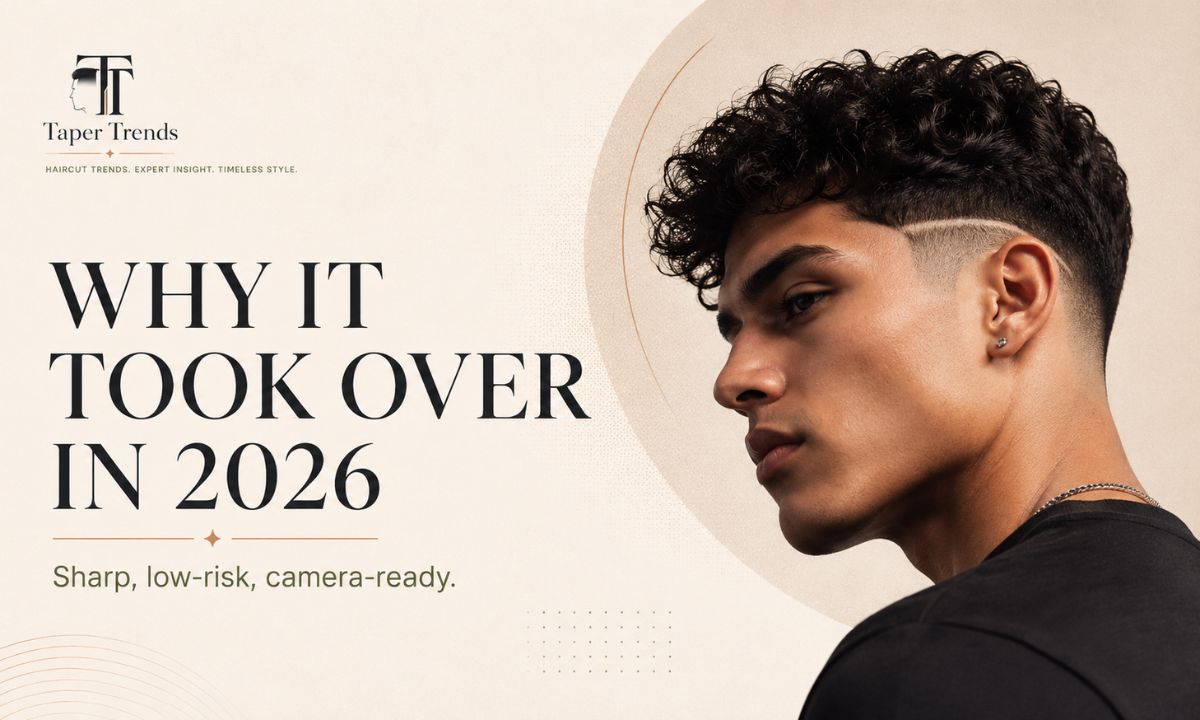
A few things keep pushing it. The base cut already looks put together, so the design isn't doing any structural work — it's a finishing touch. You can drop a faint temple line that passes for professional at the office, then ask for something a little bolder next time when you want it to read as current on a weekend. Same haircut, different dial setting.
It's also low risk. Changing your whole hairstyle is a commitment; adjusting a carved detail isn't. Your barber can move it, simplify it, or drop it entirely at the next appointment, so you can experiment without much downside.
And it films well. When most of your life gets documented in photos and short clips, a clean line against a faded background just shows up better on a phone screen — a big part of why the style spreads so fast across Instagram and TikTok. Worth noting for 2026: the trend has leaned toward softer, more blended fades and matte, natural finishes rather than the harsh high-contrast lines of a few years ago. A low taper sits right in that sweet spot.
The best low taper fade design ideas
If you're standing at the barbershop unsure what to ask for, these are the options worth knowing, with a note on who each tends to suit.
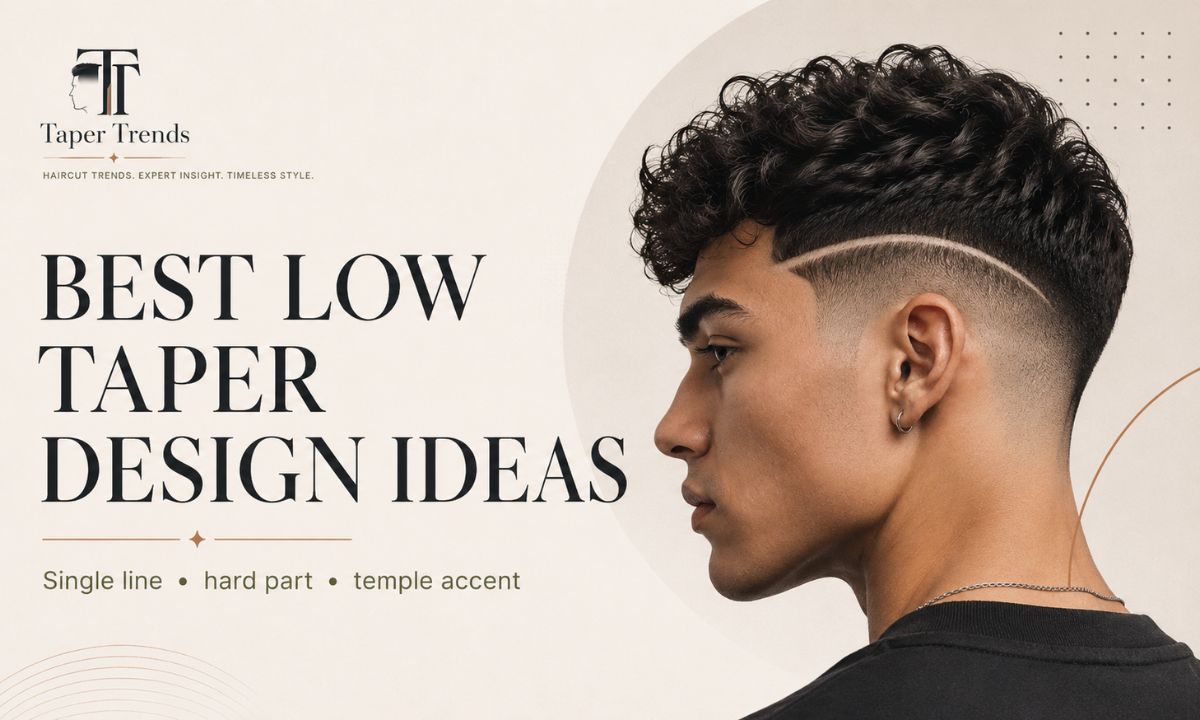
- Single lineOne clean line cut along the temple or side. It's the foundation of the whole category and the right place to start if you've never done this before. Minimal, easy to keep up, and appropriate just about anywhere.
- Double lineTwo parallel lines set close together at the temple or above the ear. The gap is everything — too wide and it loses shape, too tight and the lines blur as it grows. The single line with a bit more weight.
- Curved lineA soft arc that traces the hairline or the curve of your head instead of a hard razor edge. It feels organic rather than rigid, and it moves with the fade rather than against it.
- Hard partA razor line shaved to divide the hair from the fade along the side. It doubles as structure, not just decoration, which makes it one of the cleanest options going. Polished without showy.
- Temple accentA small line, angle, or curve placed right where the fade meets the hairline at the temple. It blends in so naturally people might not clock it at first — the most office-safe choice on the list.
- Lightning boltA short angular zigzag at the temple, popular with younger clients. Character without eating up much space. Keep it small and precise; oversized versions look clumsy rather than sharp.
- V-shaped necklineA downward V cut into the back instead of a straight line across. A back detail rather than a side one, it adds real structure from behind — a bolder pick that lives or dies on clean execution.
The thread running through all of these: a design should look like it belongs to the haircut, not like it landed on top of it. A line that follows the natural contour of the fade reads as intentional; one pointing off in some random direction looks like a mistake. Talk through placement before the razor comes out.
If you're after something low-key, the single line, hard part, or temple accent are your safest bets. A clean line done with real precision beats a complicated pattern rushed every single time. For more pattern inspiration and placement examples, our deep dive on the low taper fade with design walks through more line and pattern ideas.
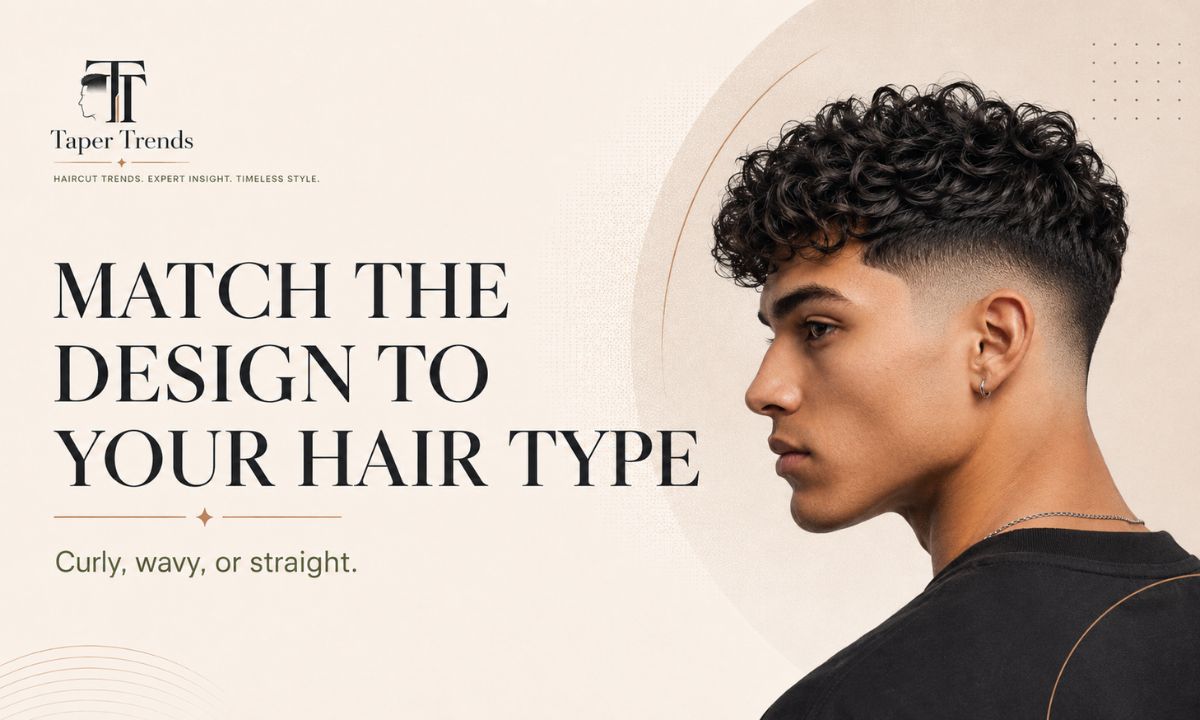
Matching the design to your hair type
Texture matters more than most people expect. The same line that looks razor-sharp on one head can go soft and muddy on another.
- Curly / coilyGives you the most room. The contrast between the shaved design and the surrounding curls is strong, so even a simple line makes a statement — and you can push toward something detailed without it looking overdone.
- StraightShows clean shapes sharply because there's less visual noise around them. That cuts both ways: any wobble is just as visible, so a simple design executed well almost always beats an ambitious one.
- WavySits in between, and takes soft, curved designs best. Hard geometric shapes can feel like they're fighting the wave; a gentle arc follows the flow and looks more cohesive.
- ThickSurrounds a design with more bulk, so a barber can cut a little deeper and still keep things full. Bolder designs hold up well.
- Fine / thinningLower natural contrast, so busy patterns read as messy as they grow in. Keep it to a single line or a temple accent and it stays readable between cuts.
Short version: the more texture you've got, the more you can get away with. The finer and straighter your hair, the more a simple, precise design earns its keep. If you have straight hair specifically, our low taper fade guide for straight hair goes deeper on top styles and products.
Face shape considerations
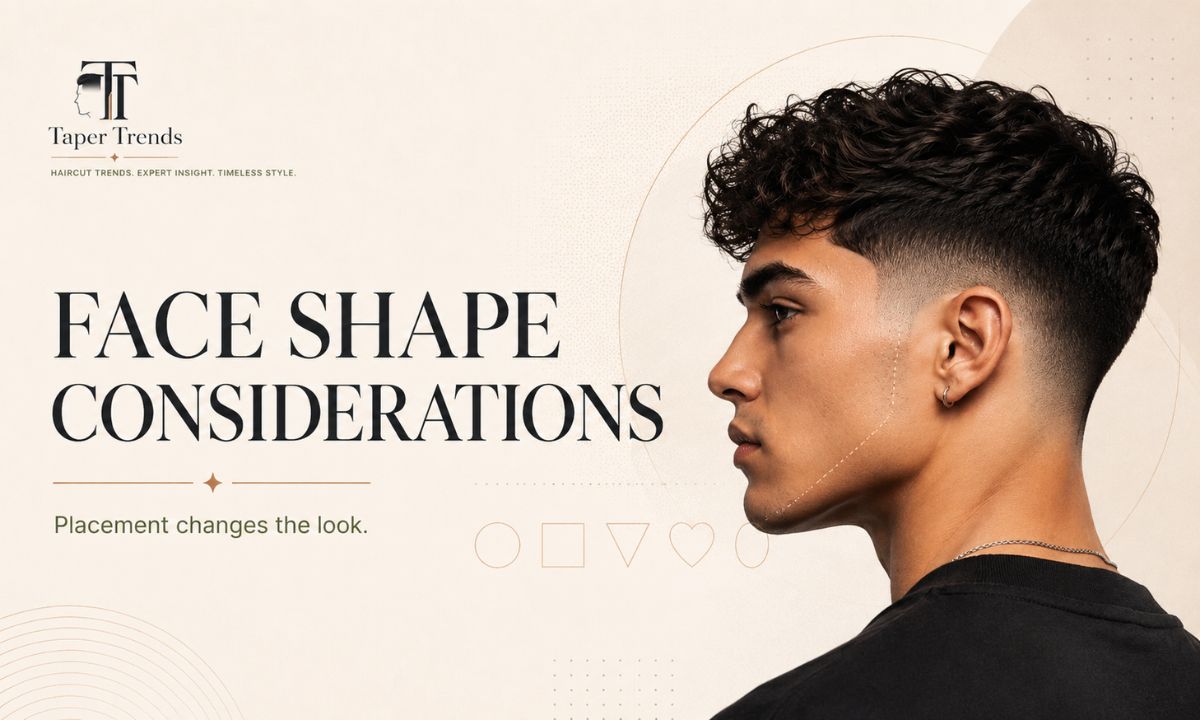
Face shape isn't a rulebook, but it's worth a thought — mostly for where the design sits and how prominent it should be.
- RoundBenefits from a slightly more angular line along the side, which draws the eye across rather than around. A clean temple line on a mild horizontal angle adds definition. Steer away from anything that adds width at the sides.
- OvalThe easy case. Almost any line or placement works, so this is the shape to experiment with.
- SquareTakes clean, structured lines well. A balanced side line or a sharp temple accent plays up the natural angles, and the low taper's structured edge already suits the shape.
- Long / oblongThe one to watch. Avoid piling on vertical emphasis — horizontal lines beat strong downward ones, and a V-neckline that pulls the eye down is usually the wrong call here.
- Heart-shapedWider at the forehead, narrow at the jaw. Does better with subtle work like a temple accent or a soft curve that doesn't add weight up top.
None of this is law. Your barber reads your actual hairline in person, which beats any chart.
How to ask your barber for it
Knowing what you want is half the job. Saying it clearly is the other half.
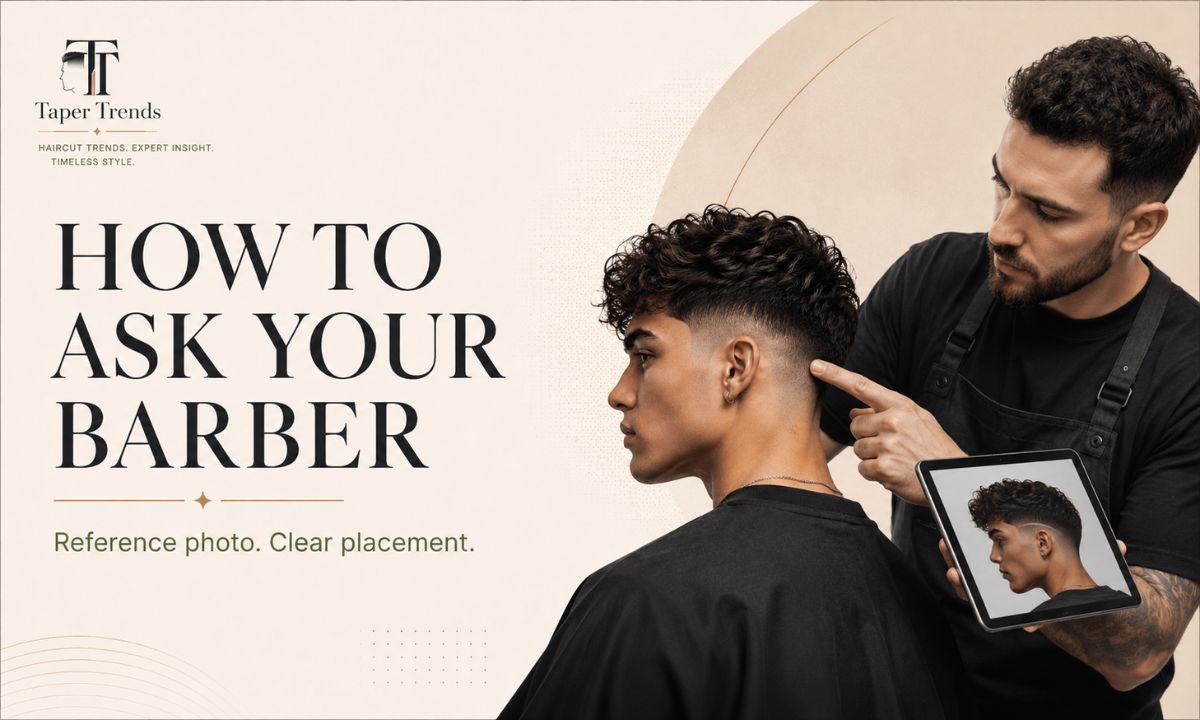
A reference photo is the single most useful thing you can bring. Two or three angles, clear enough to show the placement, the fade height, and the length on top — screenshots from Instagram or a barber's portfolio are perfect. Then tell them you want a low taper and how low you mean, something like “starting right at the natural hairline.” If you've had a fade before, use it as a reference point.
Be honest about complexity — simple, moderate, or bold? If you're unsure, go simple the first time. Adding detail at the next appointment is easy; undoing something too busy is not. Name the placement too, whether it's temple, side, neckline, or a mix. Then ask the two questions that actually matter before the razor moves: does this design work with my hairline, and how often will I need to come back to keep it clean?
If you want a line to memorize, this does the job:
“I'd like a low taper fade that stays tight along the natural hairline, with a single clean line at the temple. Nothing too bold, just something sharp that's easy to maintain.”
That gives a barber everything they need.
Keeping it sharp: maintenance and styling
Here's the honest part nobody loves: the design is the first thing to go.
A taper fade with a carved detail looks its best in the first week or two. After that the fade grows out and the lines start to soften. For most people a touch-up every two to three weeks keeps it fresh, and if you're carrying something detailed, closer to the two-week mark. The fade itself can ride to three or four weeks and still look decent — a razor line usually can't. Hair fills the shaved channel fast, and a crisp line can blur inside ten to fourteen days. That's not a flaw, it's just what carved designs do. Plan your schedule and budget around it before committing to anything complicated.
The neckline goes first as hair creeps back. A small trimmer at home to tidy the edges can buy you an extra week — you don't need to attempt the fade yourself, just clean up the obvious growth along the neckline and the perimeter.
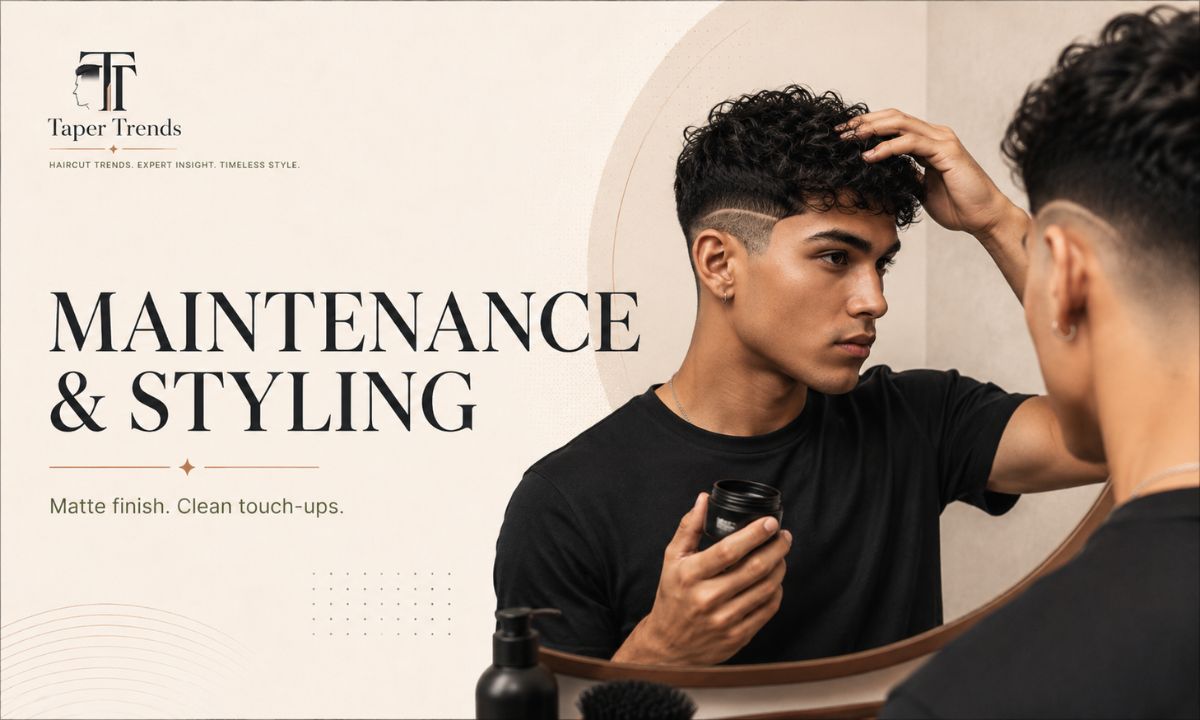
For product, go light. A pea-sized bit of matte clay, cream, or pomade shapes the top without stiffness. Heavy gels and anything greasy work against this cut — they flatten the hair and kill the contrast that makes the fade look clean. The 2026 finish is matte and natural, and shine fights that. For brushing, straight and wavy hair likes a boar bristle or soft paddle brush, while curly hair does better with a pick or wide-tooth comb so you don't pull the pattern apart. Brush before you style, not after.
Mistakes that ruin a good design
Most people learn these the hard way. You don't have to.
- Too complex for your hairA pattern that looks incredible on thick, coily hair turns muddy on fine, straight hair. Match the complexity to what your hair can hold. When in doubt, simpler survives across more textures.
- Skipping the reference photoWords leave too much room for interpretation, and even a great barber benefits from a picture. Find a clear one before you go — not a blurry screenshot from the chair.
- Copying without checking the fitA design that's perfect on someone else may not suit your hairline or face. Celebrity cuts get maintained daily by stylists and shot in ideal light. Use them as inspiration, not a blueprint.
- Going too bold for your day-to-dayA dramatic side pattern is great in the right setting and a headache at a conservative job or school. Think about where you'll be wearing it most.
- Waiting too long between touch-upsIt makes the next cut harder and pricier, and can force the barber to take off more length than you wanted just to reset it.
- Piling on productIt weighs the hair down and flattens the contrast you paid for. Less really is more.
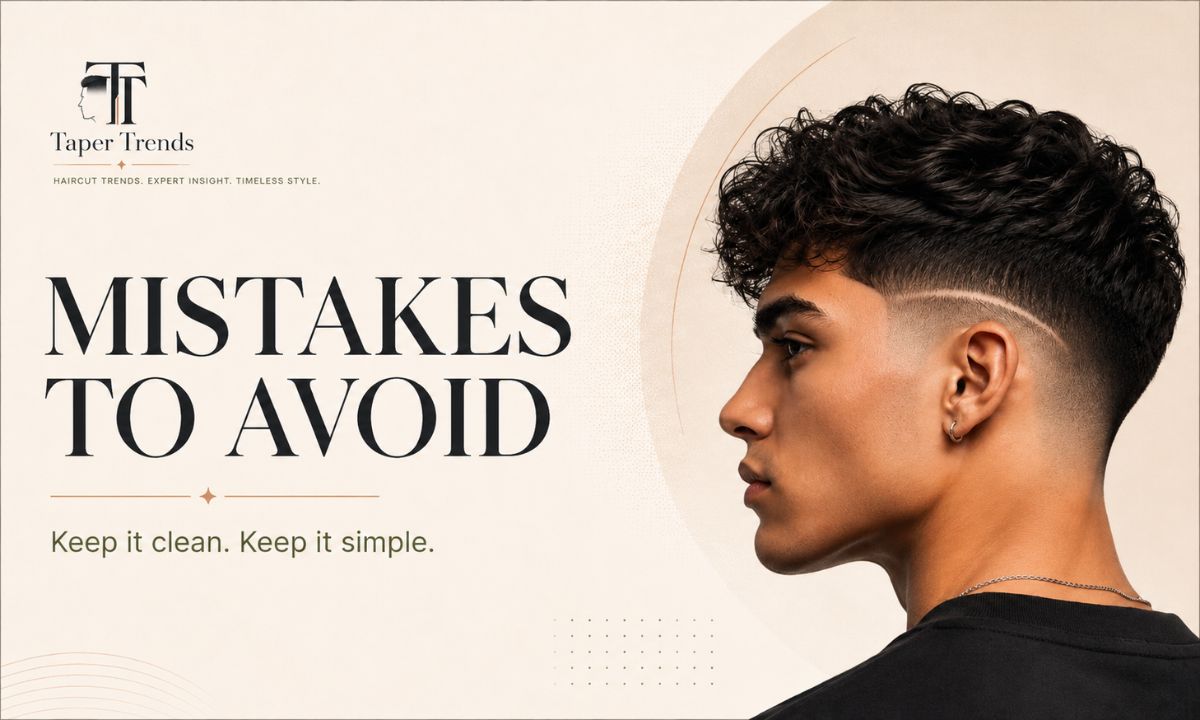
Is it the right haircut for you?
Both the look and the upkeep have to fit your life. Here's the quick read on whether it's your cut.
Go for it if
- You like visiting the barbershop and don't mind the upkeep
- You want something polished daily without a long routine
- You like a small detail that adds character without a full restyle
- You're a teen or younger guy after something stylish but manageable
Maybe skip it if
- You stretch four to six weeks or longer between cuts
- You want a style that looks fine as it grows out
- You want a look that needs zero attention between appointments
New to it? Start simple. A single line at the temple or a clean hard part gives you the finished, barbershop look without much of a maintenance commitment. Once you see how your hair behaves and how the upkeep fits your week, you can push toward bolder work. If you're still weighing the base cut itself, our breakdown of low taper vs low fade covers how much contrast you actually want, and for younger clients our guide for straight-haired boys keeps it low-maintenance.
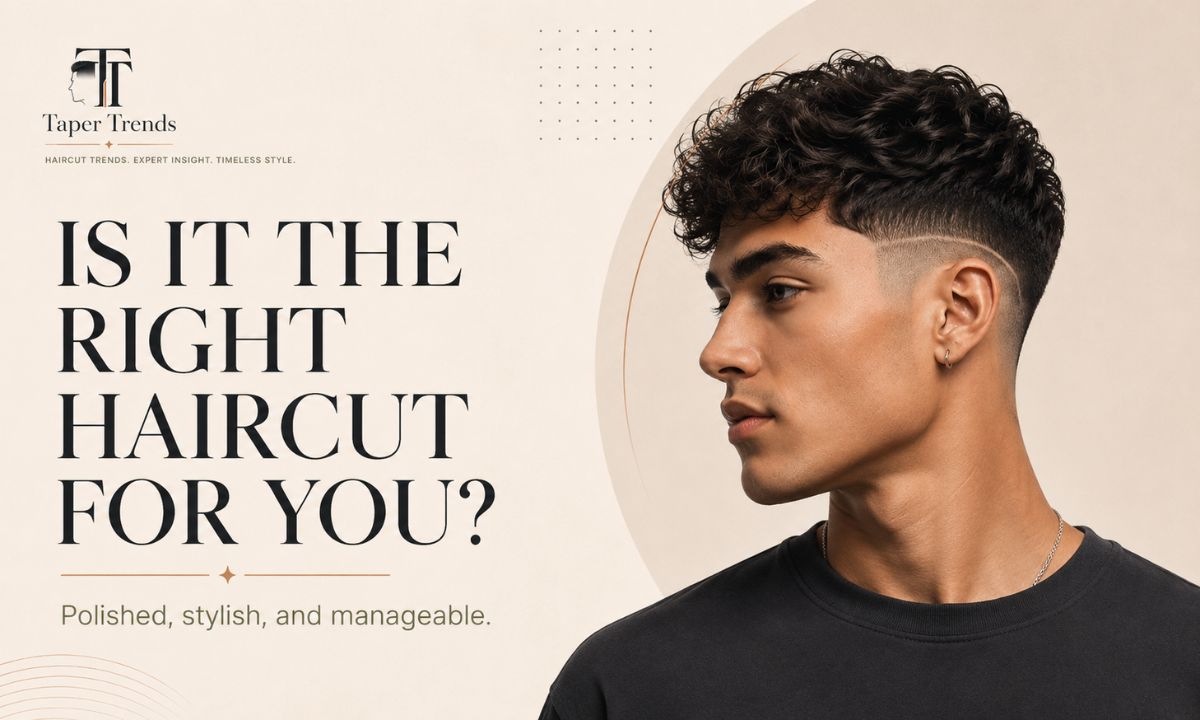
Final thoughts
A low taper fade design is about as clean and adaptable as men's cuts get in 2026. You get the structure of a classic taper with a custom detail on top, and none of the commitment of a real restyle. The best version depends on your texture, your face, your schedule, and the barber holding the razor — which is part of why no two look the same.
If it's your first time, keep the design simple. A precise single line will always beat a busy pattern rushed at the end of an appointment. Start clean, stay on schedule, and let the detail do its quiet work.
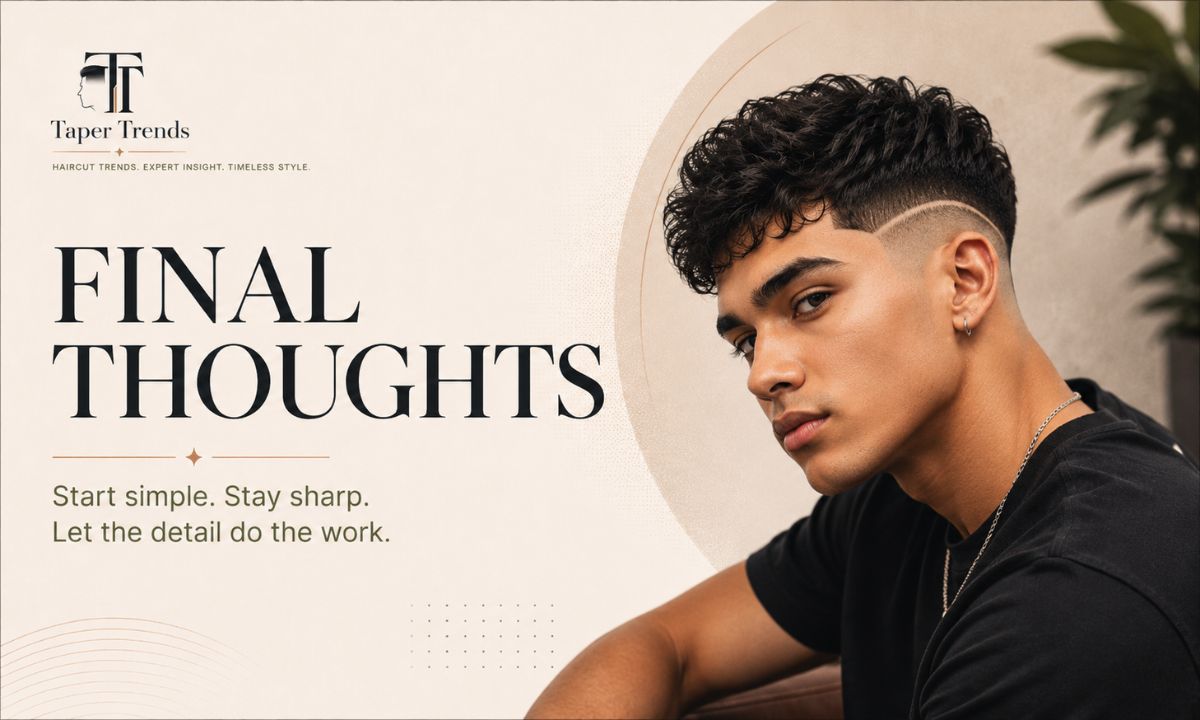
FAQs about low taper fade design
What is a low taper fade design?
It's a standard low taper fade — the gradual blend down the sides and neckline — with a detail carved in by razor or trimmer. That detail is usually a line at the temple, a line running down the side, or a shape at the neckline like a V or a curve. The fade keeps the cut clean and easy to wear; the design gives it a signature.
How long does a low taper fade design last?
The design looks its sharpest for the first one to two weeks. A razor line can blur within ten to fourteen days as hair fills the shaved channel, so most people book a touch-up every two to three weeks. The fade itself can ride to three or four weeks, but the carved detail is always the first thing to go.
Which low taper fade design is best for beginners?
A single clean line at the temple or a hard part. Both give you that finished, barbershop look without much upkeep, and they read well across almost any setting. A simple line done with real precision beats a complicated pattern rushed every time.
Does a low taper fade design work on straight or fine hair?
Yes, but keep it simple. Straight hair shows clean shapes sharply, so a precise single line looks excellent — though any wobble shows just as clearly. Fine or thinning hair has lower natural contrast, so stick to a single line or a temple accent rather than a busy pattern that reads as messy as it grows in.
How do I ask my barber for a low taper fade design?
Bring two or three reference photos, ask for a low taper that stays tight along the natural hairline, then name the design and where you want it — temple, side, or neckline. Be honest about complexity, and ask whether the design suits your hairline and how often you'll need to come back to keep it clean.
Want more taper fade guides?
Browse clean, barber-ready breakdowns for every hair type.