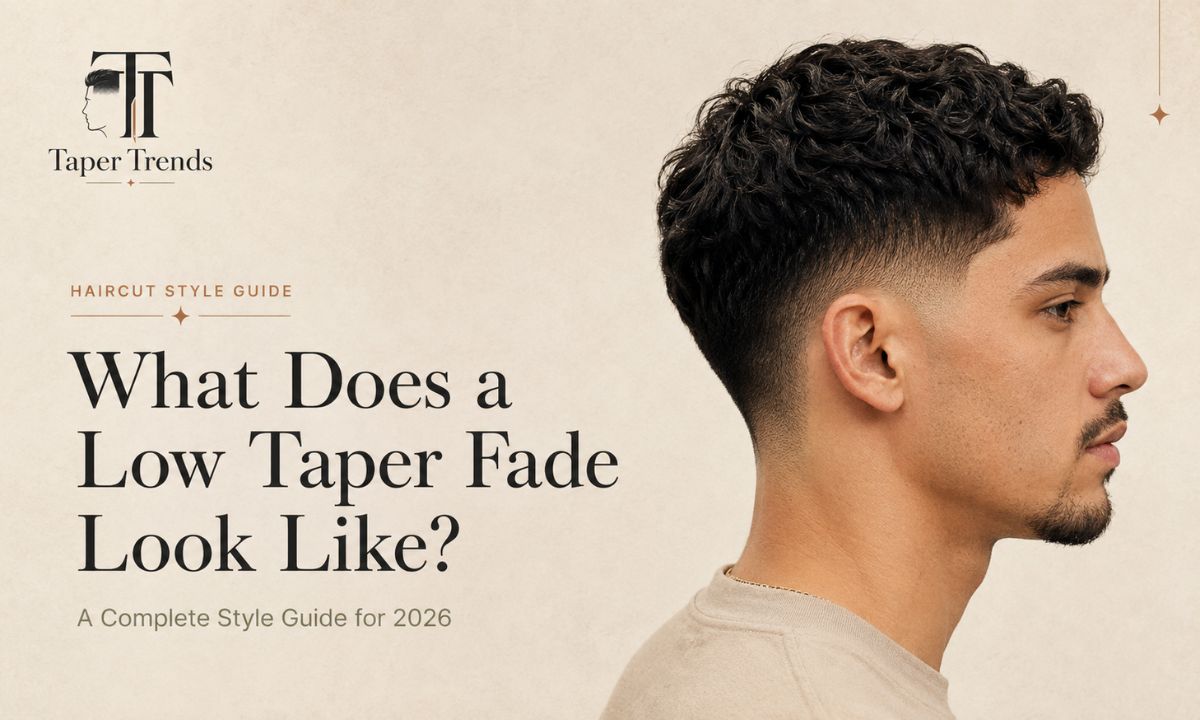
If you've spent any time scrolling barber inspiration photos and wondering what a low taper fade actually looks like, you're in good company. A low taper fade is a clean haircut where the hair gets gradually shorter as it moves down toward the ears, sideburns, and neckline. Instead of a sharp line climbing up the side of the head, the blend stays close to the natural hairline, which keeps the whole look subtle.
The top is yours to play with — natural texture, curls, waves, a short crop, or something longer brushed back. That flexibility, plus the fact that it suits almost every hair type, is a big part of why it's become such a reliable pick in 2026.
What does a low taper fade look like?
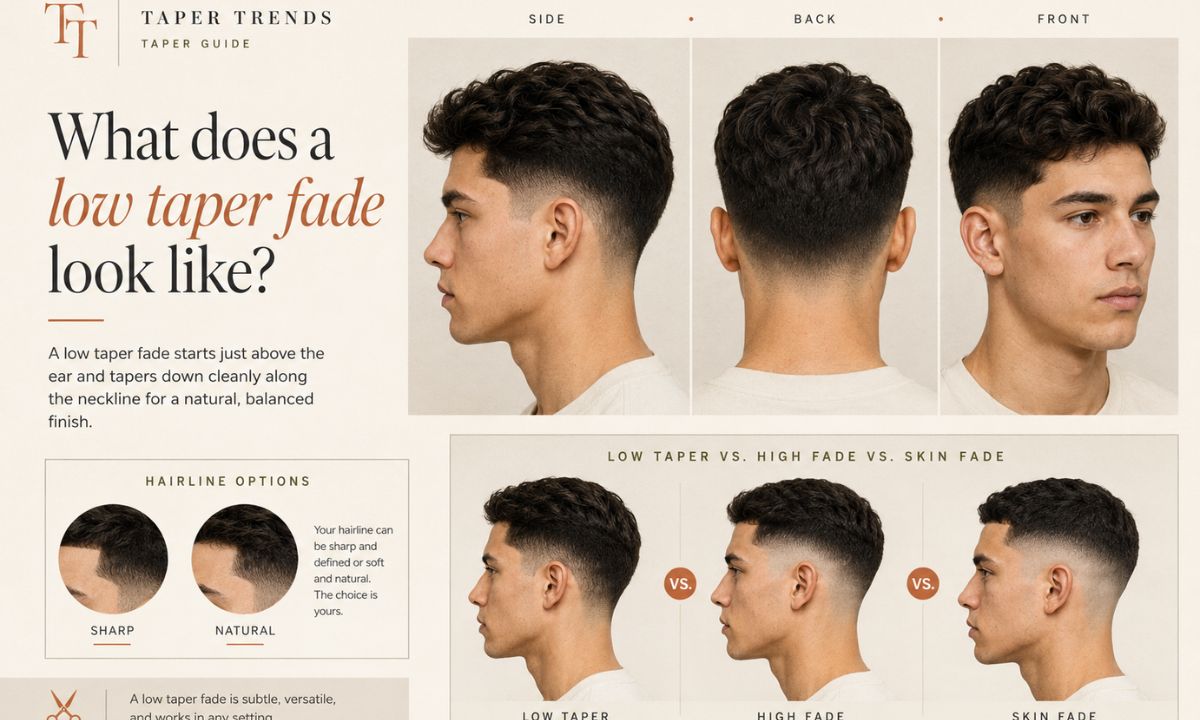
Picture your head from the side. Rather than fading high near the temple, a low taper starts much lower, right around the ear and along the neckline. From the front you'd barely register the fade at all, since most of the visible change happens on the sides and back instead of across the face.
From the side, the hair shortens gradually as it travels down toward the ear, and the sideburns blend smoothly into the skin or into very short hair near the bottom. The hair near the temple keeps decent length, and the real shortening only kicks in closer to the ear, so the sides never look shaved too high. That restraint is what makes the cut wearable in pretty much any setting.
The sides
Length stays near the temple; the gradual shortening only starts low, close to the ear.
The back
Tapers into a soft, rounded edge instead of a blunt straight line across the neck.
The hairline
A separate choice — a sharp razor line, or a soft natural edge with no obvious line.
Set next to a high fade or a skin fade, a low taper reads as noticeably softer and less dramatic. It looks put together without demanding attention, which is exactly why it sits comfortably in an office, a classroom, or a casual weekend.
What is a low taper fade haircut?
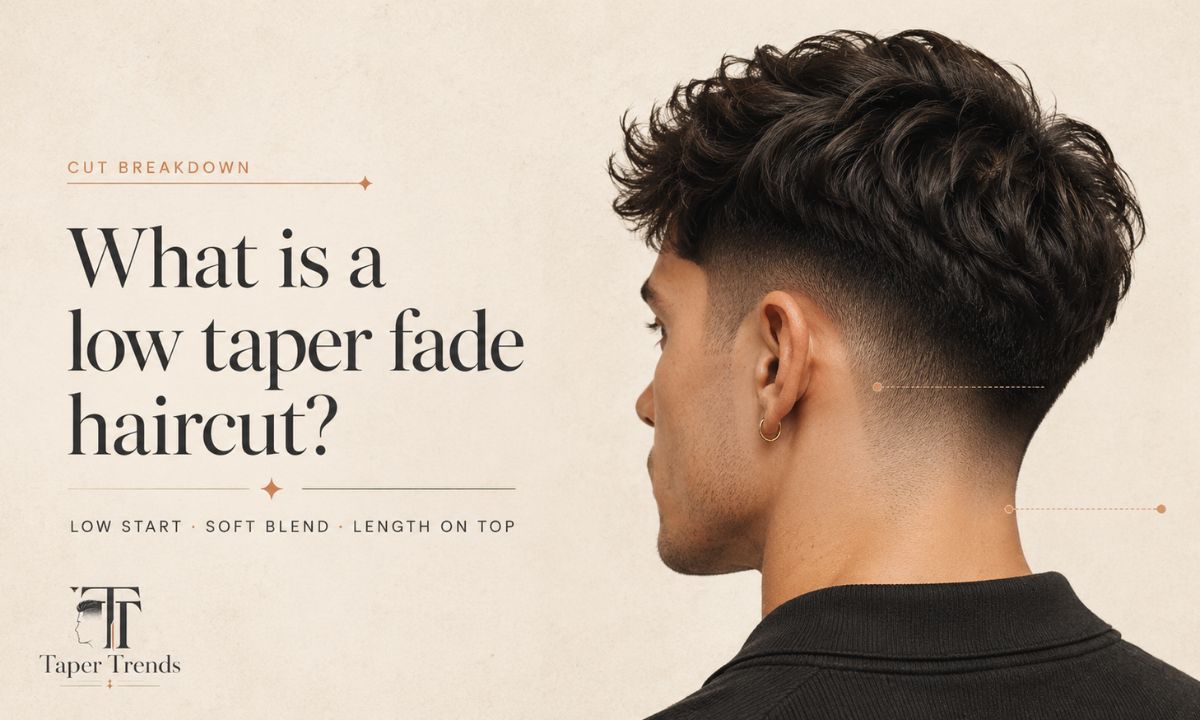
The name explains the cut once you break it apart into its three pieces.
- LowWhere the fade begins — near the bottom of the sides rather than high up by the temple.
- TaperThe gradual shortening of the hair, as opposed to an abrupt change in length.
- FadeThe hair blends down into the skin or into very short hair for that smooth, blended finish.
On a low taper, the tapering stays concentrated in three areas: the sideburns, the patch just above and around the ears, and the neckline. Everything else keeps more length, which is what makes the cut so easy to live with and so light on upkeep.
The top is where personality comes in. A low taper pairs naturally with messy texture, loose curls, soft waves, a side-swept fringe, a middle part, or a plain short crop. None of those styles interfere with the blend, since the tapering stays low on the sides and back and leaves the rest of the head alone.
Key features that define a low taper fade
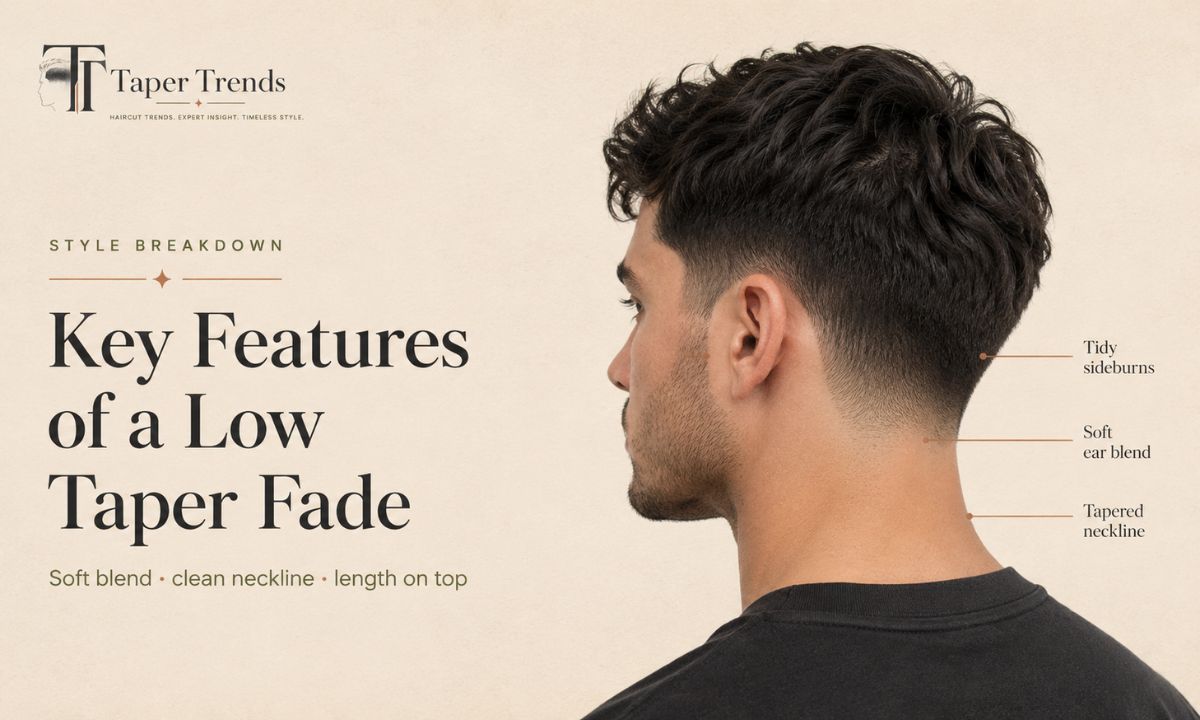
A few details show up on almost every well-cut low taper, no matter your hair type or face shape:
- The sideburns are trimmed and shaped rather than left shaggy.
- The hair around the ears blends gradually instead of stopping at a hard line.
- The neckline tapers into a clean finish that looks polished but not rigid.
- The top keeps enough length to balance the shorter sides.
- The contrast between top and sides stays gentle — far softer than a high or skin fade.
- The edges look tidy without looking severe, so the cut still feels relaxed.
That mix lines up neatly with where men's hair has landed in 2026. The biggest shift this year has been a move away from overly polished, heavily styled looks toward cuts that feel intentional but natural — soft blended fades replacing razor-sharp lines, with texture running through almost every trending style. A low taper covers all of it.
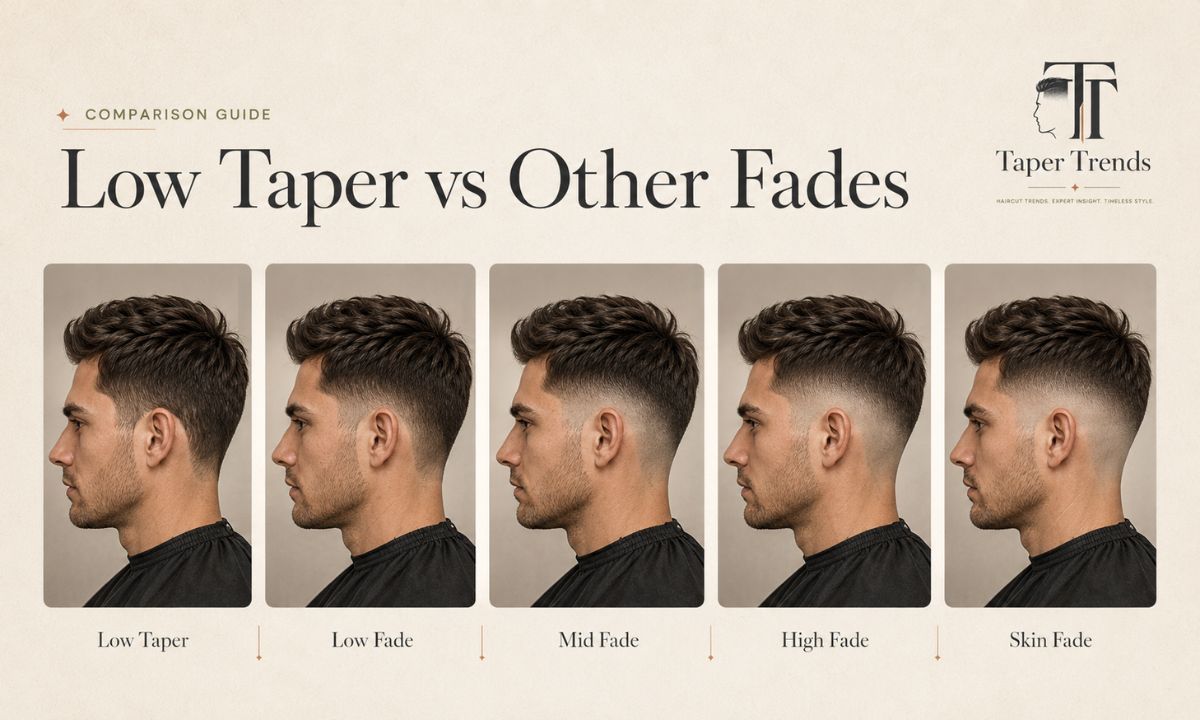
Low taper fade vs other fade types
This is where a lot of people get tangled up, so here's the plain version. A low taper stays low: the blending happens around the sideburns, the ears, and the neckline, while the rest of the sides keep their length. Where the blend starts is what changes the look completely.
| Fade type | Where it starts | The look |
|---|---|---|
| Low fade | Near the ear | Subtle — very close to what a low taper does |
| Mid fade | Middle of the side | More noticeable, still balanced |
| High fade | Up near the temple | Sharp band of contrast, short sides |
| Skin fade | Down to bare skin | Boldest — pairs with low, mid, or high |
"Taper fade" is really the umbrella category, since taper just means the gradual shortening, and it covers the low, mid, and high versions. If you want something understated, a low fade or low taper is the safer call. If you want contrast and a bolder statement, a high or skin fade gets you there. A low taper sits firmly on the quiet end of that range — and in 2026 the key word with fades is restraint, with the fade supporting the haircut instead of becoming the haircut.
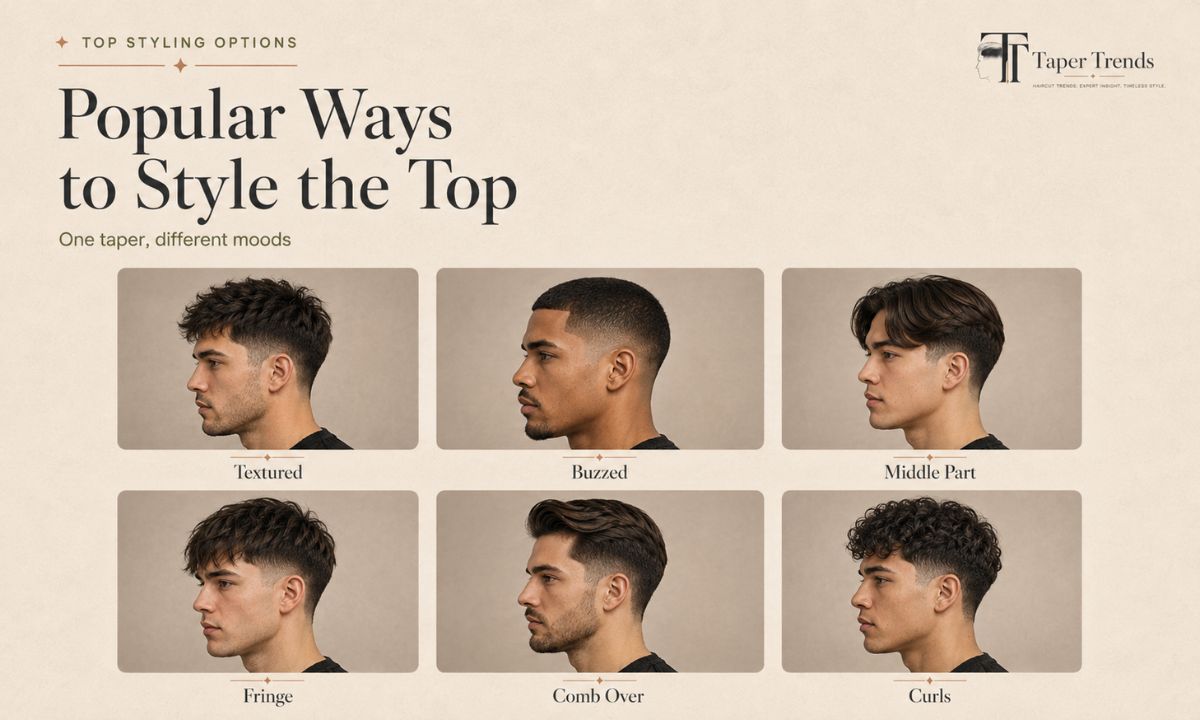
Popular ways to style the top
The blend stays consistent, but the top can change the entire mood of the haircut. These are the versions people ask for most:
Textured top
Choppy and piecey, usually finished with a matte product for an undone, modern feel.
Buzzed top
Short and even all over, fading into the taper — about as low-maintenance as it gets.
Middle part
Split down the center with each side combed out; best on straight or lightly wavy hair.
Soft fringe
Drops forward over the forehead and tends to read younger and a little trendier.
Comb over
Swept to one side with a bit of sheen — suits more polished or formal settings.
Messy top
Longer and tousled with no strict pattern, ideal for relaxed everyday wear.
Curlier and coilier hair gets its own treatment here. Curls left longer on top get to bounce naturally while the low taper keeps things tidy underneath, and afro-textured hair can hold its volume and shape up top while the sides and neckline stay clean. Whatever you pick for the top, the fade underneath does the same quiet job of keeping the cut grounded.
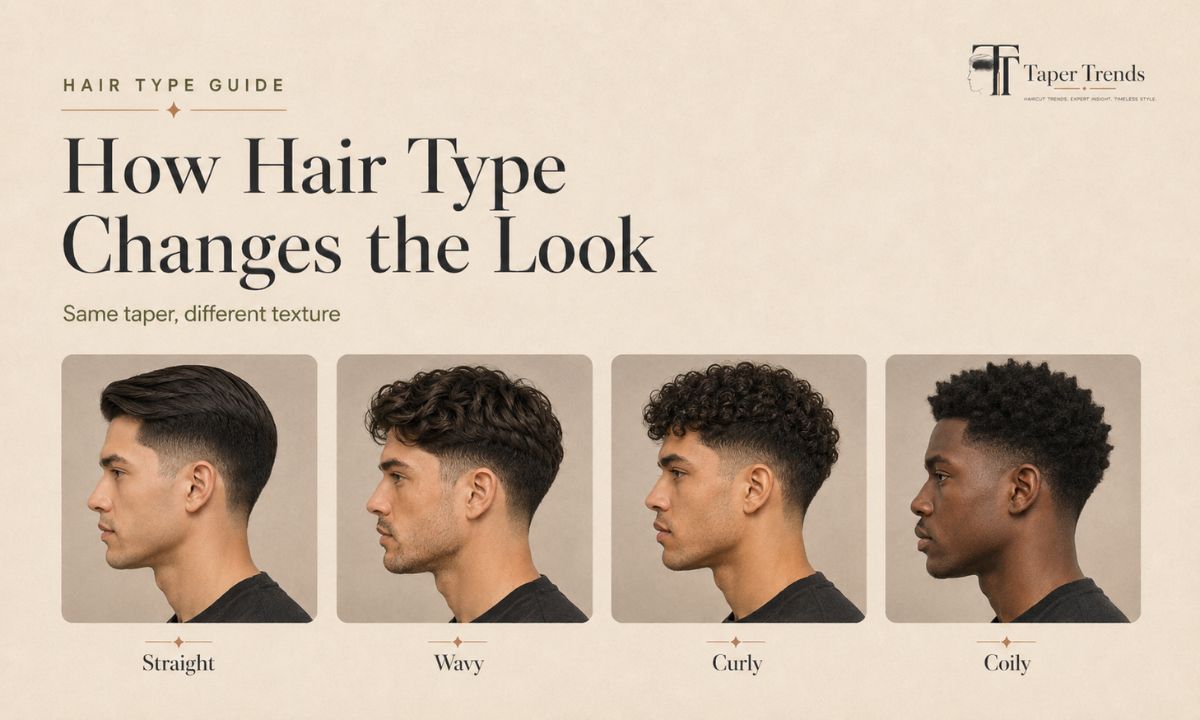
How your hair type changes the look
Even though the fade itself stays the same low blend, your natural texture has a big say in how the finished cut reads.
Straight hair
Straight hair shows the fade most clearly. With no curl pattern adding bulk, the move from longer hair on top into the tapered sides is easy to see from the side and back, which tends to make the cut look especially crisp and defined.
Wavy hair
Wavy hair brings some natural movement up top that plays nicely against the clean lines below. The waves add texture and dimension so the style never looks flat, while the taper keeps everything grounded and neat.
Curly hair
Curly hair brings volume, and the low taper gives that volume somewhere to sit. The contrast between fuller curls on top and cleanly tapered sides is a big part of why curly low tapers are so popular right now. Density matters too, since thicker curls hold their shape longer between cuts.
Coily & afro-textured hair
Coily and afro-textured hair often creates the cleanest contrast of the bunch. The natural density and pattern sit beautifully against a neat, faded neckline and sideburns, giving the cut real structure without flattening the texture on top.
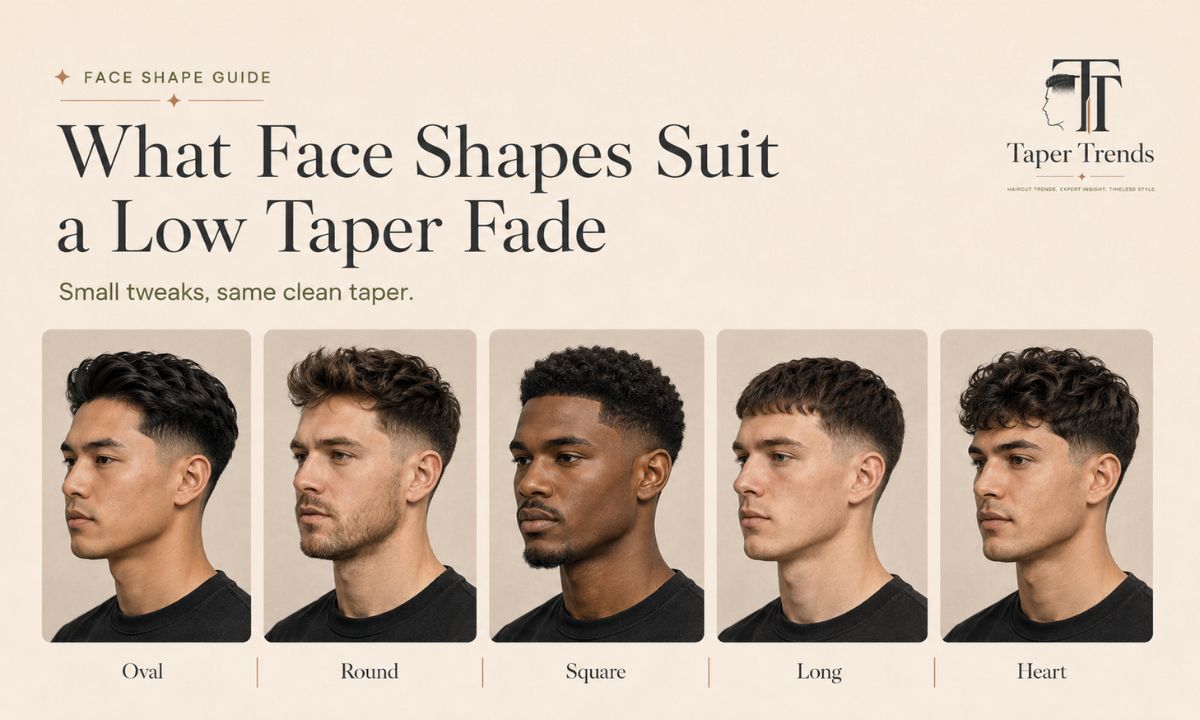
What face shapes suit a low taper fade
The cut adapts to most face shapes, though a few small tweaks help it land even better.
- OvalThe most flexible — nearly every version works, short top or long.
- RoundAdd height or texture on top to lengthen the face; a textured or messy top beats anything flat.
- SquarePairs well with clean, sharp edges around the blend that play off a strong jaw.
- LongKeep the top shorter and avoid added height; a buzzed or low-volume top is the smart choice.
- HeartSuits a slightly fuller top to offset a narrower chin, while the taper keeps width down near the jaw.
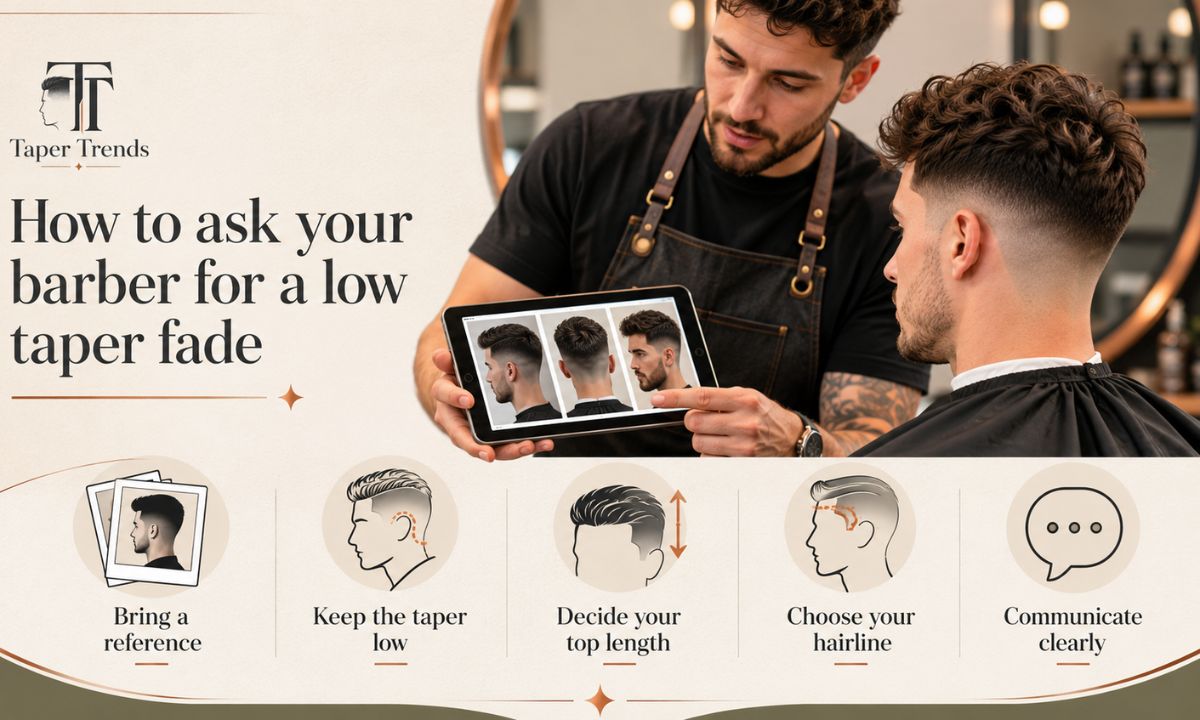
How to ask your barber for a low taper fade
Getting the cut you pictured comes down to clear communication, and a few habits make it easier:
- Bring a reference photo — a verbal description gets interpreted differently from one barber to the next.
- Be specific that you want the taper to sit low, mainly around the sideburns, ears, and neckline.
- Decide on your top length before you sit down — long enough to style, or short and easy to manage.
- Settle your hairline preference too: soft and natural, or a sharper line-up.
“Keep the taper low around the ears and neckline. I want a soft blend, not a high fade — leave the top longer and natural, and keep the hairline clean.”
That gives your barber direction without overcomplicating the conversation.
How to maintain a low taper fade at home
Part of the appeal is that this cut is genuinely easy to keep up, but a little attention goes a long way. Most guys refresh it every three to four weeks, which is what barbers generally suggest for faded sides; longer or more textured cuts can usually stretch to five or six. Because the blend is low and subtle, it grows out more gracefully than a high or skin fade, so you have a bit of room if you need to push an appointment back.
Keeping the neckline clean between visits makes a real difference — a quick clipper tidy at home or a neckline-only stop at the shop can stretch how fresh the cut looks. Styling the top depends on your hair and the finish you want:
- Straight or wavyA light pomade or texture powder for definition without weight.
- CurlyA curl cream or leave-in to hold shape and cut down on frizz.
- Coily / afro-texturedA leave-in moisturizer that keeps volume looking healthy.
- Piecey, textured finishA matte clay does the job; a sea salt spray adds grit for beachier styles.
Two things to avoid: letting the neckline and sideburns grow out unevenly, and piling on product, since buildup flattens texture and leaves the top looking greasy rather than styled.
Is a low taper fade right for you?
A low taper works well if you want something clean and modern that doesn't feel loud or attention-seeking. It slots comfortably into school, the office, casual weekends, and dressier occasions, which is why it stays one of the most dependable fades going in 2026. It's also a strong pick if you'd rather not be tied to frequent barber visits, since the subtle blend grows out more naturally than higher-contrast fades.
It might not be your cut if you're drawn to a very high-contrast skin fade or a bold, dramatic shape. In that case a high fade or skin fade will probably suit you better.
Bottom line
So, what does a low taper fade look like in practice? It's a clean, softly blended cut where the fade stays low around the sideburns, ears, and neckline while the top stays natural, textured, or styled however you like. It works across straight, wavy, curly, and coily hair, and it's relaxed enough to wear just about anywhere.
That balance of clean structure and easy upkeep is why it's stayed such a reliable choice in 2026. Before your next appointment, save a reference photo and bring it along — it's the simplest way to make sure you and your barber are picturing the same haircut.
Frequently asked questions
What does a low taper fade look like?
It's a clean cut where the hair gradually shortens low down — around the sideburns, the area above the ears, and the neckline — while the rest of the sides and the top keep their length. There's no hard line, just a soft transition, so from the front you barely notice the fade at all.
Where does a low taper fade start?
Low — right around the ear and along the neckline, rather than up near the temple. That low starting point is what separates it from a mid or high fade and keeps the whole look subtle.
Is a low taper fade subtle or noticeable?
Subtle. Set next to a high fade or skin fade, a low taper reads as much softer and less dramatic. It looks put together without demanding attention, which is why it works in an office, a classroom, or a casual weekend.
Does a low taper fade suit all hair types?
Yes. The same low blend works across straight, wavy, curly, and coily or afro-textured hair. Your natural texture changes how the finished cut reads on top, but the fade underneath does the same quiet job of keeping it grounded.
How often do you need to maintain a low taper fade?
Most people refresh it every three to four weeks, though longer or more textured cuts can stretch to five or six. Because the blend is low and subtle, it grows out more gracefully than a high or skin fade.
Want more taper fade guides?
Browse clean, barber-ready breakdowns for every hair type.