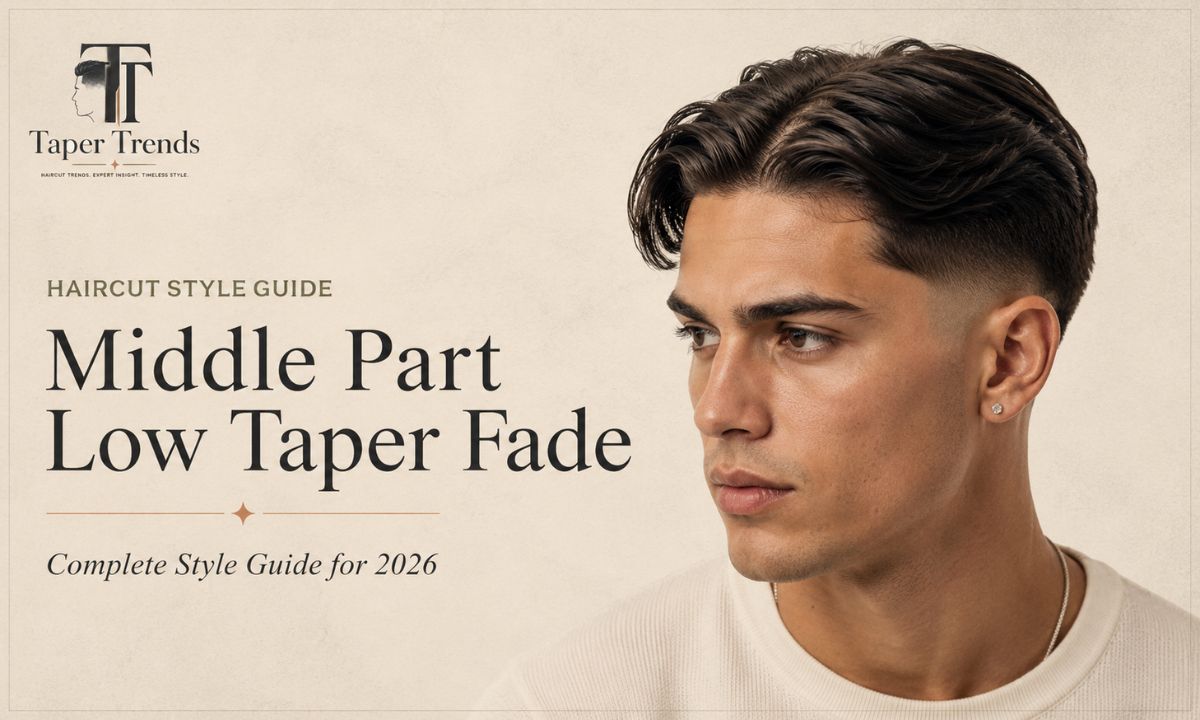
If you've been saving haircut inspiration lately, you've probably seen this one on repeat. The middle part low taper fade is among the most requested looks in barbershops this year, and the appeal is easy to spot. It sits between sharp and relaxed: clean, faded sides under a longer, center-parted top that frames the face on its own.
It also wears better day to day than the harder, high-contrast fades. The cut looks tidy enough for the office and easy enough for a weekend, and it flatters a wide range of hair types and face shapes. If you're trying to work out whether it suits your hair texture and features, this guide covers the whole decision in plain language.
What is a middle part low taper fade?
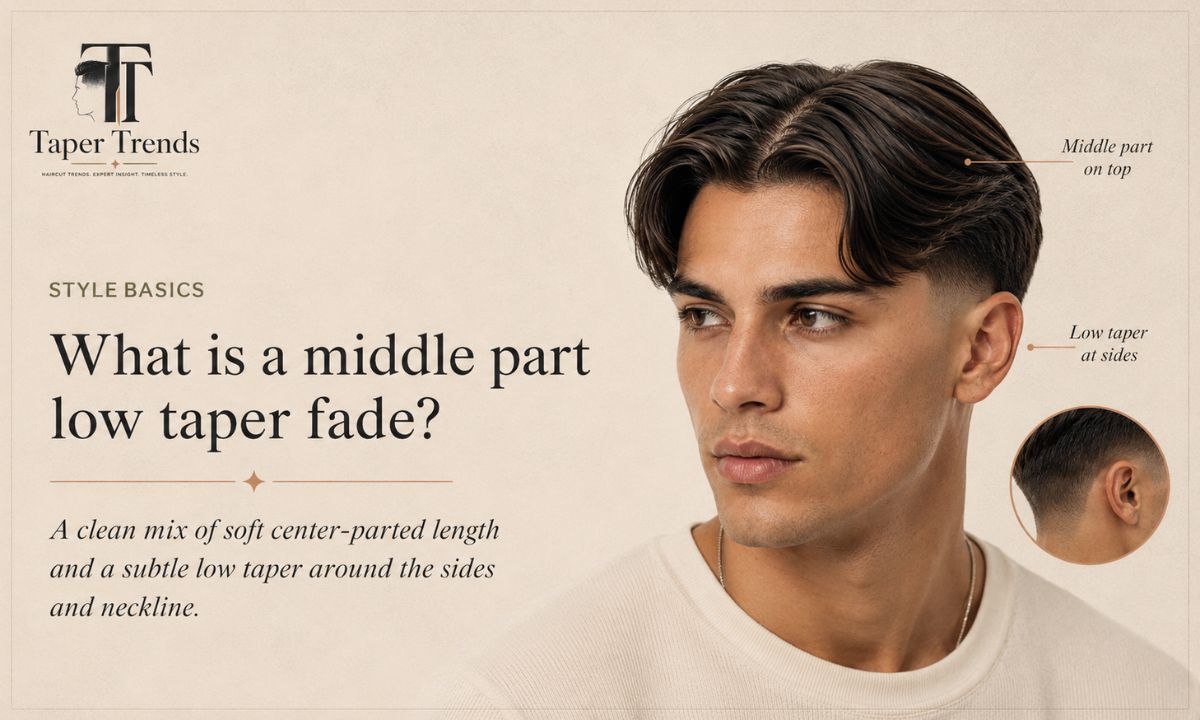
The cut combines two simple ideas: a middle part on top and a low taper on the sides.
A middle part just means the hair on top is split down the center instead of swept to one side. It gives a symmetrical shape and works best once the top has enough length to fall on both sides, which is where it starts to look like a soft curtain style.
A low taper describes where the shorter hair begins. "Low" means the gradual shortening starts near the ears and neckline rather than up by the temples, so the change stays subtle.
People mix up taper and fade, but the difference is small. A taper shortens the hair gradually without showing much skin. A fade goes shorter and blends down closer to the skin for a crisper edge. A low taper fade uses both: a soft taper up top with a cleaner fade near the bottom.
The result looks neat without looking fussy, which is why it works for students and office workers alike, and for anyone who wants a current cut that stays low maintenance.
Why it's popular in 2026
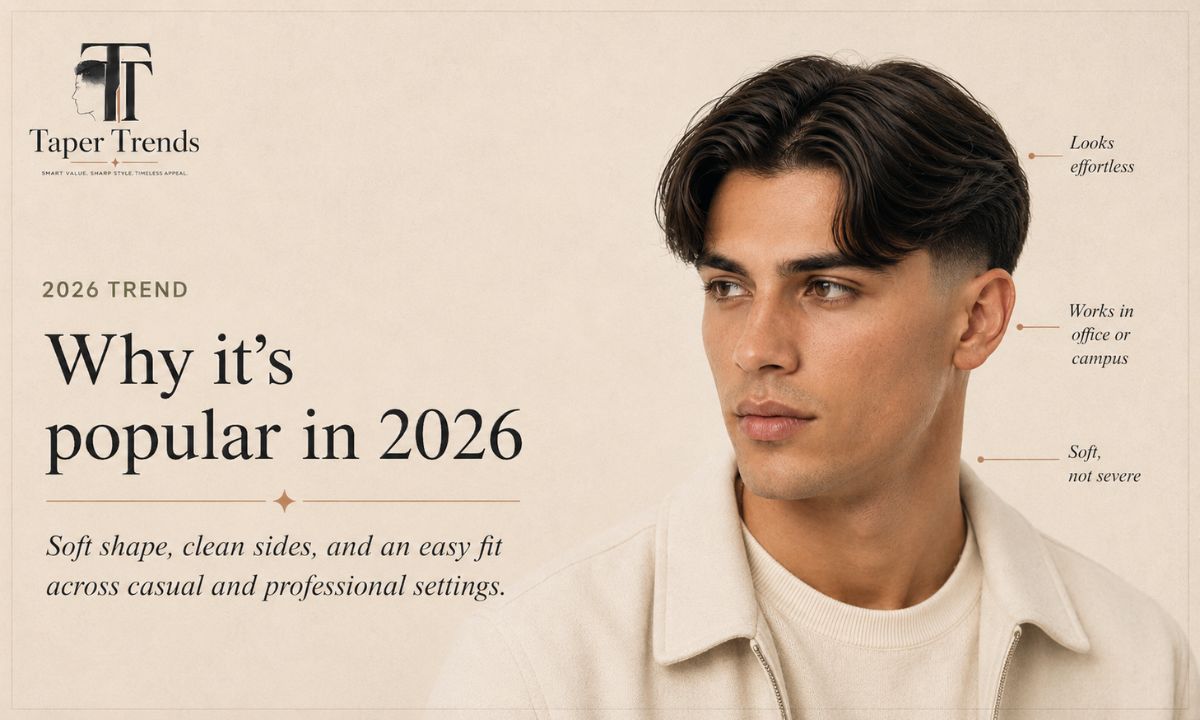
The trend has practical legs, not just good looks. Among the fades getting requested most this year, the low taper sits near the top, partly because it reads as effortless rather than fresh out of the chair.
The contrast between short, clean sides and a longer top adds definition without looking severe. For guys who want a fade but not the drama of a high or skin fade, it's a comfortable middle ground.
Social feeds helped spread it, but the staying power comes from how easily it moves between settings. It looks right in a lecture hall and in an office, and it pairs with streetwear or with something smarter. Because the low taper sits closer to natural hair growth than a high fade, the overall shape stays soft — and it takes well to most textures, which is part of why so many people land on it.
Best face shapes
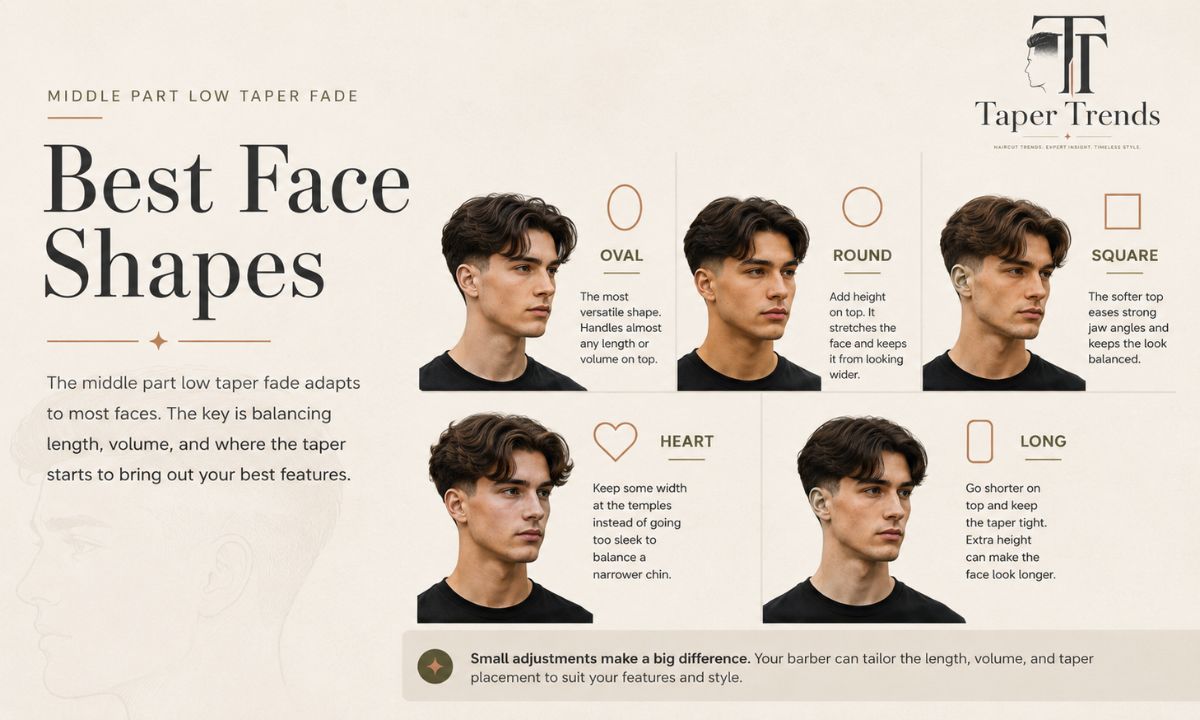
The cut adapts to most faces, but a few shapes get the most out of it.
- OvalThe easiest fit — balanced proportions handle almost any length or volume on top.
- RoundAdd some height up top; a flat middle part can widen the face, so a little lift stretches things out.
- SquareLooks sharp here — the softer top eases strong jaw angles.
- HeartKeep a bit of width at the temples instead of going sleek, to balance a narrower chin.
- LongSuit a shorter top and a tighter taper; extra height only makes the face look longer.
Length, volume, and where the taper starts all shift the result, so small adjustments make the cut personal rather than one-size-fits-all.
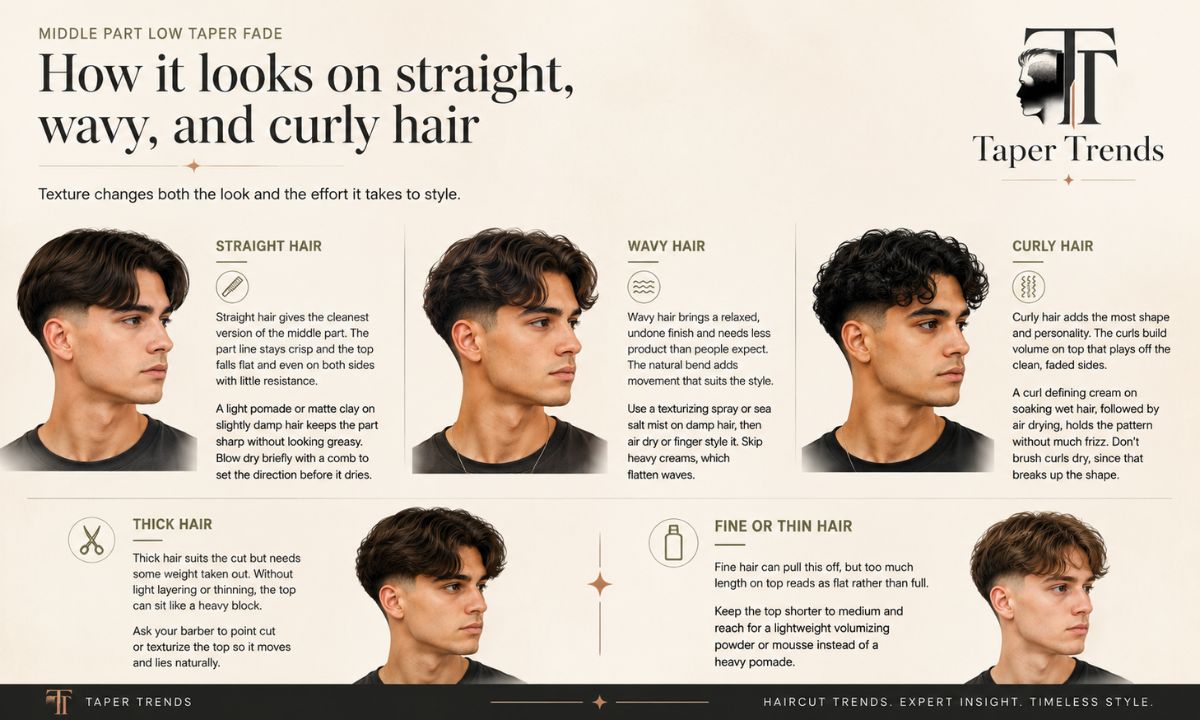
How it looks on straight, wavy, and curly hair
Texture changes both the look and the effort it takes to style.
Straight hair
Straight hair gives the cleanest version of the middle part. The part line stays crisp and the top falls flat and even on both sides with little resistance. A light pomade or matte clay on slightly damp hair keeps the part sharp without looking greasy. Blow dry briefly with a comb to set the direction before it dries.
Wavy hair
Wavy hair brings a relaxed, undone finish and needs less product than people expect. The natural bend adds movement that suits the style. Use a texturizing spray or sea salt mist on damp hair, then air dry or finger style it. Skip heavy creams, which flatten waves.
Curly hair
Curly hair adds the most shape and personality. The curls build volume on top that plays off the clean, faded sides. A curl-defining cream on soaking wet hair, followed by air drying, holds the pattern without much frizz. Don't brush curls dry, since that breaks up the shape.
Thick hair
Thick hair suits the cut but needs some weight taken out. Without light layering or thinning, the top can sit like a heavy block. Ask your barber to point cut or texturize the top so it moves and lies naturally.
Fine or thin hair
Fine hair can pull this off, but too much length on top reads as flat rather than full. Keep the top shorter to medium and reach for a lightweight volumizing powder or mousse instead of a heavy pomade.
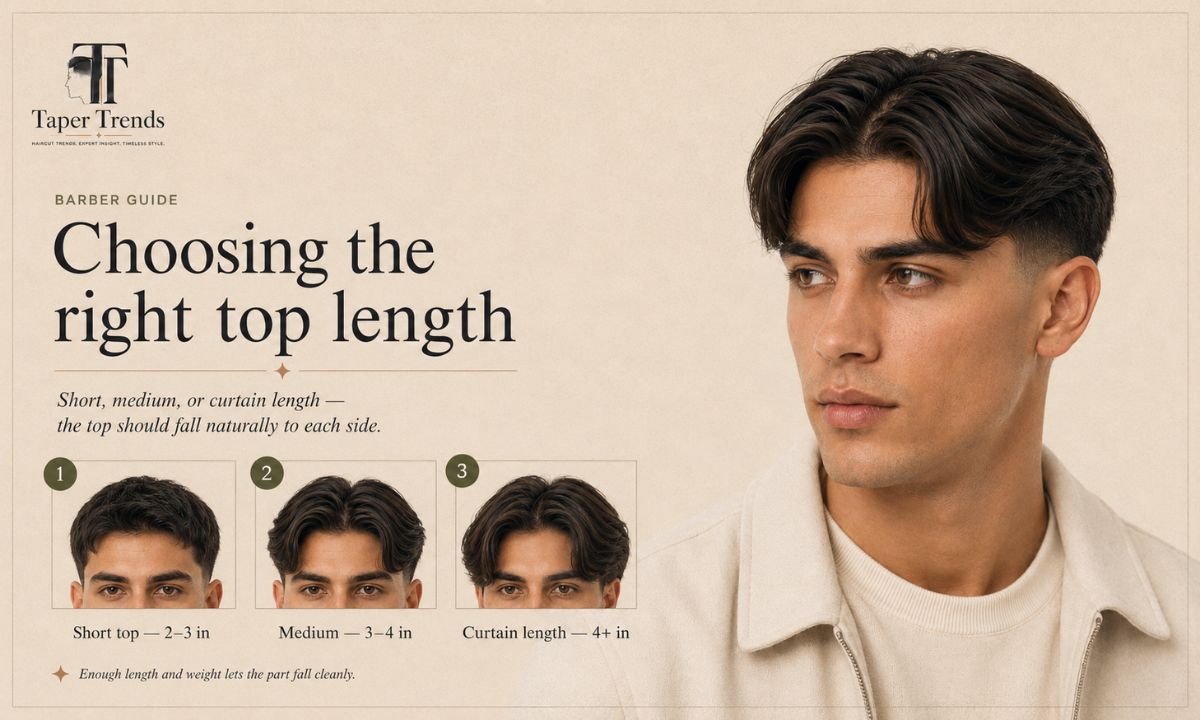
Choosing the right top length
Length on top makes or breaks the cut, since it decides how the middle part falls and behaves.
Short
2–3 in
A low-key part with little styling. The part reads subtle rather than a full curtain.
Medium
3–4 in
The common pick — long enough to part cleanly and add movement while staying manageable.
Long
4 in +
A real curtain effect with side-swept movement, but it asks for more frequent styling.
The general rule: the hair needs enough length and weight to fall to each side on its own. Too short and it stands up instead of lying down. Match the length to your hair density too — thicker hair carries more length without looking heavy, while finer hair often looks better kept shorter so it doesn't go flat.
The sides should stay clean but don't need to be cut aggressively short. The low taper works best when it supports the top instead of competing with it.
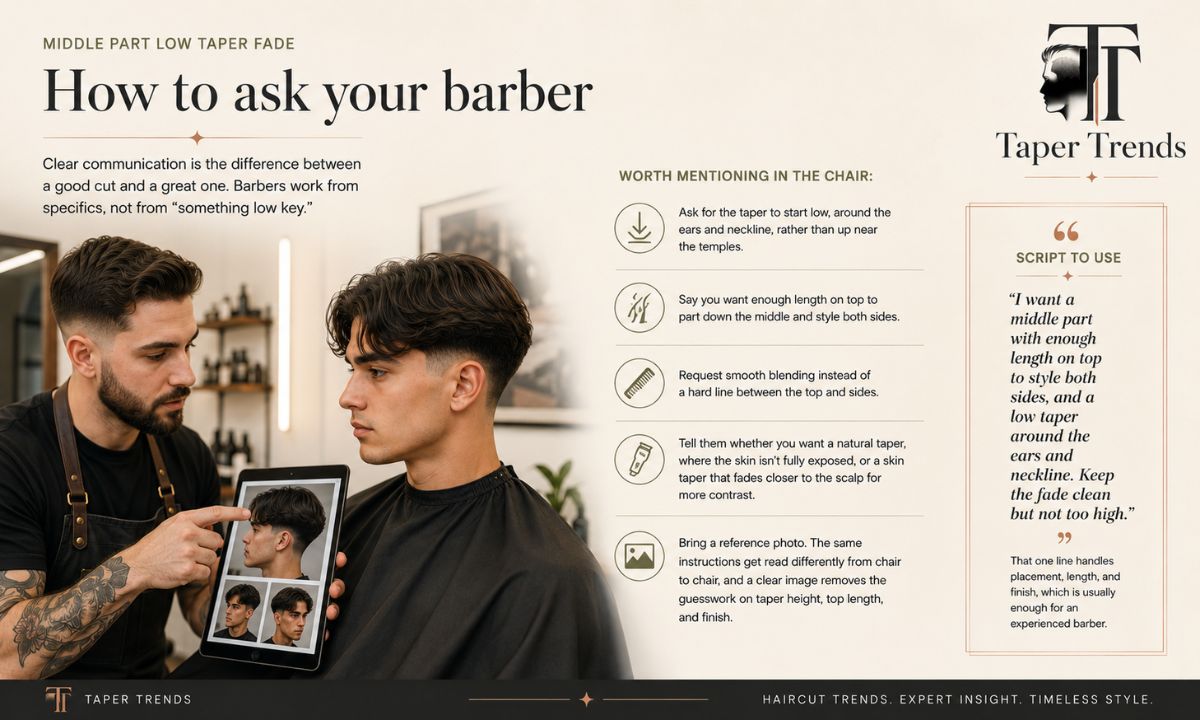
How to ask your barber
Clear communication is the difference between a good cut and a great one. Barbers work from specifics, not from "something low-key." Worth mentioning in the chair:
- Ask for the taper to start low, around the ears and neckline, rather than up near the temples.
- Say you want enough length on top to part down the middle and style both sides.
- Request smooth blending instead of a hard line between the top and sides.
- Tell them whether you want a natural taper (skin not fully exposed) or a skin taper that fades closer to the scalp for more contrast.
- Bring a reference photo — the same instructions get read differently from chair to chair.
“I want a middle part with enough length on top to style both sides, and a low taper around the ears and neckline. Keep the fade clean but not too high.”
That one line handles placement, length, and finish, which is usually enough for an experienced barber.
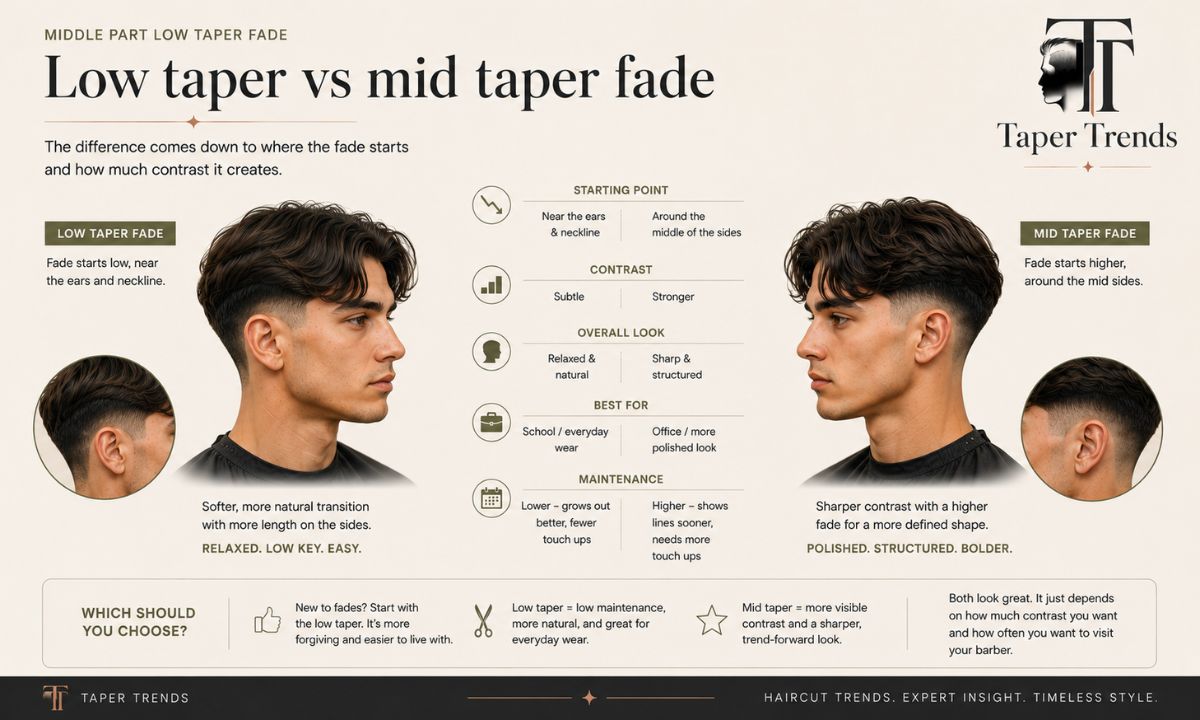
Low taper vs mid taper fade
These two get confused often, but the difference comes down to where the fade starts and how much contrast it creates.
| Low taper | Mid taper | |
|---|---|---|
| Fade starts | Near the ears & neckline | Around the middle of the sides |
| Contrast | Soft, natural transition | Sharper, more structured |
| Feel | Relaxed, low-key | Polished, deliberate |
| Best for | School, everyday wear | Office, trend-forward contrast |
New to fades? Start with the low taper. It's more forgiving as it grows out, needs fewer touch-ups, and avoids the stark lines a mid or high fade shows after a couple of weeks.
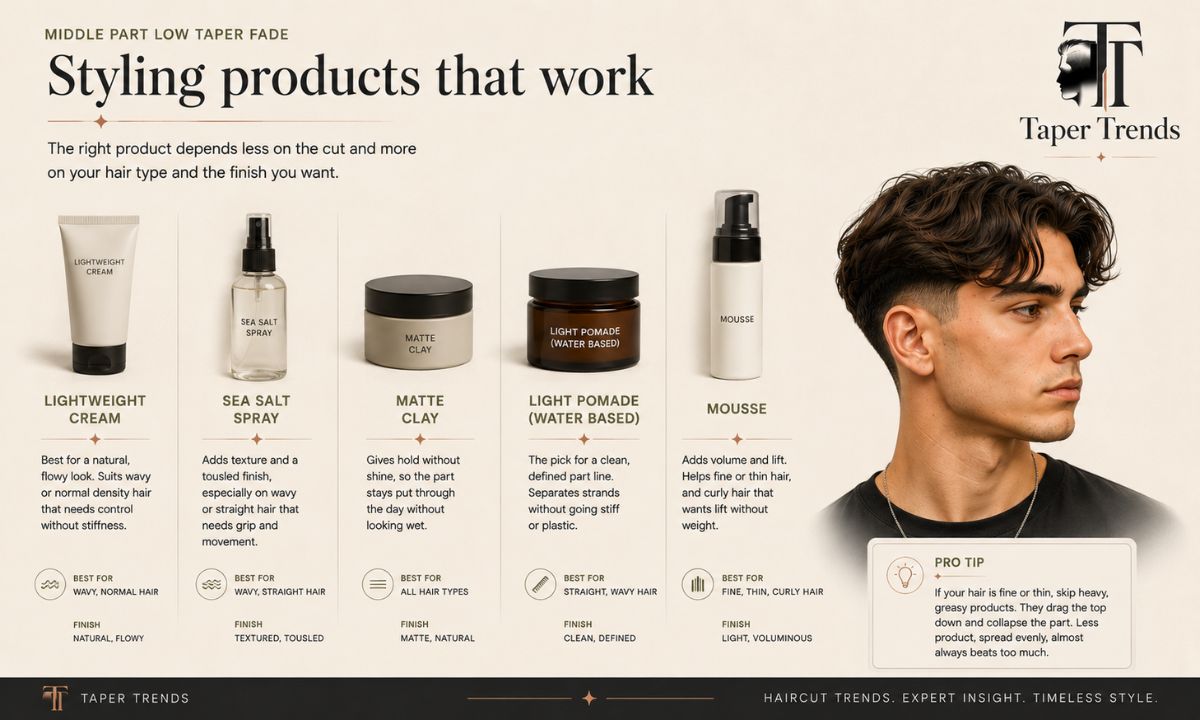
Styling products that work
The right product depends less on the cut and more on your hair type and the finish you want.
- Lightweight creamA natural, flowy look — best for wavy or normal-density hair that needs control without stiffness.
- Sea salt sprayTexture and a tousled finish, especially on wavy or straight hair that needs grip and movement.
- Matte clayHold without shine, so the part stays put through the day without looking wet.
- Water-based pomadeA cleaner, defined part line — it separates strands without going stiff or plastic.
- MousseVolume for fine or thin hair, and for curls that want lift without weight.
If your hair is fine or thin, skip heavy, greasy products. They drag the top down and collapse the part. Less product, spread evenly, almost always beats too much.
How to style it at home
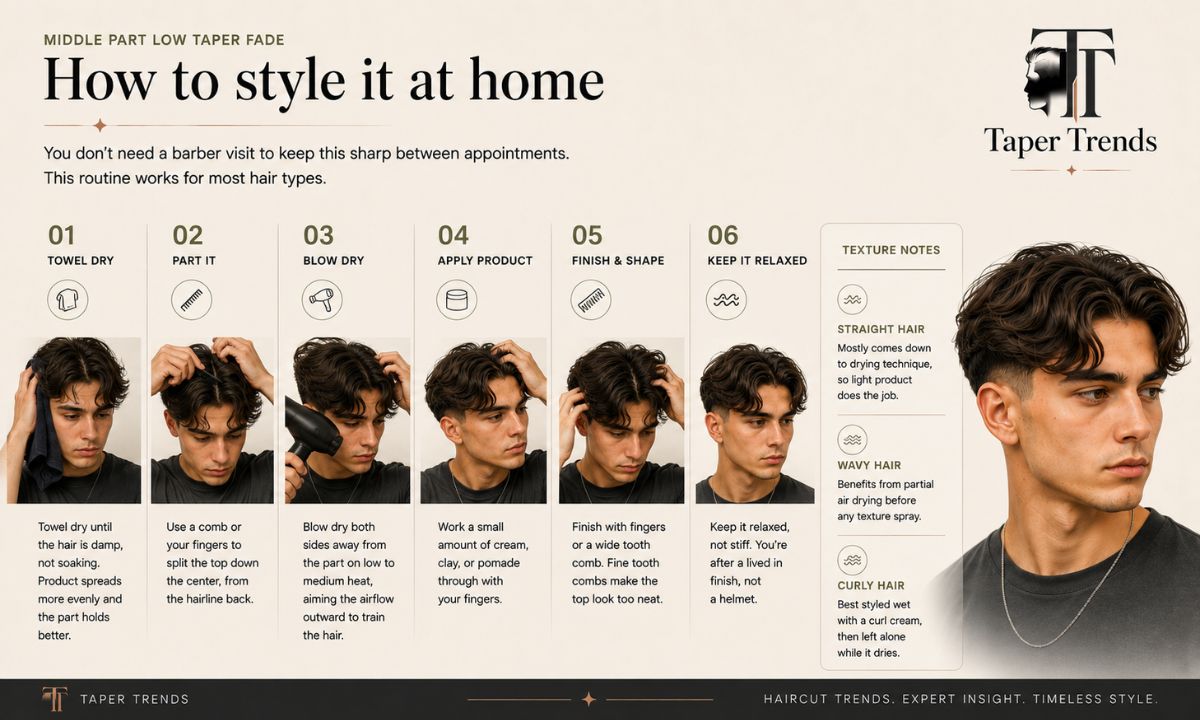
You don't need a barber visit to keep this sharp between appointments. This routine works for most hair types.
- 1Towel dry until the hair is damp, not soaking. Product spreads more evenly and the part holds better.
- 2Use a comb or your fingers to split the top down the center, from the hairline back.
- 3Blow dry both sides away from the part on low to medium heat, aiming the airflow outward to train the hair.
- 4Work a small amount of cream, clay, or pomade through with your fingers.
- 5Finish with fingers or a wide-tooth comb. Fine-tooth combs make the top look too neat.
- 6Keep it relaxed, not stiff. You're after a lived-in finish, not a helmet.
A few texture notes: straight hair mostly comes down to drying technique, so light product does the job. Wavy hair benefits from partial air drying before any texture spray. Curly hair is best styled wet with a curl cream, then left alone while it dries.
How often to maintain it
Upkeep is what keeps the cut sharp instead of growing into a shapeless mess.
Plan on cleaning up the taper every 2 to 4 weeks, depending on how fast your hair grows. Because it sits low, it grows out a little more gracefully than a higher fade, but it still needs regular attention to stay defined. The top usually needs a trim every 6 to 8 weeks so the length stays consistent and the part keeps falling correctly. The neckline and sideburns grow noticeably between cuts and are worth a quick touch-up even if you're stretching the full visit.
A low taper looks subtle, but it still needs the upkeep. Skip it and the line between the taper and the top blurs, and the shape starts to look accidental. A quick trim of stray neckline hairs at home, plus steady styling, holds it together until your next appointment.
Variations to try
This isn't one fixed look. Small changes give you several directions depending on texture and how much effort you want to put in.
Classic
A clean, even part with moderate top length — suits straight to slightly wavy hair in most settings.
Textured
A choppy, piece-y top for a more lived-in feel and a bit more personality.
Curly top
Let the curls take over up top while the sides stay clean — the cut's boldest version.
Wavy curtain
Runs the top longer with visible wave movement; suits wavy hair that holds shape.
Longer fringe
Extra length at the front for a softer, face-framing effect — good on round or square faces.
Subtle skin finish
A touch of skin near the bottom adds contrast while keeping the low placement.
Picking one comes down to matching it to your texture and the styling effort you'll realistically keep up with.
Bottom line
The middle part low taper fade earned its spot for good reason. It's a clean, current cut that adapts to different face shapes, textures, and routines without constant upkeep. Straight hair holds a crisp part, waves add flow, and curls bring volume, so there's a workable version for most people.
The trick is matching the details to your features: top length, taper height, and a styling routine you'll stick with. Bring a photo, be specific with your barber, and stay on top of maintenance. Done that way, the cut holds its shape and stays current well past a single trend cycle.
Frequently asked questions
Is a middle part low taper fade good for straight hair?
Yes. Straight hair gives one of the cleanest versions, since it holds the part line and lies flat on both sides with little effort.
How long should the top be for a middle part?
Aim for around 3 to 4 inches to part the hair and have it fall on both sides. Shorter lengths give a subtle part, while longer hair builds a fuller curtain effect.
Is a low taper fade professional?
Yes. The low taper is one of the more workplace-friendly fades. It's subtle, grows out gracefully, and avoids the high-contrast look that can feel too casual for formal settings.
How often should I get a low taper touched up?
Most people clean up the taper every 2 to 4 weeks and trim the top every 6 to 8 weeks. That keeps the shape sharp and stops the taper from blending into an undefined grow-out.
Want more taper fade guides?
Browse clean, barber-ready breakdowns for every hair type.