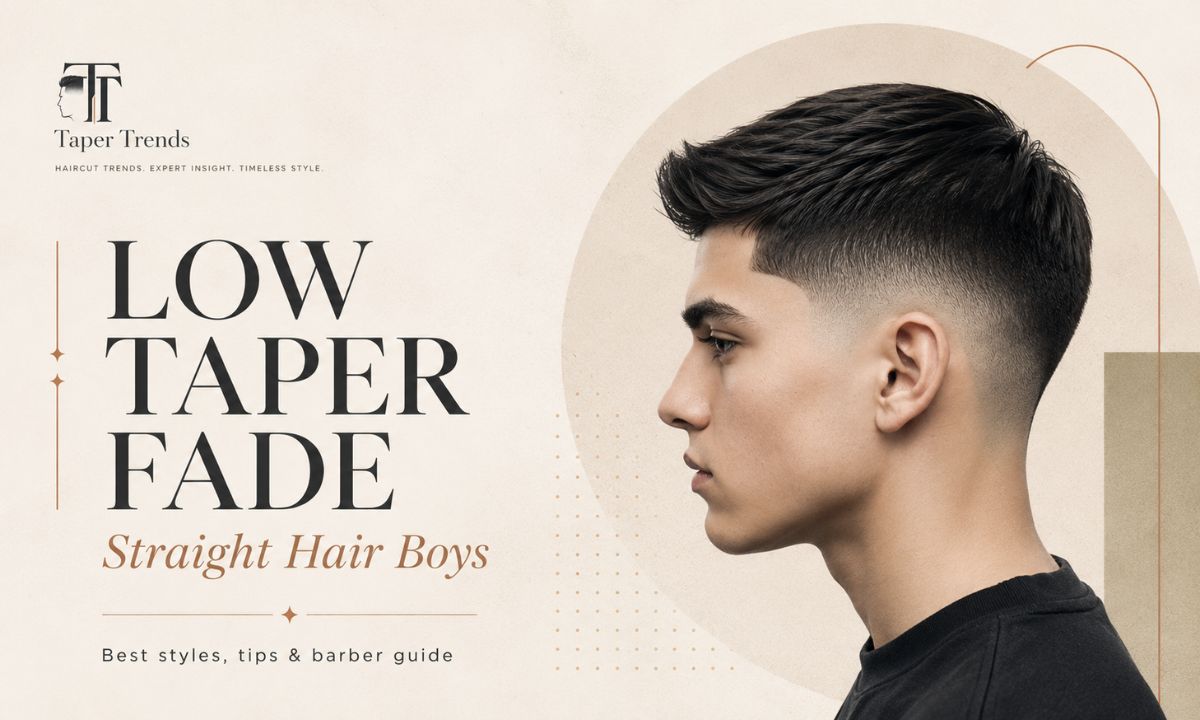
The low taper fade has quietly become the default ask for boys at the barbershop, and it's easy to see why. The sides stay neat and blend down toward the ears and neckline, the top keeps enough length to actually style, and the whole thing looks tidy without much daily effort.
It holds up for school, weekends, and the occasional dressed-up occasion. This guide covers what the cut is, which versions work best on straight hair, how to describe it to a barber so you get what you pictured, and how to keep it sharp between visits.
What a low taper fade is
A taper fade shortens the hair on the sides gradually as it travels down toward the ears and the back of the neck. The "low" part tells you where that blending starts: near the bottom of the head, just above the natural hairline.
That placement is what sets it apart from a high fade, which begins blending much higher up the sides and creates a bold contrast against the top. A low taper leaves most of the side hair at its original length and only graduates the bottom inch or so. It's also a step back from a skin fade, where the clippers take the hair right down to the scalp. A low taper stops short of bare skin, so a little hair stays at the sides and the blend reads as soft rather than a hard line.
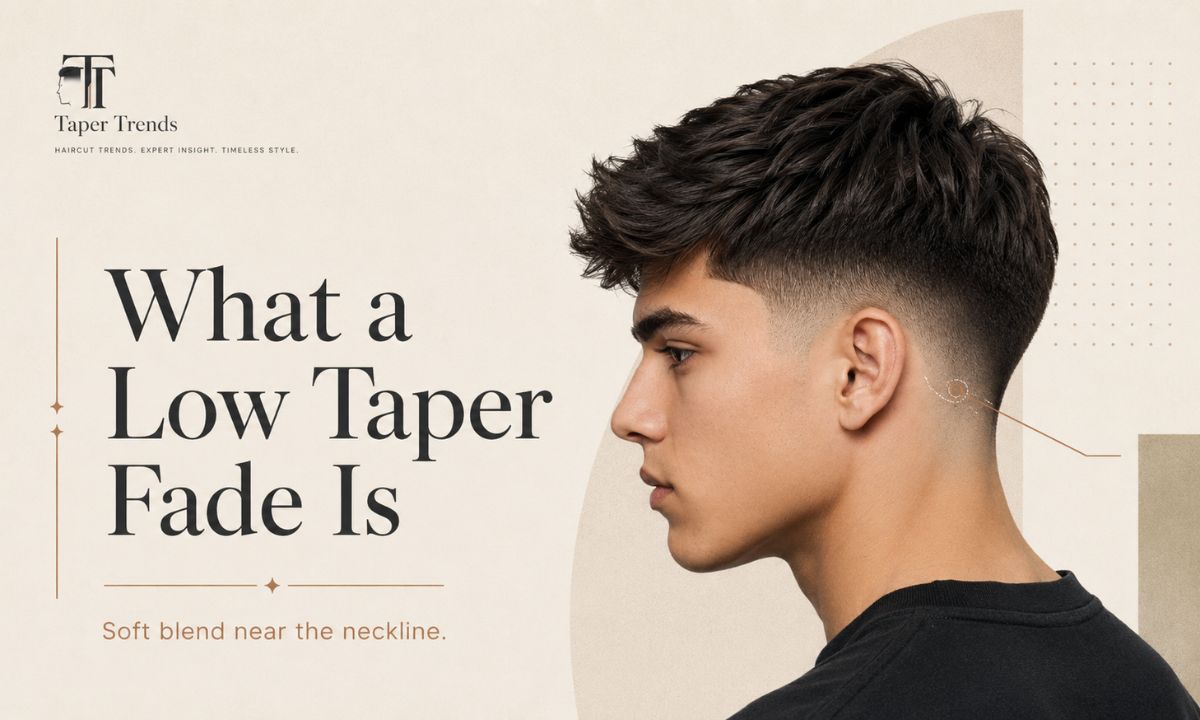
Straight hair is well suited to this. It lies flat and falls in a predictable direction, so the taper blends evenly and the neckline looks clean without much fighting. The crisp lines this cut depends on are simply easier to get when the hair behaves.
Why it suits straight hair so well
Because straight hair moves in one direction and sits flat, the gradual blend looks precise. No curl or wave breaks up the line, so the transition from the sides into the neckline stays smooth and deliberate. The low placement also keeps the proportions calm. There's no sharp jump between top and sides, which is why the same cut looks at home on a seven-year-old heading to school and a teenager at a weekend match.
The other draw is what it leaves you on top. Since the fade only touches the lower sides and back, the longer hair up top can go almost any direction: a fringe pushed forward, a centre part, a bit of texture, a comb over for something smarter, or just left loose and natural. A quick comb most mornings is usually enough, and because the blend sits low, it grows out gently instead of looking shaggy after two weeks. That means fewer barber trips than a high fade demands.
The best styles in 2026
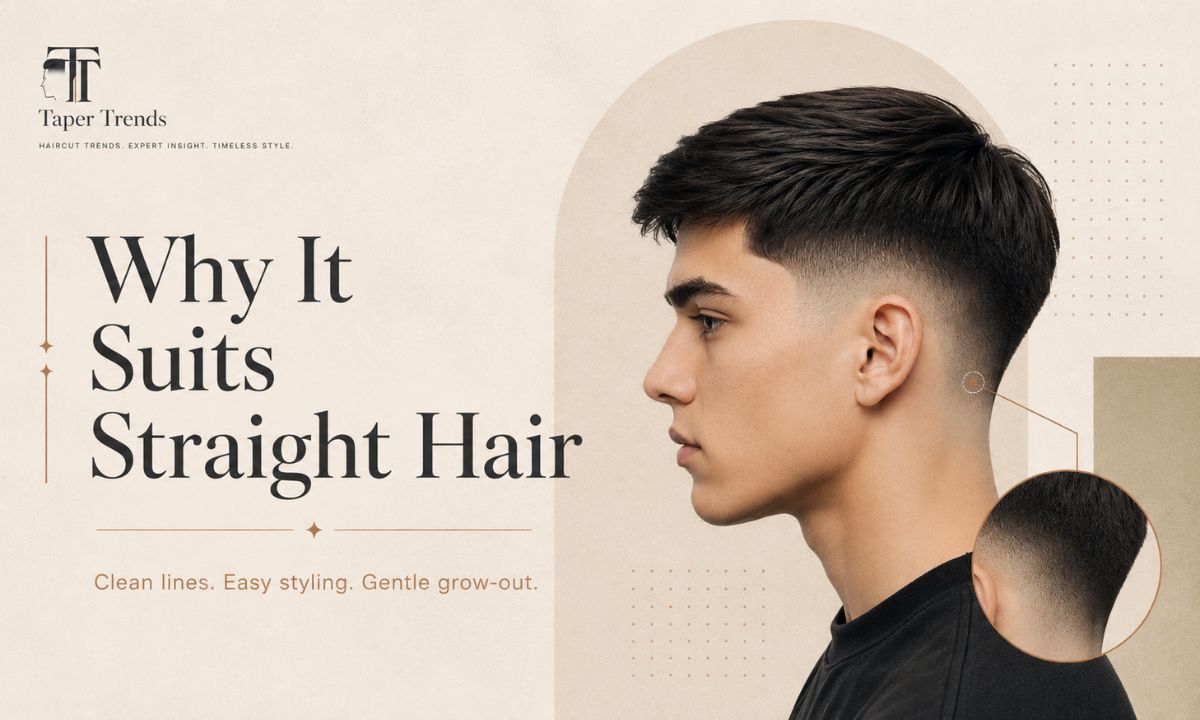
Boys' hair has drifted toward natural and low-effort over the past couple of years, and 2026 is no different. The low taper fade has been the most requested boys' cut since around 2024, helped along by TikTok, and the versions getting asked for now lean relaxed rather than sharp.
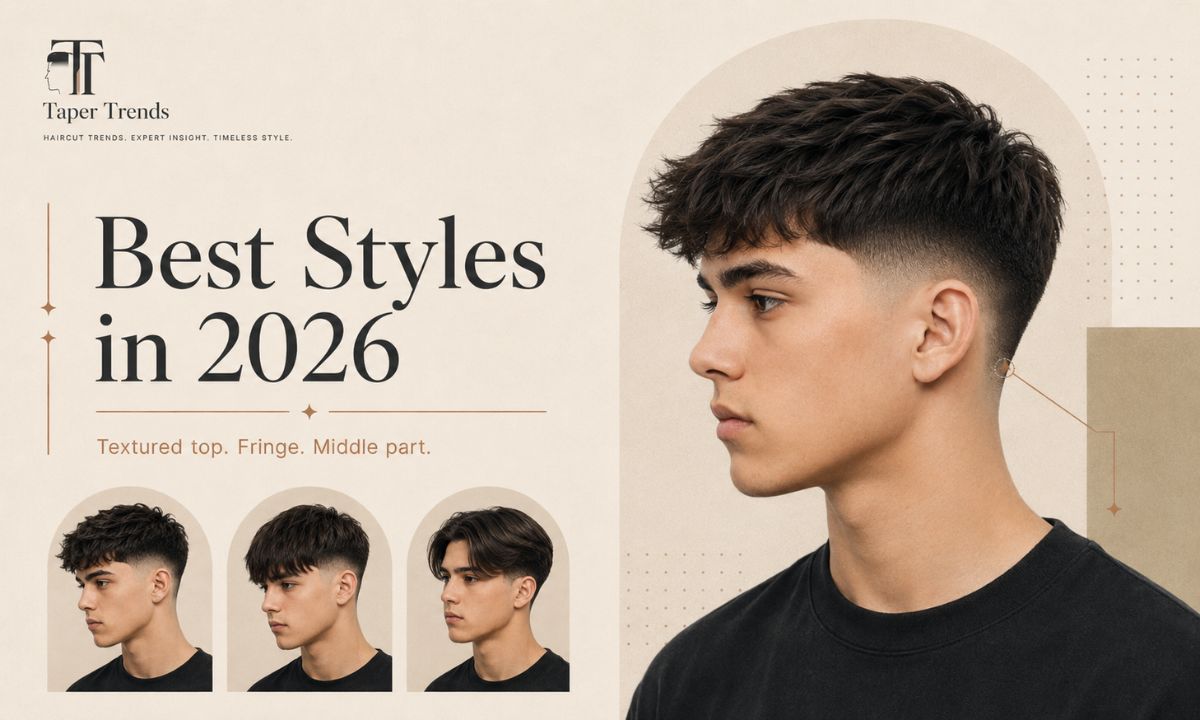
Three combinations dominate, and each gets its own section below: a textured top, a fringe, and a middle part. Beyond those, a few simpler options are worth knowing. A short, even top with a subtle taper gives a sporty look that barely needs styling. A longer top left to fall to one side works if your son already has length and doesn't want it chopped off. And a plain neat version, slightly longer on top with a clean neckline, covers any setting without fuss.
Which one fits comes down to current hair length, face shape, age, how active he is, and how much time anyone wants to spend on it in the morning.
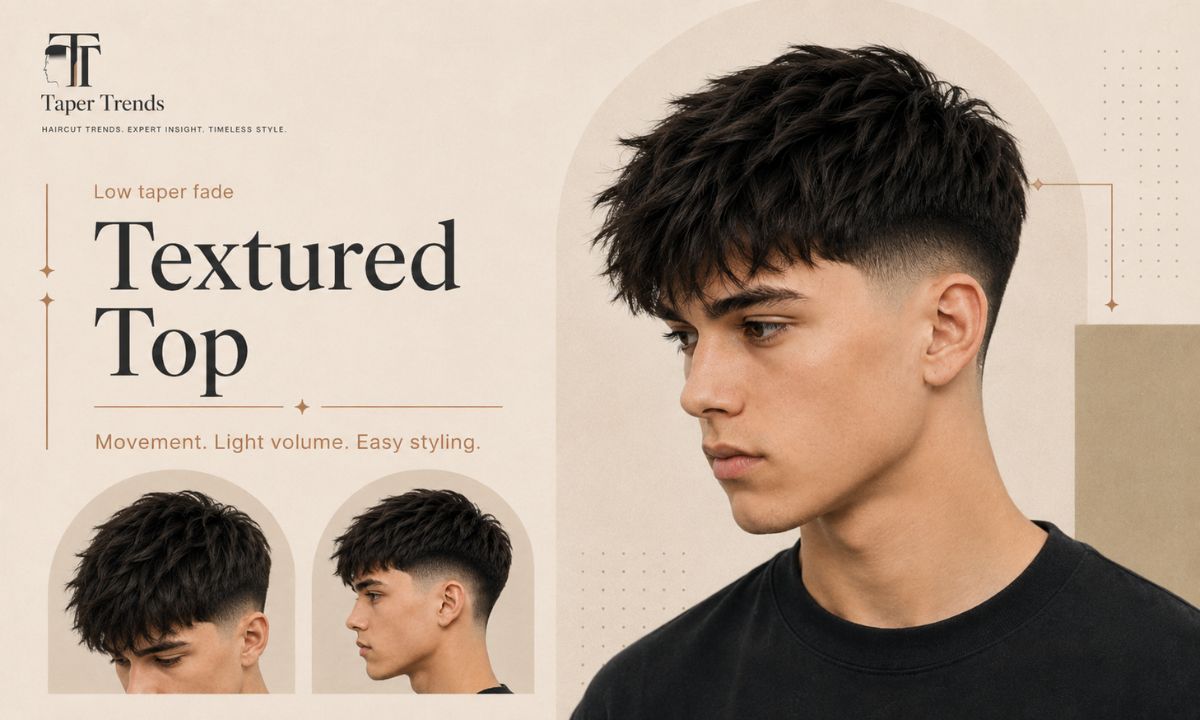
Low taper fade with a textured top
A textured top is one of the most common requests in barbershops right now, and it pairs neatly with a low taper.
"Textured" just means the top is not cut to one flat, even length. The barber uses point cutting, razoring, or slide cutting to thin out bulk and leave small variations in length, so the hair has movement instead of sitting like a single sheet. That matters more for straight hair than most, because straight hair left blunt tends to look heavy and a bit lifeless. Breaking it up makes it read fuller and lighter even on a no-product day. The low taper underneath does the quiet work, keeping the sides tight so the eye goes to the top.
It's a strong pick for boys with fine straight hair, since the texture fakes some thickness, and for rounder faces, where a little height on top adds length to the overall shape.
Styling is light. A pea-sized amount of matte clay worked through slightly damp hair with the fingertips, scrunching up rather than pressing down, is plenty. Let it air dry or use a diffuser on low. Texture powder dusted into dry hair gives an even more barely-there finish. Skip heavy wax and wet-look gel, which flatten everything the cut was trying to create.
Low taper fade with a fringe
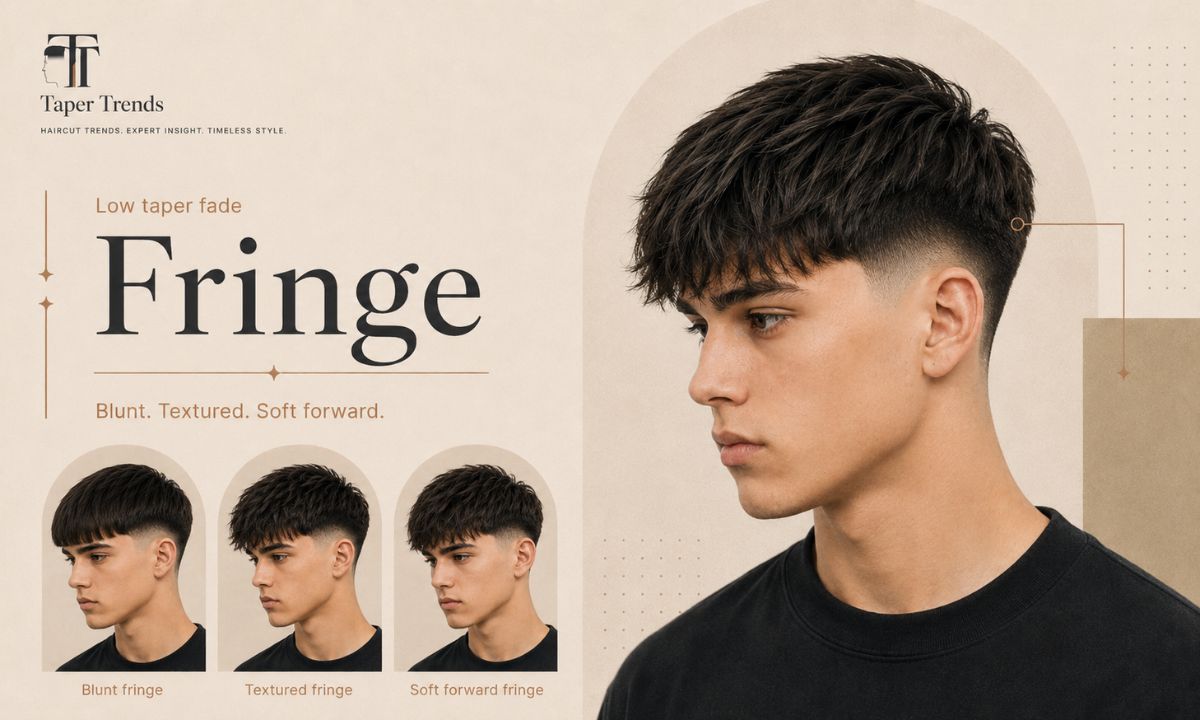
A fringe is hair cut to fall across the forehead, and it's about as old as haircuts get. What has changed is how it's worn. The 2026 version is loose and a little undone, nothing like the stiff, helmet fringes of years past.
Straight hair takes to a fringe easily. It grows forward and lies flat, so it drops into place across the forehead on its own, with no wave to wrestle. It looks deliberate even on days when no one touches it with product.
A few versions come up often. A blunt fringe is cut straight across at one length for a clean, graphic edge, though it can look heavy on thick hair unless kept thin. A textured fringe has the ends point-cut into a softer, slightly uneven line, and it's the one most boys ask for now because it looks relaxed rather than strict. A soft forward fringe runs a touch longer through the centre and sits loosely, almost like short curtains.
A fringe is also useful for a bigger forehead or a longer face, since bringing hair down to the brow shortens the face visually and balances the proportions. To keep it from looking heavy, ask for it thin and point-cut, and blow it forward with a round brush or just your hand. A little light cream stops it splitting down the middle if the hair wants to part on its own. It also sits inside most school dress codes, which makes it an easy everyday choice.
Low taper fade with a middle part
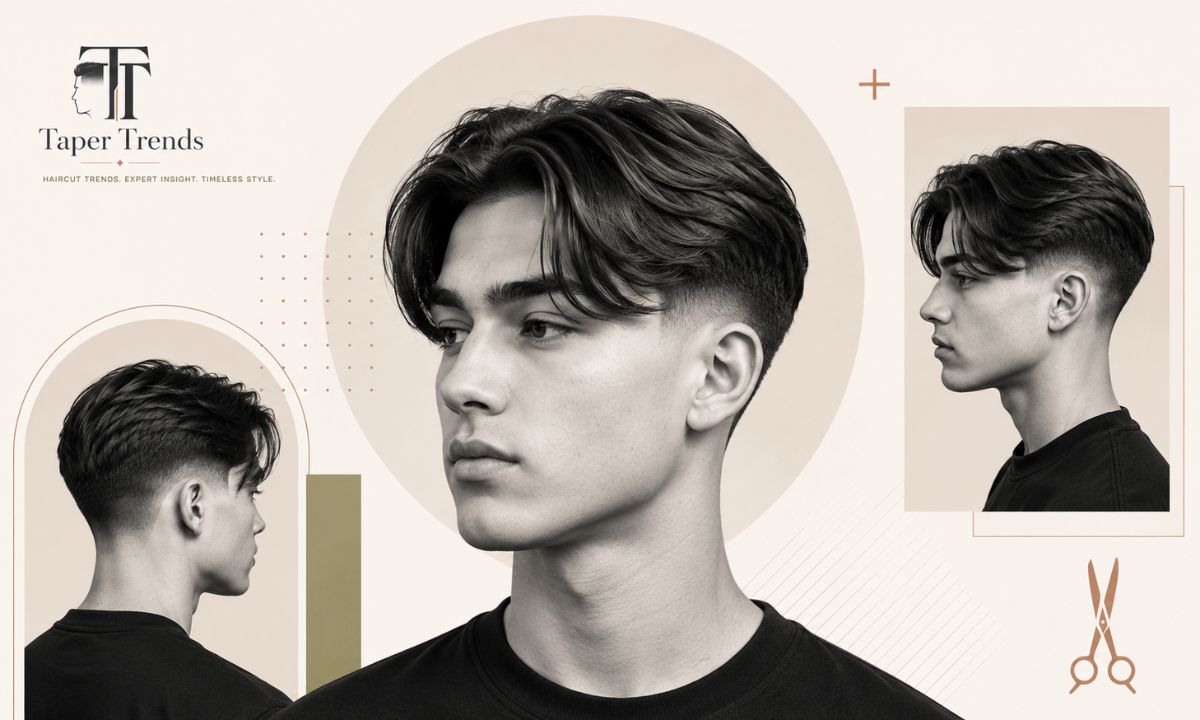
The middle part, or curtain hair, has been one of the defining boys' looks for a few years now, and it's still going strong in 2026 as curtain and fringe shapes hold their place near the top of the trend lists. With a low taper underneath it becomes a clean, easy style that looks groomed without trying hard.
The idea is simple: part the top down the centre and let each side fall outward and slightly down to frame the face. Straight hair holds a part on its own, so it doesn't need product to stay put, and both sides move naturally. The taper earns its keep here. With the sides blended cleanly toward the ears, the parted top looks sharp; on unstyled sides, the same part can look untidy.
Length is the catch. A middle part needs enough hair to fall on each side, usually three to four inches on top, reaching somewhere between the cheekbones and the jaw when pulled straight down. Very short tops will not part cleanly. A few soft layers through the middle help it move instead of hanging in one stiff sheet.
The usual worry is looking greasy. The fix is a light hand: part it while slightly damp with a wide-tooth comb, let it dry in place, and if it needs anything, use a small amount of light serum or a dry texture spray. Hair oil, heavy pomade, and anything labelled "high shine" will weigh it down and read as unwashed by lunchtime.
Low taper vs mid taper
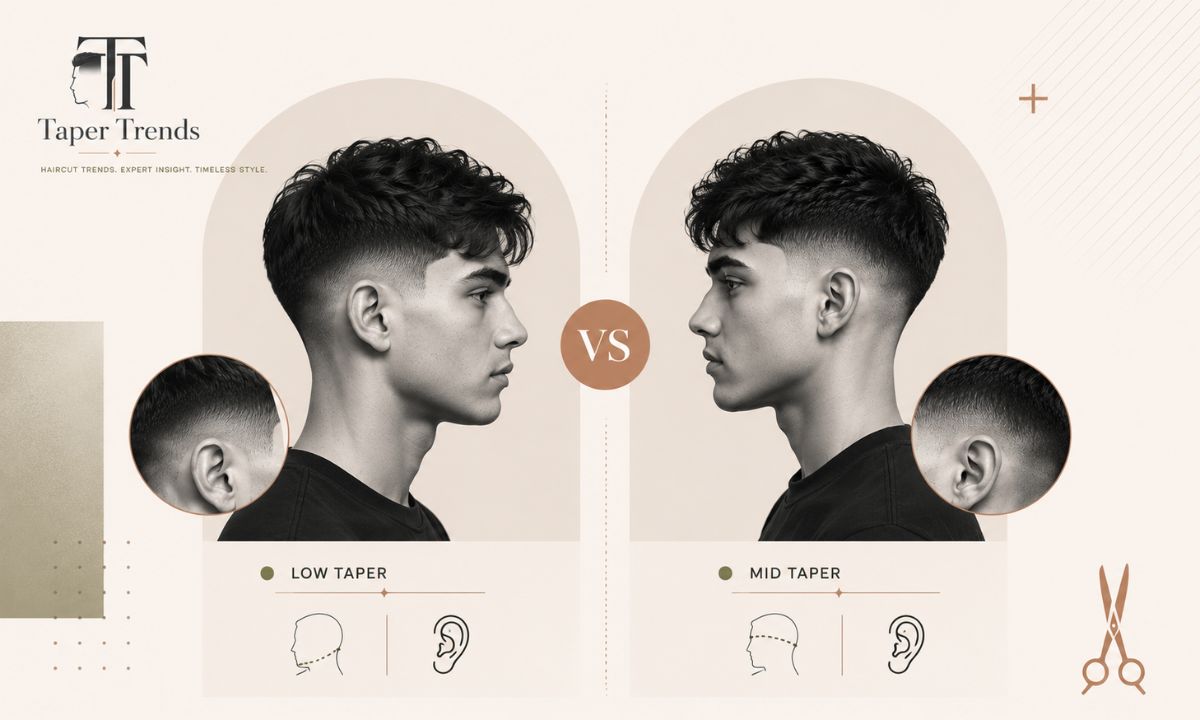
If the question of low versus mid taper has come up, here's the short version. A low taper starts blending right down by the ear and neckline, keeps most of the side length, and reads soft and tidy. A mid taper starts higher, around the temples, so the contrast between top and sides is more obvious and the overall shape looks sharper.
| Low taper | Mid taper | |
|---|---|---|
| Blend starts | By the ear & neckline | Higher, around the temples |
| Contrast | Soft and tidy | Sharper, more obvious |
| Best for | Younger boys, school | Older boys & teens |
| Upkeep | Grows out gradually | Looks uneven sooner |
For younger boys, the low taper is usually the better call. It's softer, school-friendly, easy to maintain at home, and forgiving if the next appointment slips a few weeks, since it grows out gradually. For older boys and teens who want more of a statement, the mid taper adds contrast without going all the way to a skin fade, and it suits anyone happy to visit the barber a bit more often to keep the line crisp.
On upkeep, the low taper wins. The blend sits low and the sides keep length, so it takes longer to look like it needs a trim. Neither is better outright — they suit different ages, dress codes, and how often a family realistically gets to the barber.
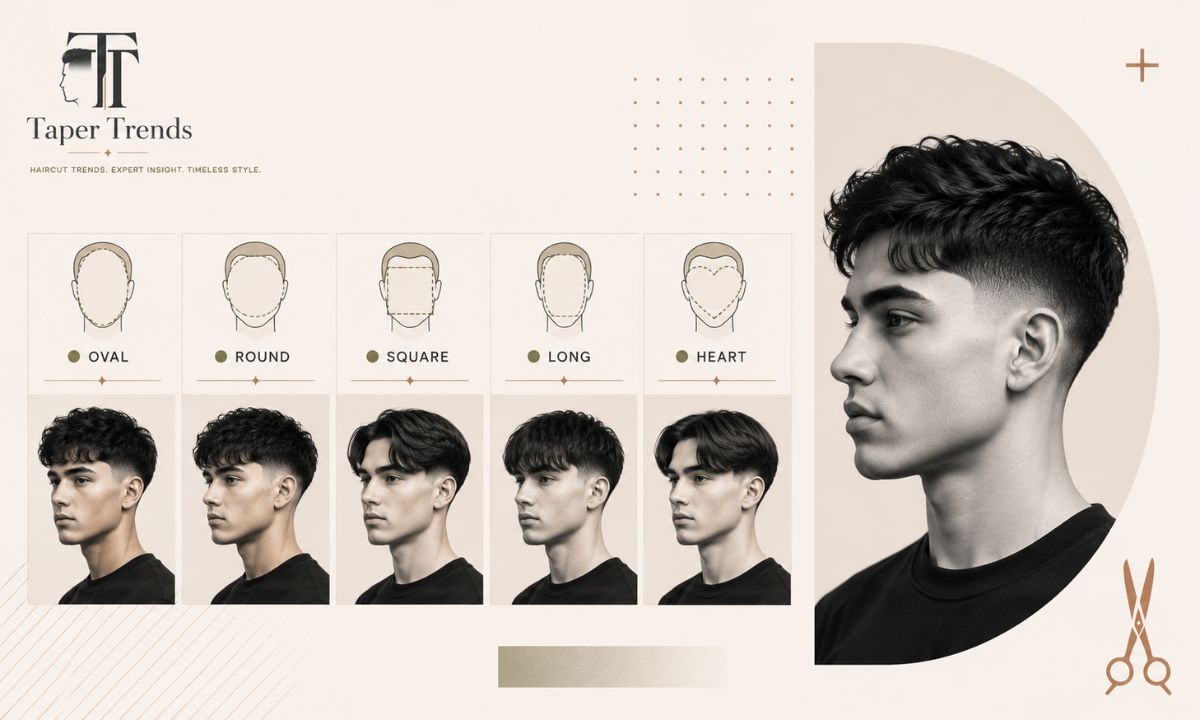
Which face shapes suit it
Face shape is a helpful starting point, not a rulebook. Treat it as something to raise with the barber rather than a formula.
- OvalThe easy one — almost any version works, so the choice comes down to preference.
- RoundA bit of length up top stretches the shape: a textured top, comb over, or swept fringe all help.
- SquareClean sides with a balanced, not-too-tall top sit well; texture or a middle part softens the angles.
- LongToo much height makes it longer, so a fringe at or just above the brow brings proportions back.
- HeartA middle part or textured fringe balances a wider forehead; skip piled-up volume at the crown.
These are guides, not gospel. Plenty of boys wear styles that supposedly clash with their face shape and look great. A good barber will make the call once he sees the actual head.
How to ask your barber for it
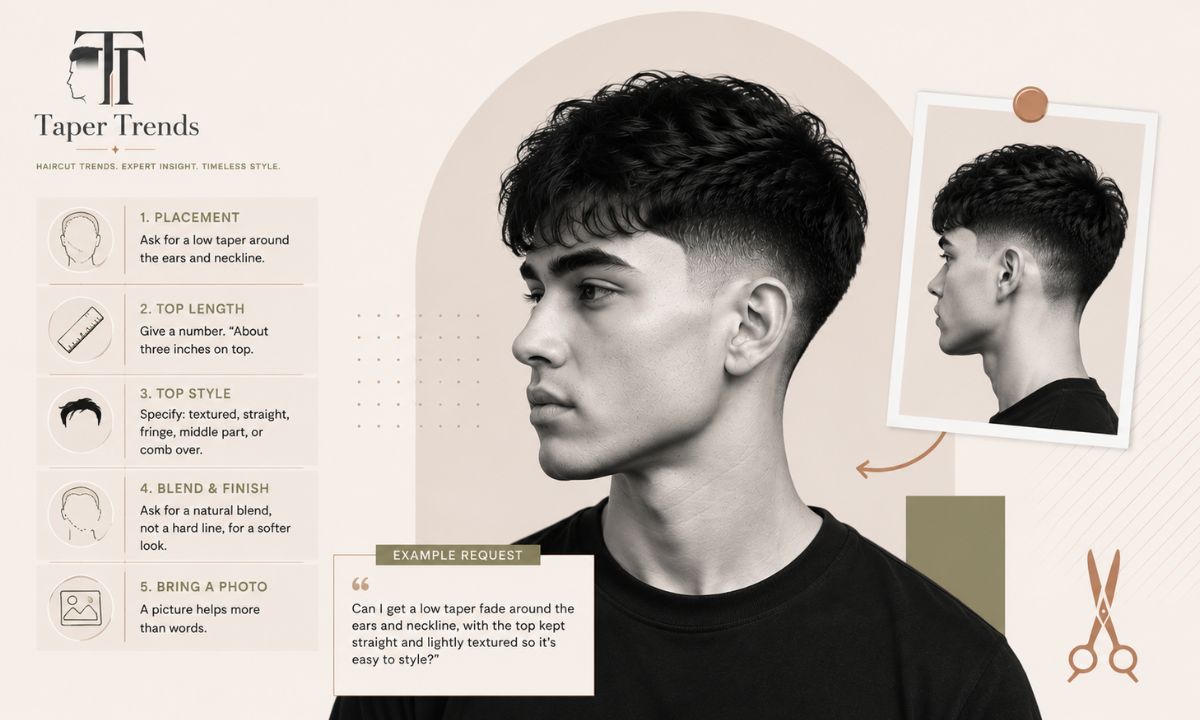
Most haircut disappointments come from vague instructions, not bad barbering. Saying what you want clearly does most of the work.
- Be specific on placement: ask for a low taper around the ears and neckline. Plain “fade” leaves too much open.
- Decide the top length before sitting down, and give a number; “about three inches on top” beats “not too short.”
- Say what you want the top to do — textured and layered, straight and neat, a fringe, a middle part, or a comb over.
- Ask for a natural blend rather than a hard line if you are after the softer look.
- If any of this feels hard to describe, bring a photo. One image settles more than a paragraph of explanation.
“Can I get a low taper fade around the ears and neckline, with the top kept straight and lightly textured so it's easy to style?”
That covers placement, top, and finish in a single sentence — usually enough for an experienced barber to get it right.
Styling and upkeep at home
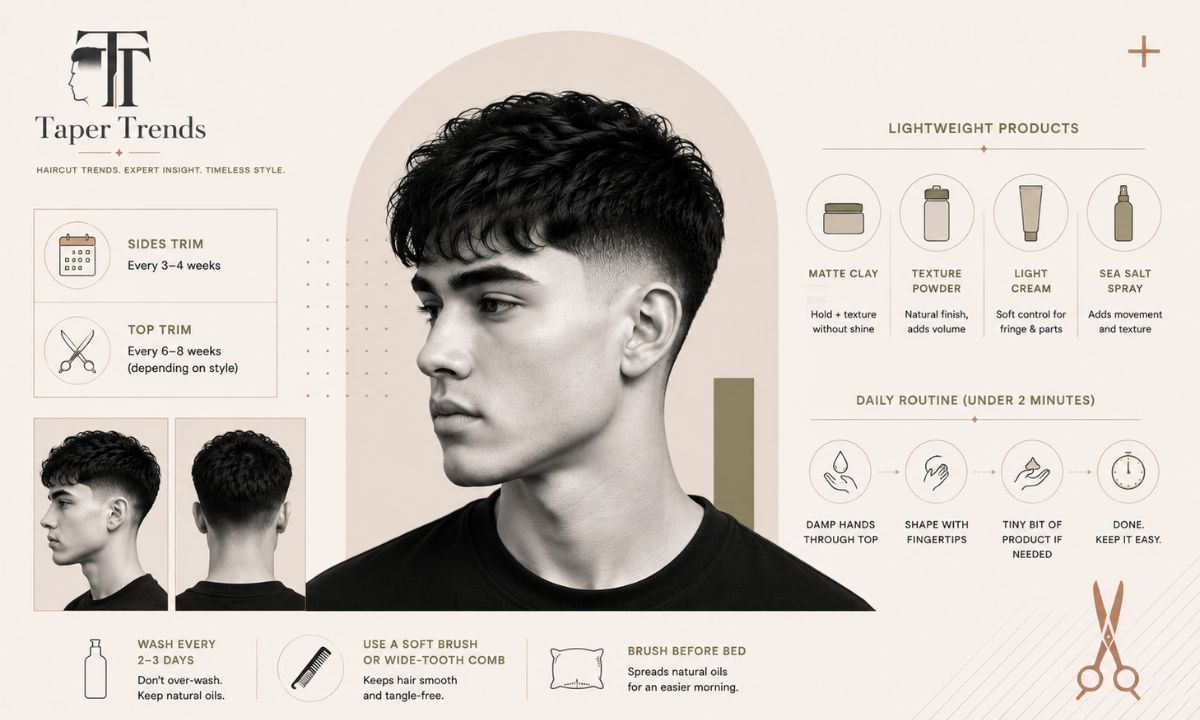
The cut asks for very little, which is half its appeal. For the sides, a trim every three to four weeks keeps things clean, though the low taper grows out slowly enough that some boys stretch to five or six. The top can usually wait longer, depending on the style.
The most common mistake is too much product. Straight hair grabs it fast, and a heavy hand leaves the hair greasy and flat by midday. A few lightweight options cover almost everything:
- Matte clayHold and texture without shine — the everyday workhorse for straight hair.
- Texture powderDusted into dry hair for a natural, barely-there finish and a bit of lift.
- Light styling creamSoft control for fringe and middle-part styles that want to stay put.
- Sea salt sprayScrunched into damp hair for easy movement without weight.
A workable morning routine takes under two minutes: damp hands through the top, shape with the fingertips, and a tiny bit of product only if it needs it. Wash every two or three days rather than daily, since over-washing strips the oils that keep straight hair behaving. A soft brush or wide-tooth comb keeps it smooth, and a quick brush before bed spreads those oils around so the morning is easier.
Common mistakes to avoid
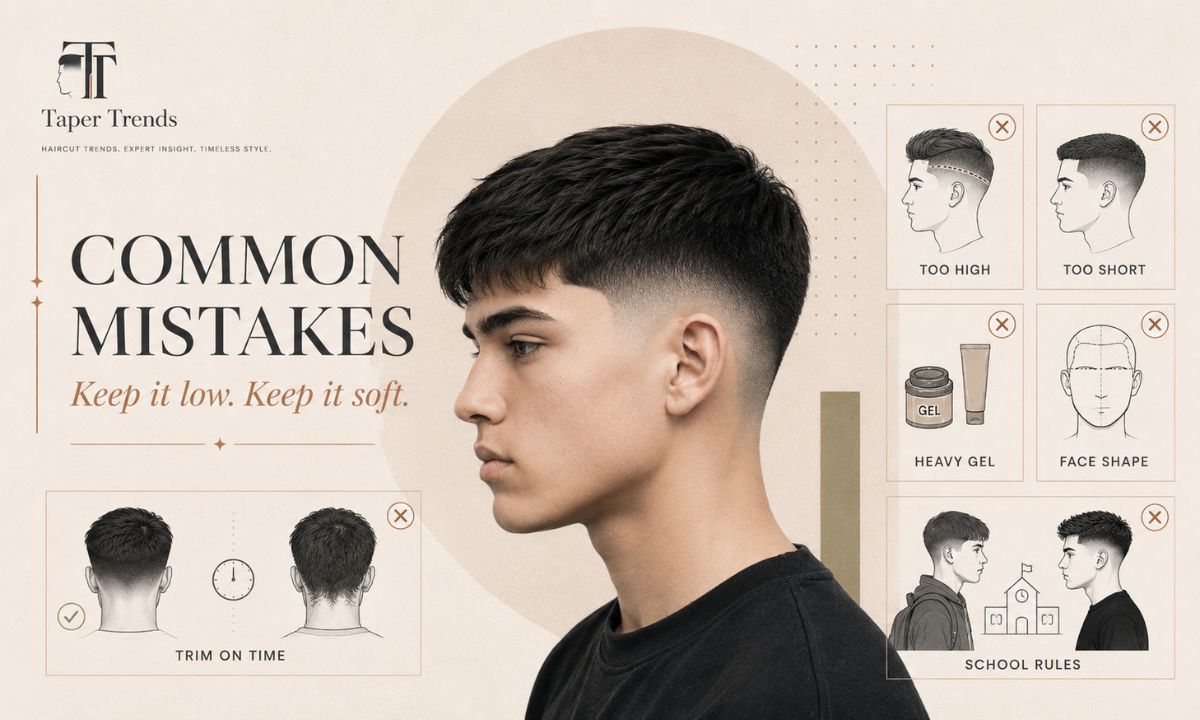
A handful of small errors can sink a good idea.
Fade too high
Asking for it too high turns a low taper into a mid or high fade. Name “low taper” and point to just above the ear.
Top cut too short
It strips out the flexibility to wear a fringe, part, or texture later. Take less off first; you can always go shorter.
Reaching for gel
Traditional gel leaves straight hair wet-looking and crunchy. Switch to matte products or a light cream.
Only describing the fade
Describe the top alongside the fade — a style can be well cut and still feel off if it fights the face.
Skipping school rules
Most allow a low taper, but some ban skin fades, hard lines, or disconnected cuts. Easier to know before the appointment.
Leaving it too long
A quick tidy around the ears and neckline every three to four weeks keeps the shape from drifting.
Bottom line
Few boys' haircuts give you this much room to work with on straight hair. The sides stay clean and low-effort, and the top is open to a textured finish, a natural fringe, a relaxed middle part, or a plain neat cut, so it works from a school morning to a family wedding.
Getting it right comes down to three things: picking a top that suits the face, telling the barber clearly what you want, and going easy on lightweight product at home. Do that, and it's a cut that looks sharp on day one and still looks like a haircut three weeks later.
Frequently asked questions
Is a low taper fade good for boys with straight hair?
Yes. Straight hair lies flat and falls in one direction, so the taper blends evenly and the neckline stays clean with little effort. The crisp lines this cut depends on are easier to get when the hair behaves, which is exactly why it suits straight hair so well.
What is the difference between a low taper and a low fade?
A low taper shortens the side hair gradually near the ears and neckline but stops short of bare skin, so a little hair stays and the blend reads soft. A skin fade takes the hair right down to the scalp. The low taper keeps most of the side length and only graduates the bottom inch or so.
How long should the top be for a boy's low taper fade?
It depends on the style. A textured top or fringe works at almost any length, while a middle part needs roughly three to four inches so the hair falls on each side. When in doubt, take less off on the first visit — you can always go shorter next time.
How often does a boy's low taper fade need a trim?
Plan on a side trim every three to four weeks to keep it sharp, though the low taper grows out slowly enough that some boys stretch to five or six. The top can usually wait longer, depending on the style.
What is the best way to style straight hair after a low taper fade?
Go easy on product — straight hair grabs it fast. A pea-sized amount of matte clay or a light styling cream worked through slightly damp hair with the fingertips is plenty. Skip heavy gel and high-shine pomade, which leave straight hair wet-looking and flat by midday.
Want more taper fade guides?
Browse clean, barber-ready breakdowns for every hair type.