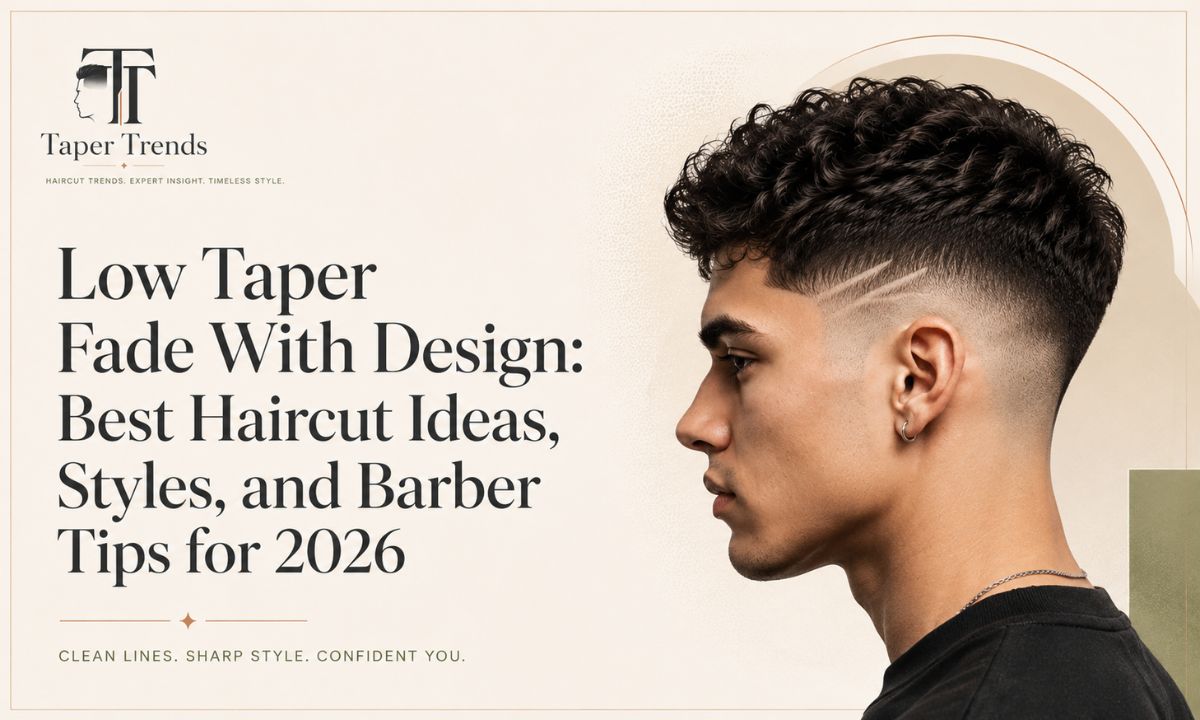
Scroll through a barber's Instagram or a few minutes of grooming videos and the low taper fade with design keeps turning up. There's a reason for that. It looks clean enough for a classroom or an office, but lean in a little closer and there's a shaved line or pattern doing something more interesting.
The cut pairs a low taper around the sides and neckline with a design shaved or hand-cut into the hair, usually somewhere low-key like the temple or behind the ear. Neat from across the room, personal up close. That mix is most of the appeal, and it's why this haircut has hung around instead of fading after a season.
Below is what the haircut is, why barbers keep recommending it in 2026, which designs work, and how to ask for one.
What is a low taper fade with design?
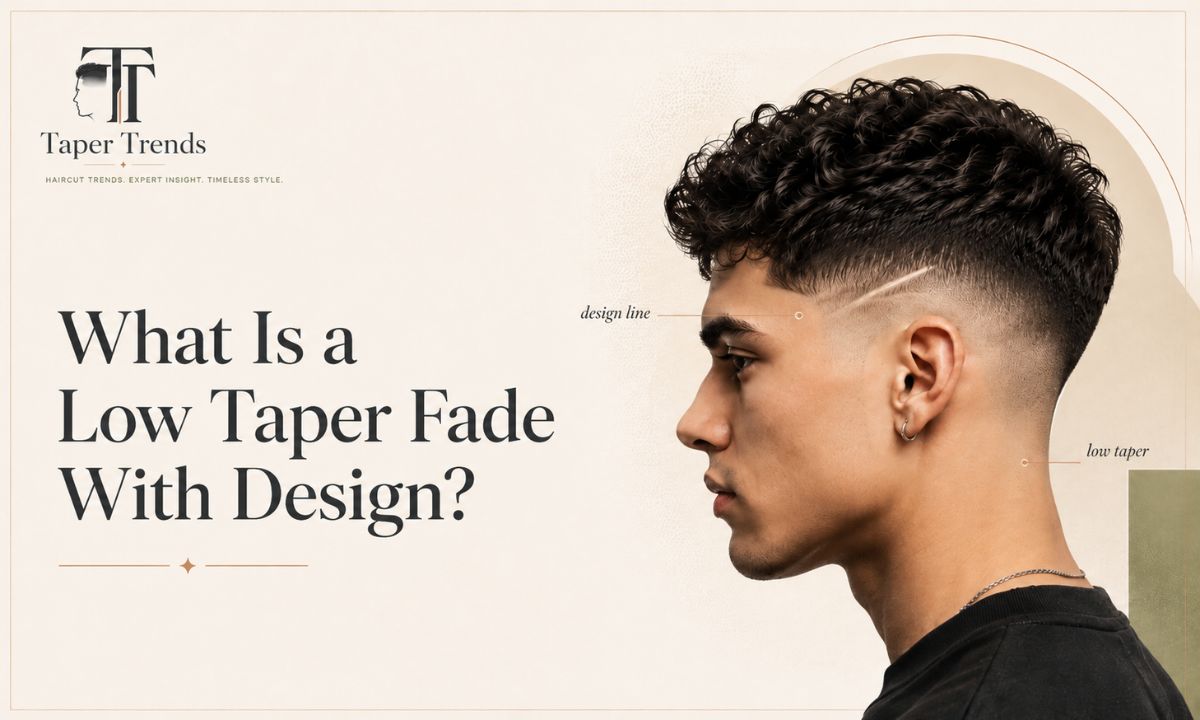
A low taper fade starts short near the neckline and ears, then blends gradually into longer hair as it climbs the head. The fade sits lower than a high or skin fade, which keeps the whole thing softer and closer to your natural hairline. That low starting point is the part people get wrong when they ask for it, so it's worth being clear about with your barber.
The design is any pattern, line, or shape a barber shaves in with clippers or a trimmer. It can be a single straight line or a detailed freehand pattern, and it usually lands in one of a few spots:
- The side, just above the fade
- The temple, near the hairline
- The back, along the lower skull
- The neckline, where the hair meets the neck
- Behind the ear, the most hidden option
There's a real gap between a simple design and a bold one. A simple design might be one thin line or a small curve, something that reads as a quiet detail rather than a statement. A bold design stacks multiple lines, sharp angles, or a freestyle pattern meant to catch the eye.
What makes the combination work is balance. The taper keeps you presentable almost anywhere, while the design stops the cut from feeling generic. You get structure and a bit of personality in the same haircut, which is harder to pull off than it sounds.
Why it's popular in 2026
Barbers keep putting this cut near the top of their 2026 lists, and the appeal is mostly practical rather than hype.
You get clean tapered sides plus a detail that makes the cut feel like yours, without going overboard. It also moves between settings easily. It's fine for school, casual everyday wear, and sports, and it photographs well, which matters more than most people admit. Not every haircut handles all of that.
It's low risk to try, too. A barber can add, tweak, or drop a design during a normal trim, so you're not committing to anything you can't undo in a couple of weeks. There's range in how it's done as well — the same base cut can look completely different from one person to the next depending on whether the barber goes with a straight line, a soft curve, a freestyle pattern, or detailed neckline work.
The last reason is comfort. Because the taper sits near your natural hairline, it reads softer than a high fade or a full skin fade. Guys who want something clean but not harsh tend to land here.
Best low taper fade with design ideas for men and boys
A handful of designs come up far more than the rest in barber shops right now:
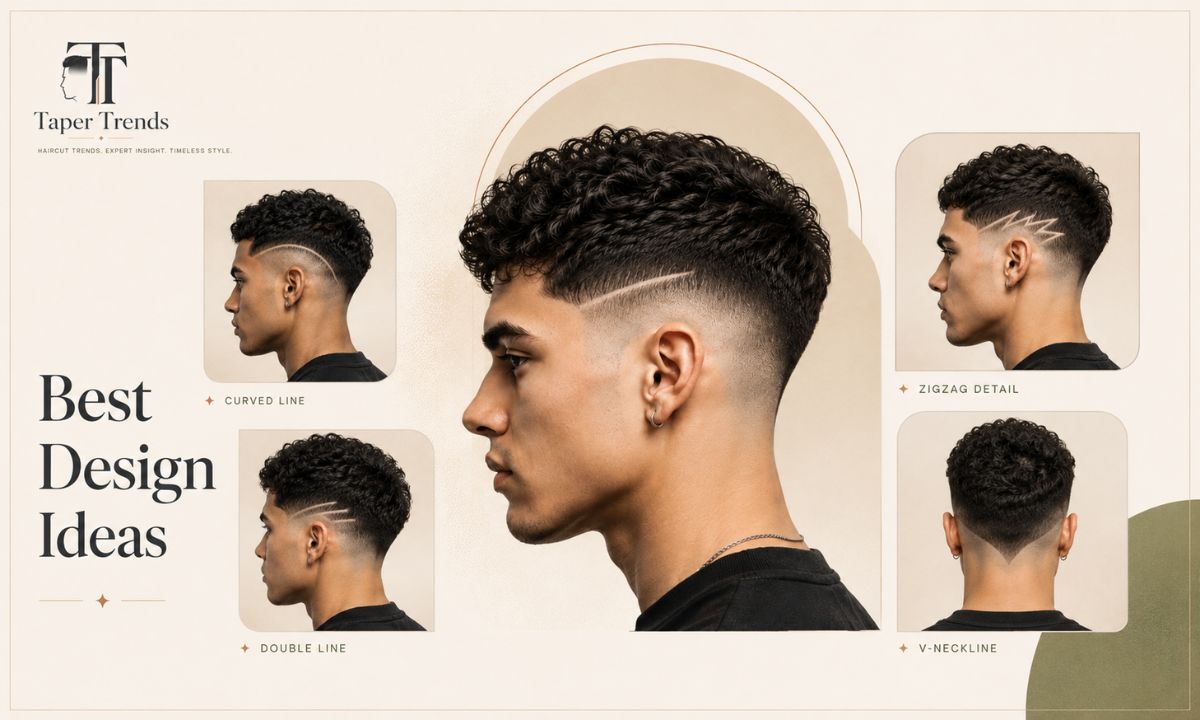
- Single lineOne clean line through the side or temple. Minimal and easy to keep up.
- Double lineTwo parallel lines for a bit more detail without looking busy.
- Curved lineA soft curve that follows the shape of the head instead of cutting straight across.
- Lightning / zigzagMore energy and movement — popular with teens.
- V-shaped necklineA sharp V cut into the nape for a crisp finish.
- Freestyle sideCustom shapes, good if you want something nobody else has.
- Subtle hairline lineBarely visible, safe for school or work.
- Bold multi-lineSeveral lines or shapes combined into a proper statement.
Any of these can shrink or grow depending on your hair length, head shape, and how much detail you actually want to walk around with. A barber will usually size it to your head rather than copying a reference exactly.
Simple line designs for a clean look
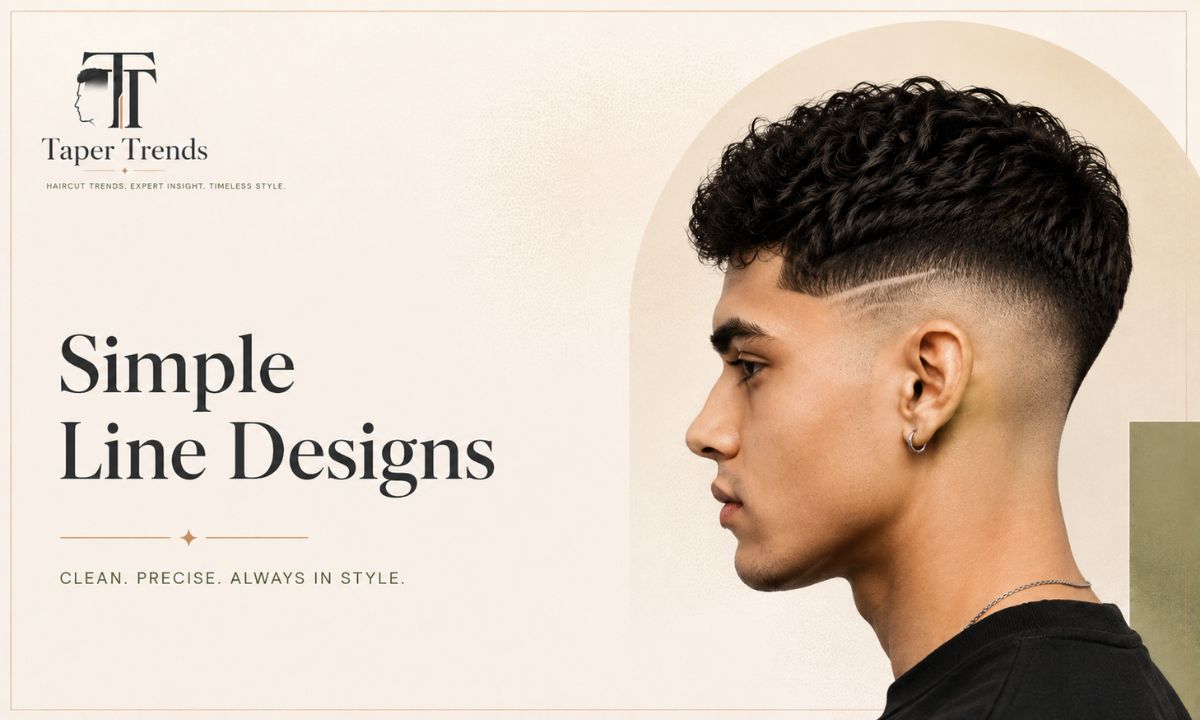
If you're new to the idea, start small. Simple lines give you detail without turning your head into a billboard, and they're the easiest way to find out whether you even like having a design.
One clean shaved line is the usual first request. It sits just above the taper and sharpens the edge without much else going on. Two parallel lines push it slightly further while still reading as minimal. A short temple line near the hairline is quieter still, small enough that nobody notices unless they're looking. If you want a bit of shape, a curved side line follows the head instead of cutting straight across and blends more naturally into the fade. A short diagonal slash near the fade is another low-key choice.
The case for keeping it simple is partly about where you can wear it. School dress codes and stricter workplaces tend to tolerate a single line far better than a full pattern. Simple designs also grow out cleanly. A single line blurs into the regrowth over a couple of weeks, while a complex pattern can go patchy and uneven as the hair fills in. If you don't get to the barber often, that alone is a good reason to keep the first design plain.
Back and neckline design ideas
Most people picture a side design first, but the back and neckline give you just as much room, and it's usually easier to keep low-profile back there.
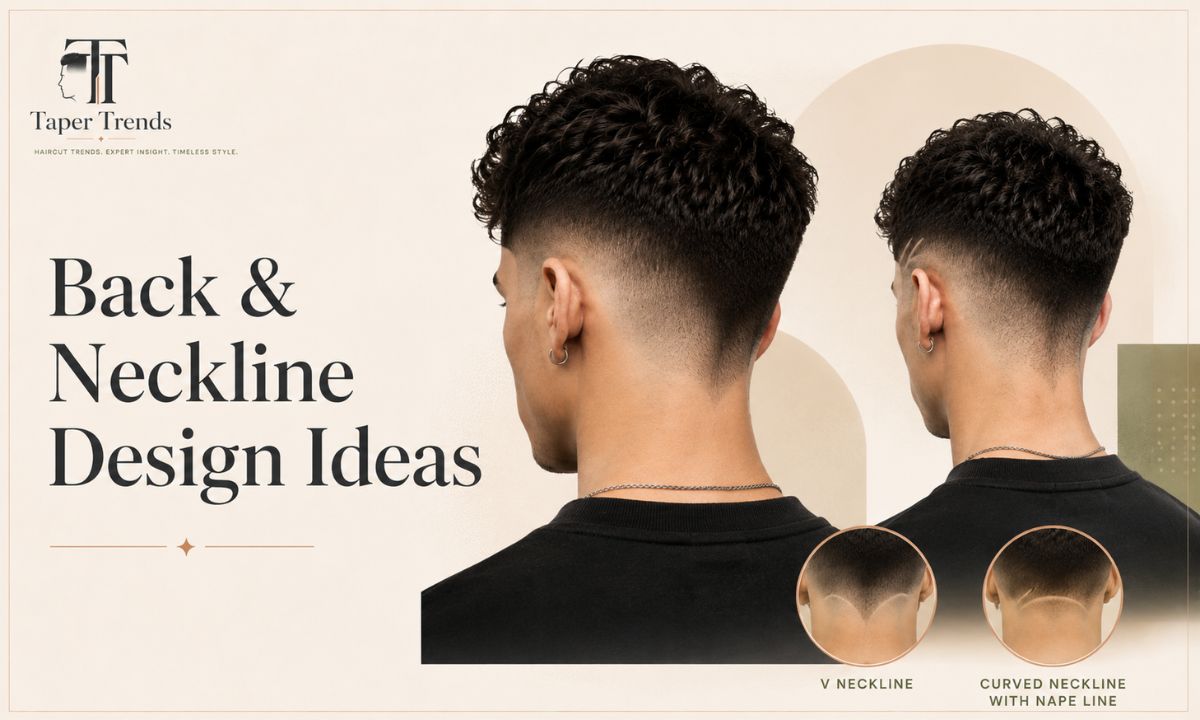
A V neckline is one of the more popular picks. The barber shapes the hairline at the back into a clean V instead of a rounded or straight edge, which sharpens the whole cut. A small nape line is the understated version, a short shaved line that adds a little structure without much visibility. A curved neckline softens things further by following the natural curve of the neck rather than using hard angles, which pairs well with a low taper since both are after the same smooth effect.
If you want something more deliberate, a symmetrical back design mirrors a shape on both sides of the head. That takes real skill to get even, so it's worth booking a barber who does detailed neckline work regularly rather than trusting it to whoever's free. A design behind the ear is about as hidden as it gets — invisible most of the day and only showing when the hair is pushed back or during a fresh-cut reveal.
The main advantage back here is privacy. Hair on top falls over the back of the head more than it does over the sides, so these designs stay out of sight most of the time. That suits anyone who wants the detail without it being on display all day. And when the hair is freshly cut and the lines are crisp, a good neckline design can make the entire haircut look sharper from behind.
Low taper fade with design for curly, wavy, and straight hair
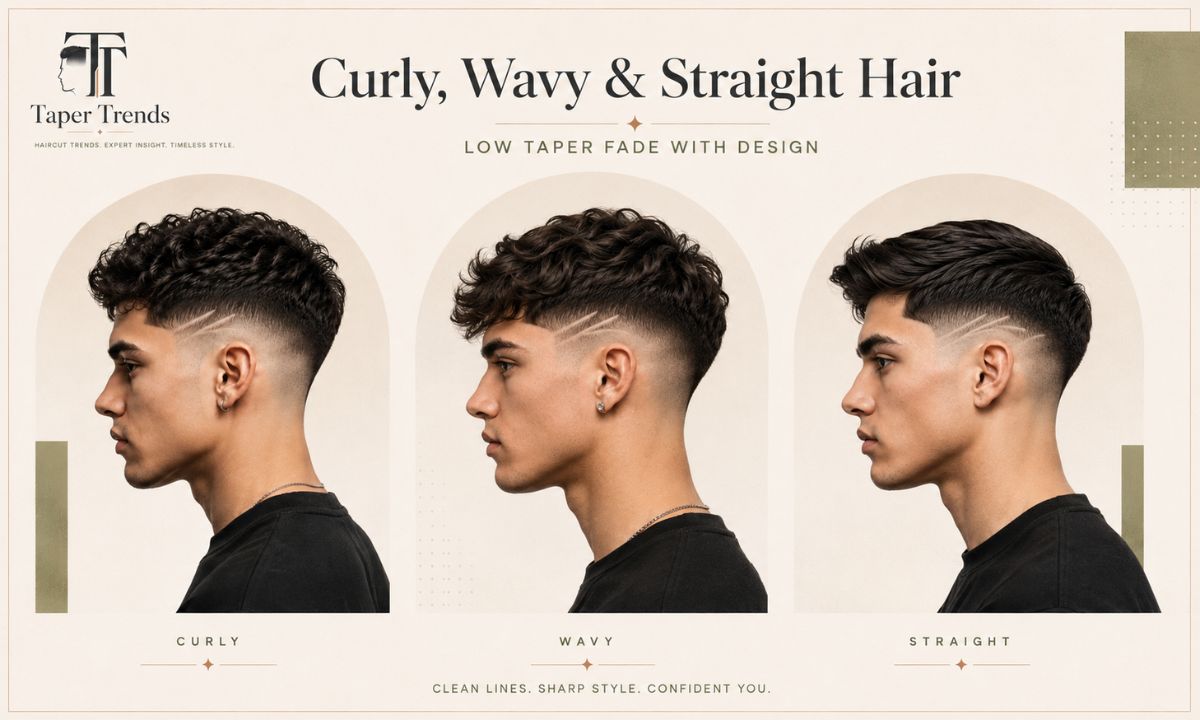
Texture changes how a design actually looks once it's cut, so it helps to know what you're working with before you sit down.
Curly hair
Curly hair makes designs pop. The contrast between tight curls up top and clean shaved lines below is strong even with a simple pattern.
Wavy hair
Wavy hair does well with some texture left on top and a smooth taper underneath; the waves add movement while the sides stay controlled.
Straight hair
Straight hair gives the cleanest, sharpest result. With less texture competing, the lines read crisp and obvious — see our straight-hair low taper fade guide for styling specifics.
Coily or thick hair
Coily or thick hair creates that same strong contrast curly hair does, but it's less forgiving. Thicker hair is harder to fade evenly, and the design needs steady, confident clipper work or it ends up looking patchy.
Fine hair
Fine hair is the one case where less is genuinely more. Keep the design simple and avoid exposing too much scalp, or the cut can start to look thin and bare.
A good barber adjusts guard lengths and design depth based on how dense your hair is in the first place. What looks great on thick curls might need a lighter hand on fine, straight hair, and knowing that difference is most of what separates a clean cut from an average one.
Low taper fade with design for different face shapes
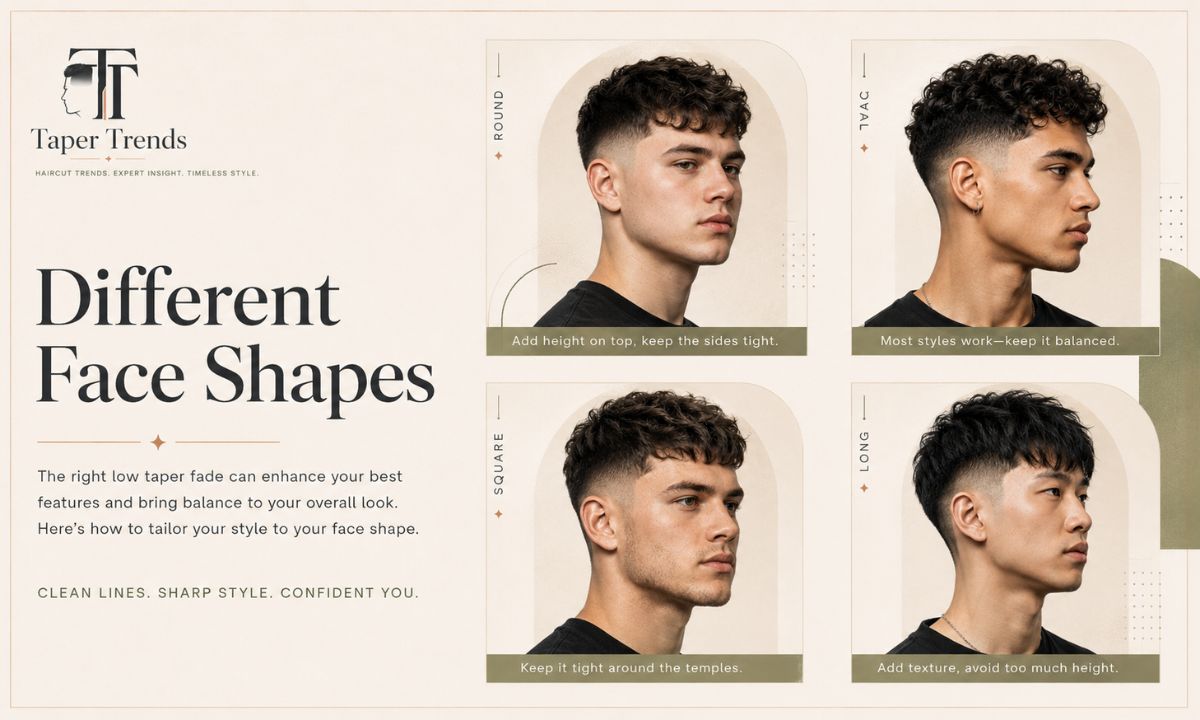
Texture isn't the only thing that matters. Face shape feeds into how the top gets styled alongside the design.
- RoundA bit more height or texture on top adds length and balances out the roundness.
- OvalThe easy case — most versions of this cut work without much adjustment.
- SquarePairs well with clean lines and a sharp taper, which play off a strong jaw; some barbers add texture on top to soften it.
- LongGo easy on height up top, since extra height only makes the face look longer.
- HeartTends to suit softer, simpler designs over heavy patterns.
The best design matches your hairline, head shape, and how you actually like to look — not whatever looked good on someone else's head. A decent barber will usually suggest small tweaks based on your face before committing to a design.
How to ask your barber for a low taper fade with design
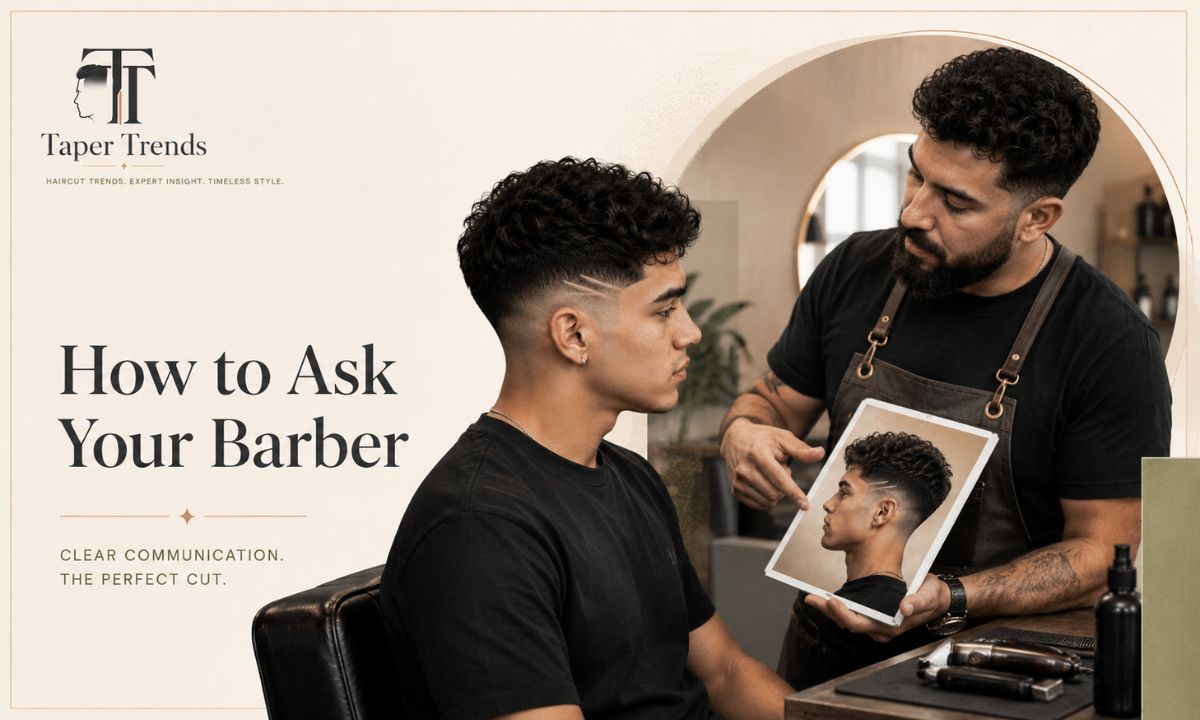
Most of the result comes down to what you say before the clippers even start.
- Bring a reference photo — the single easiest way to avoid a miscommunication. Even a rough one helps.
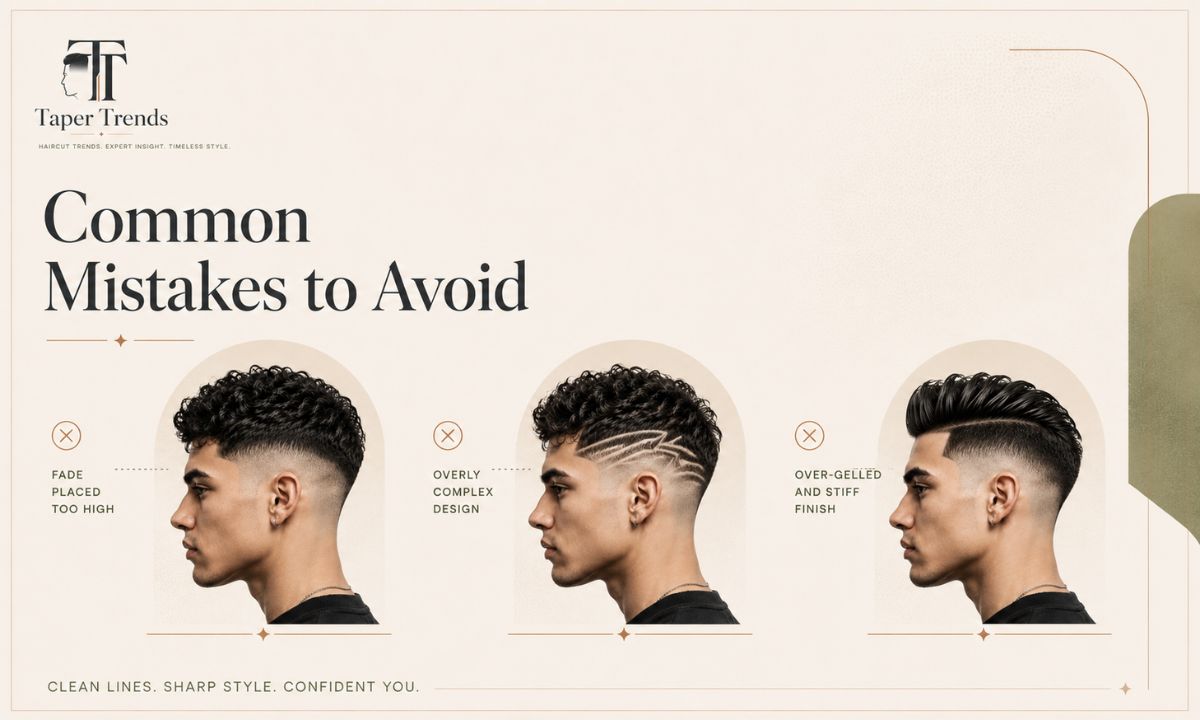
- Ask specifically for a low taper around the sideburns, ears, and neckline, or it can drift into a mid or high fade by accident.
- Say where you want the design: the side, temple, back, or behind the ear, so there's no guesswork.
- Tell the barber how far to take it — simple, medium, or bold. That one word changes the whole cut.
- Mention the style too, since sharp and geometric, soft and curved, freestyle, and symmetrical each need a different technique.
It's also worth asking whether the design even suits your hairline and density. A good barber will tell you straight if a line will look clean on your hair or if it needs adjusting first.
“The barber matters more than the design. A simple line looks sharp in skilled hands and uneven in inexperienced ones.”
So the person holding the clippers is worth more than the pattern you pick. Choose the barber first, then the design.
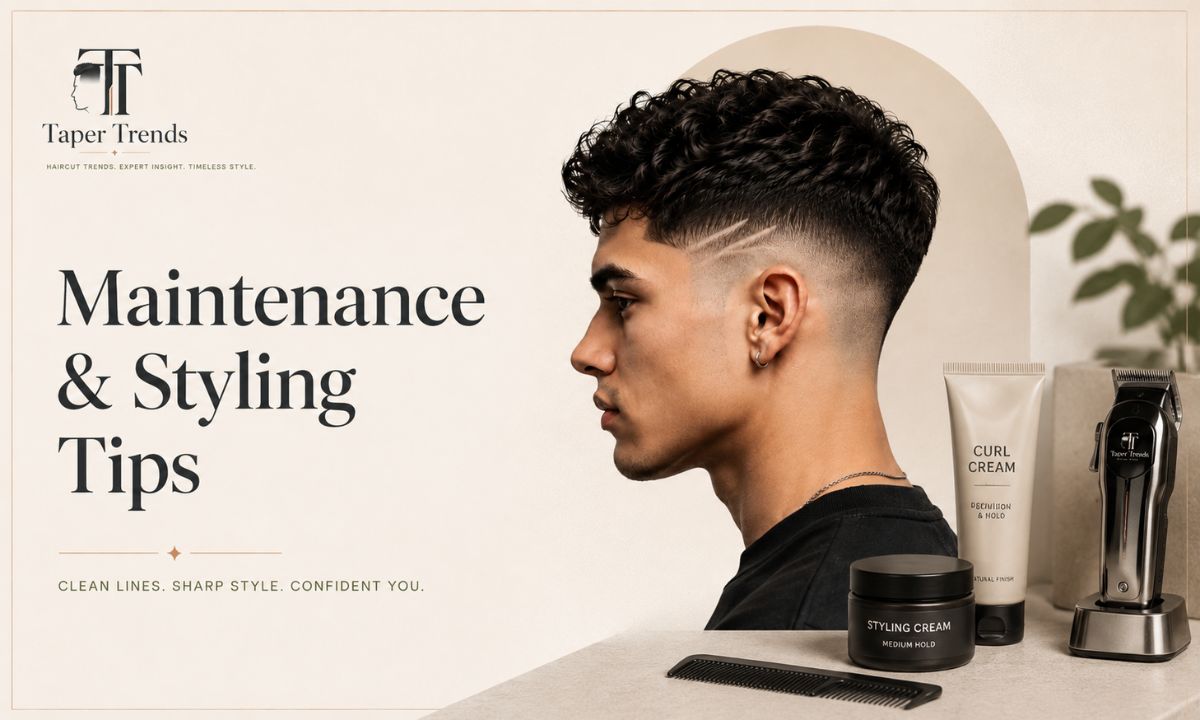
Maintenance and styling tips
Designs don't stay crisp forever, so a little upkeep goes a long way.
As the hair grows, the design loses its sharp edges. That happens to every shaved design no matter how clean it looked on day one. The lines tend to blur fastest, usually within one to two weeks, while the low taper itself holds its shape a little longer, closer to two or three weeks before it needs attention. Faster-growing hair pushes both of those windows shorter. Keeping the neckline tidy between full cuts also helps the whole thing look fresh even once the design starts to soften.
For daily styling, match the product to your hair. A light styling cream suits straighter hair, curl cream defines curls without weighing them down, and a matte product gives texture without shine. Go easy on heavy gel; it makes the top look stiff and unnatural next to a clean taper. Brushing, combing, or just finger-styling the top keeps everything balanced, and when the top looks intentional the fade and design underneath stand out more.
One last thing: leave the at-home trimming alone unless you really know what you're doing. It's easy to blur a line or wobble a curve with a quick touch-up, and that's a hard mistake to fix before your next appointment.
Common mistakes to avoid with haircut designs
The same handful of errors show up again and again:
- Picking a design that's too complex for your hair type, so it looks cluttered instead of clean.
- Skipping the reference photo and leaving too much to interpretation.
- Choosing a design that fights your face shape or hairline and throws off the balance of the cut.
- Going bolder than your school, job, or comfort level allows, then regretting it once it's done.
- Letting an inexperienced barber attempt detailed work, which usually means uneven lines.
- Ignoring the fade once the design grows out, so the whole cut looks patchy and unfinished.
- Copying a celebrity's exact design without adapting it — different hair and head shape can make the identical cut look nothing alike.
Most of these come down to communication and picking a barber with real design experience.
Final thoughts
A low taper fade with design is a practical way to keep a clean haircut while still making it feel like your own. It works for school, work, and casual settings, and it adapts to most hair types and face shapes.
The trick is matching the design's style, placement, and boldness to your life and your hair density instead of copying a photo. Find a barber who knows what they're doing, keep up with the trims, and the cut holds its shape well into 2026.
FAQs about low taper fade with design
Is a low taper fade with design good for boys?
Yes. It's one of the more popular options for boys precisely because it stays neat enough for school while leaving room for a bit of personal style through the design.
How long does a haircut design last?
The crisp lines usually hold for about one to two weeks before they start blending into the regrowth, and the fade underneath lasts a little longer. Faster hair growth shortens both.
Can I get a low taper fade with design on curly hair?
Yes, and it often looks especially good. The contrast between curly hair on top and the clean shaved lines below makes the design stand out more than it does on straighter hair.
Is this haircut professional enough for work or school?
In most cases, yes — especially with a simple or subtle design. Save the bolder patterns for more casual settings.
What design should I choose for my first time?
A single line or a short temple line is the safest start. Low commitment, easy to maintain, and enough to tell you whether you like the style before going bolder.
Want more taper fade guides?
Browse clean, barber-ready breakdowns for every hair type.